Hawaii Braces for Lowell as Climate Warning Becomes Reality
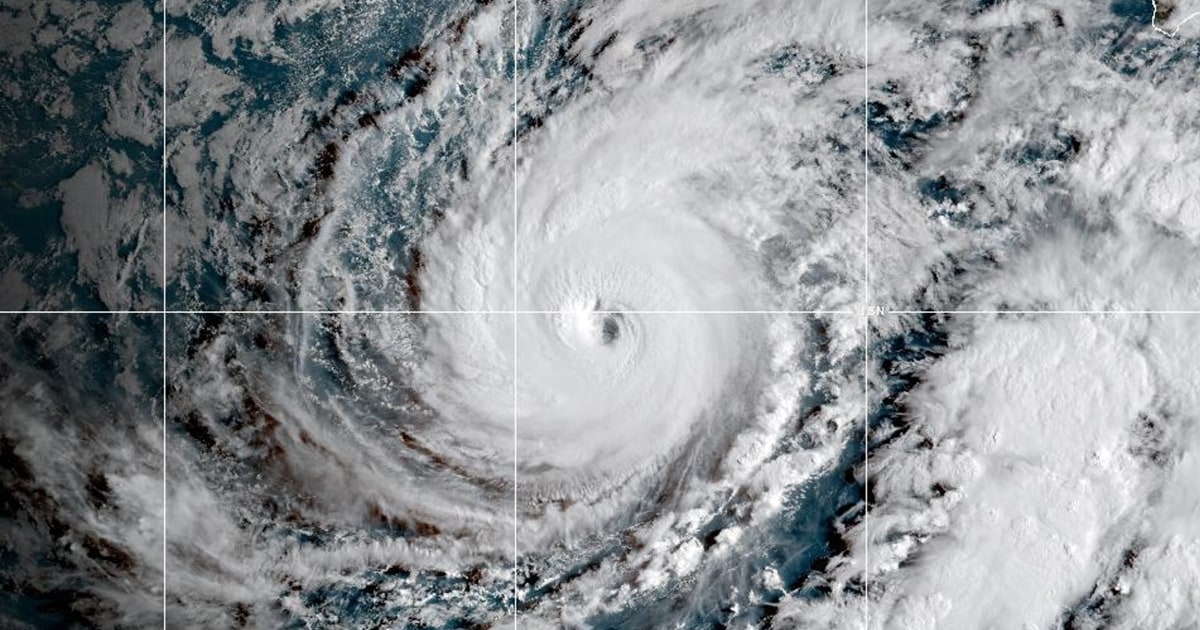
Hurricane Lowell is the third Pacific cyclone to hammer the region this week, hitting an island chain still recovering from two prior storms. What's happening off Hawaii's coast is exactly what climate scientists have been forecasting.
The Third Storm in a Week
Hawaii is facing its third Pacific cyclone in seven days, and the timing says more about climate than coincidence.
Hurricane Lowell, a Category 3 system with 115 mph sustained winds, is tracking west of Kauai and Niihau late Monday into early Tuesday. Hurricane warnings are in effect for both islands. Oahu sits under a tropical storm warning. Governor Josh Green has ordered state and county offices, schools, and courts closed through Tuesday. Kauai Mayor Derek Kawakami urged residents off the roads by midday Monday and told people to shelter in place.
The storm itself is not unprecedented. The unusual part is the sequence. Lowell is one of three named cyclones swirling through the Pacific this week — Hurricane Karina and Hurricane Marie also bearing down on the basin, with Marie already delivering high surf and rain to Southern California.
“What I’ve observed over the last few days is nothing less than phenomenal,” Kawakami said of his county’s preparations. That confidence deserves scrutiny.
Saturated Ground, Repeated Hits
Hawaii’s Big Island is still reeling from Tropical Storm Lala, which struck just last month. Lala killed at least one person in a storm-related car crash and left more than 100,000 residents without power. A week later, Tropical Storm Moke dumped additional rain across the same terrain.
Now Lowell could bring up to 12 inches of rain to parts of the Big Island and up to 16 inches to Kauai, according to the National Weather Service. Storm surges of 2 to 4 feet are expected. Rivers are already reaching flood stage. The NWS warned of flash flooding, mudslides, and possible tornadoes.
The compounded risk is the real story. When soil is already saturated from prior events, even moderate rainfall produces outsized runoff. Emergency Management Administrator Elton Ushio warned that the Kuhio Highway — Kauai’s critical coastal route — could face a prolonged closure, isolating communities further.
“Conditions are rapidly deteriorating,” Ushio said. “We could have a prolonged closure out there, but other areas island-wide could be affected.”
That warning about island-wide impact matters. Hawaii’s road networks are narrow, winding, and geographically constrained. A single washed-out stretch can strand residents and block emergency vehicles simultaneously.
Beyond the immediate danger, second-order disruptions are already accumulating. The Hawaii Agricultural Association estimated that Lala and Moke together knocked roughly 15 percent of the state’s produce supply offline — damaging taro patches, disrupting pineapple harvests, and contaminating irrigation channels with debris and saltwater intrusion. With Lowell approaching, farmers are watching fields they had barely begun to rehabilitate face fresh destruction. Insurance adjusters assigned to the Big Island after Lala are being pulled back into the field before closing their earlier cases, stretching an already thin claims workforce thin across three overlapping disaster zones.
The El Niño Signal
This level of Pacific storm activity aligns precisely with what climate models projected for a strong El Niño year. The current event is forecast to be exceptionally intense — possibly record-breaking — driven by warmer-than-average sea surface temperatures across key regions of the Pacific.
Warmer ocean water is fuel. It provides the thermal energy that sustains and intensifies tropical cyclones. What climate scientists have cautioned about for decades is now unfolding in real time: more frequent multi-storm sequences, stronger systems at later points in the season, and greater rainfall totals per event.
Lowell weakened from Category 5 earlier in its track, but it retains enough structure to deliver destructive winds and dangerous flooding. The fact that a late-season storm retains Category 3 intensity as it approaches the Islands is itself a pattern shift. Historically, Pacific hurricanes lose strength as they move into cooler waters or encounter wind shear near Hawaii. That margin of safety is shrinking.
Dr. Mei-Lin Tanaka, a climate physicist at the University of Hawaii’s School of Ocean and Earth Sciences, noted that the Atlantic and Eastern Pacific basins have been running overlapping active seasons for the first time in the observational record since satellite monitoring began. “We’re seeing cyclone genesis events fire in close temporal proximity across basins that previously didn’t interact this way,” she said. “The Pacific is warming at roughly twice the global average rate. That energy has to go somewhere, and storms are one of the delivery mechanisms.”
Logistics of Isolation
Hawaii’s geography makes every storm a logistical problem. The island chain is 1,500 miles from the nearest mainland. When Lihue Airport — Kauai’s only airport — closes, there is no alternate commercial hub on the island. Hawaiian Airlines and Alaska Airlines suspended flights as early as 11 a.m. Monday. United offered travel waivers. Those suspensions will ripple through supply chains already strained by prior storm damage.
Kauai’s emergency management agency told residents to fill gas tanks, charge devices, refill prescriptions, and stock several days’ worth of food and water. The department of water recommended filling buckets and bathtubs for non-drinking use. These are instructions for a community cut off from external aid for days.
Niihau, located less than 20 miles southwest of Kauai, has no mayor and is administered as part of Kauai County. It is privately owned and home to a small permanent population. No specific evacuation orders were detailed for the island, leaving questions about how its residents are being protected.
The flight suspensions carry economic consequences well beyond the travel inconvenience. Tourism accounts for roughly a quarter of Hawaii’s economy, and even a three-day pause in arrivals — combined with negative publicity from the triple-storm narrative — could cost the state an estimated $40 million to $60 million in direct spending losses, according to a preliminary analysis by the Hawaii Tourism Authority. Hotels on Oahu and Maui are already absorbing cancelled reservations, and restaurant suppliers are recalculating weekly deliveries against hollowed-out demand. For small businesses on Kauai that operate on thin margins and depend on just-in-time inventory, a prolonged airport closure isn’t an inconvenience — it’s a liquidity crisis.
Memory and Preparation
Resident Nouveau Naumu told KHNL he was 10 years old when Hurricane Iniki devastated Kauai in 1992. He remembered huddling in a bathroom as debris hit the house, waking to find the island unrecognizable the next morning.
Iniki was a Category 4 storm that caused $3 billion in damage — roughly $6 billion adjusted for inflation. It remains the costliest hurricane in Hawaiian history.
Kawakami’s praise for his emergency management team reflects genuine institutional growth since Iniki. Hawaii established a modern disaster response framework in the decades following that storm. But institutional preparedness for a single event does not guarantee resilience against repetition.
The question hanging over Lowell is whether Hawaii’s emergency capacity — already stressed by Lala and Moke — can absorb another major hit without fractures appearing. The answer will determine whether this sequence of storms is remembered as a warning or as a preview. If Lowell breaches the seawalls along Kauai’s north shore and triggers the kind of cascading infrastructure failure that Iniki produced, the state will face a decision that no emergency operations plan fully addresses: how to sustain an island population when the supply lines themselves are underwater.