Hormuz on Fire — And Seoul Is Already Scanning for Gas Masks
US strikes on IRGC targets push oil above $90 as Hormuz Strait fears ignite. For South Korea, an oil-importing nation where energy security is existential, this escalation reads very differently than it does in Washington.
The $90 Shock No One in Washington Fears — But Everyone in Seoul Does
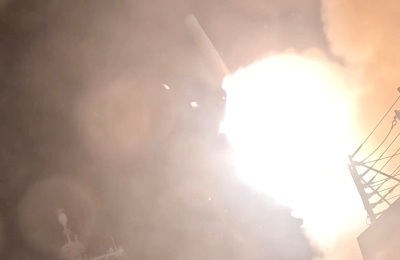
The US struck Iranian Revolutionary Guard targets on September 1. Within hours, WTI crude vaulted 4.5 percent to $89.63 a barrel. Brent followed at $94.06. The Strait of Hormuz — the single narrowest chokepoint on the planet through which roughly 21 million barrels of oil pass daily — is once again the most dangerous stretch of water on Earth.
In Washington, this is headline news wrapped in defense policy debate. In Seoul, it is a national emergency written in numbers most Americans will never calculate. South Korea imports nearly 97 percent of its crude from the Middle East. Roughly 70 percent of that flows through Hormuz. When that strait closes — or even looks like it might close — the Korean won doesn’t just waver. It trembles.
How We Got Here, Quickly
The current war began February 28 with US and Israeli strikes on Iranian targets. A ceasefire memorandum was signed in June, but the hard issues — enrichment limits, regime constraints, regional security architecture — were deferred to a 60-day negotiation window that expired without a deal. By late August, the conflict had shifted from a cold economic standoff back into kinetic territory: US forces struck Larak Island off Iran’s southern coast on August 30, and Iran retaliated with missiles aimed at two US Air Force bases in Jordan.
President Trump called the latest exchange a limited encounter, not a return to full war. Iranian officials agreed publicly — calling the strikes restrained — while simultaneously declaring that no country would be allowed to export oil from the Persian Gulf if the US tried to stop them. Parliament Speaker Mohammad Bagher Ghalibaf put it bluntly: if the US wants to blockade Iran’s oil, nobody exports from the Gulf.
The contradiction is the point. Both sides say they want de-escalation. Both are preparing for the alternative.
The Hormuz Problem, By The Numbers
Hormuz is not a suggestion. It is geography. Of the 17 million barrels per day that flow through the strait, about 4 million go to Japan, 3.5 million to South Korea, 2.5 million to China, and 1.5 million to India. Taiwan alone receives roughly 800,000 barrels daily through it. Close Hormuz even briefly and you don’t just move markets — you redistribute energy access across the entire Indo-Pacific.
Right now, Iran has not formally closed the strait. It has been pressuring and harassing commercial vessels since the conflict began, creating a zone of uncertainty that markets price into the spread. That is why WTI is approaching $90 without Hormuz actually being sealed. Close it for a week — the kind of closure that lasted 21 days during the 2019–2020 tense period — and analysts project prices could surge past $120. This is not speculation. It is arithmetic.
Why Seoul Reads This Differently From Washington
American strategists treat Hormuz as a theater problem. Korean strategists treat it as an existential one.
South Korea has no domestic oil. It has no strategic petroleum reserve large enough to absorb a prolonged Hormuz disruption — roughly 80 days of net imports, compared with the IEA’s 90-day recommendation and the US’s 150-plus days. Its refineries, many of them among the world’s largest, are calibrated for Middle Eastern crude grades that arrive through Hormuz. Switching suppliers is not a logistics puzzle; it is a months-long recalibration that most Korean refiners cannot economically execute.
Japan faces a similar exposure — it is the world’s second-largest importer of Middle Eastern oil — which is why Tokyo’s response to the latest strikes has been quieter and more procedural than Washington’s. Both nations share a structural vulnerability that no amount of diplomatic language erases.
China’s calculus is different. Beijing holds leverage through its relationship with Tehran and has been quietly absorbing Iranian oil at discounted rates even during peak sanctions periods. A Hormuz disruption hurts China, but China has more alternative supply routes — the China-Pakistan Economic Corridor, the Belt and Road pipelines, Russian crude — than any other major Asian importer. That asymmetry matters for how Beijing positions itself in any escalation scenario.
The Refinery Exposure Nobody Is Talking About
South Korea’s three largest refiners — S-Oil, GS Caltex, and Hanwha Ocean (formerly SK Innovation’s refining arm) — collectively process over 2 million barrels per day. Together they make South Korea the world’s fifth-largest refining hub. That capacity depends on a steady flow of crude that almost entirely transits Hormuz.
When CENTCOM announced the September 1 strikes, these companies did not issue press releases. They issued internal alerts. Stock prices for Korean energy sector names moved within minutes. The won weakened against the dollar on the Hormuz risk premium alone — a currency hit that compounds the energy cost in real time for a nation already wrestling with a weak won and stagnant growth.
This is the detail English-language wires are missing. They cover the missiles and the price spike. They do not cover the phone calls happening inside Korean refinery boardrooms at 3 a.m. Seoul time, when the Hormuz status report arrives and the P&L models start breaking.
What Happens Next
Several trajectories are plausible, none of them clean.
The most likely near-term path: continued low-intensity strikes and counter-strikes, sustained Hormuz harassment without formal closure, and oil trading in a $85–$105 band. This is the grinding escalation that damages markets without triggering full war. Historical precedent suggests this phase could last weeks or months.
A harder path: Iran formally mines or blocks key channels in Hormuz. This would trigger an immediate price spike past $110, emergency IEA release coordination among ally nations, and likely US naval intervention to reopen the strait — which in turn could prompt Iranian escalation against Gulf infrastructure. Neither side wants this. Both have signaled they will pursue it if backed into a corner.
The softest path: a renewed diplomatic framework emerges from behind-the-scenes channels, possibly involving Oman or Qatar as intermediaries. Iran gets some sanction relief; the US gets de-escalation optics. Oil drops back below $80. Markets breathe. This is the outcome Washington prefers publicly and Seoul needs privately.
The Unspoken Alliance Test
The real question for Seoul and Tokyo is not whether Hormuz will close — it is who they will turn to when it does. The US alliance guarantees security coverage in the region but does not guarantee energy access. American strategic priorities may not align with Korean or Japanese survival calculations on oil supply.
That divergence has been visible before — during the 2011 Libya crisis, the 2019–2020 Hormuz tensions, and the 2022 Russia-Ukraine energy shock. Each time, Asian allies pursued parallel diplomacy and supply diversification while publicly maintaining alliance solidarity. This time will be no different. The difference is the stakes are higher because the strait is more congested, the reserve buffers are thinner, and the next escalation cycle begins sooner.
Washington sees a military operation against IRGC targets. Seoul sees a potential gas crisis in November. Both readings are correct. The gap between them is where the next chapter of this conflict will be written.