How a Canceled Zelda Game Broke the Ubisoft-Nintendo Partnership
An unproduced Zelda spinoff called Goliath was supposed to let players control Ganondorf — but after Nintendo rejected its prototype, the project died and so did Ubisoft Milan's ambitions for the partnership. Key staff bolted to form Day 4 Night.
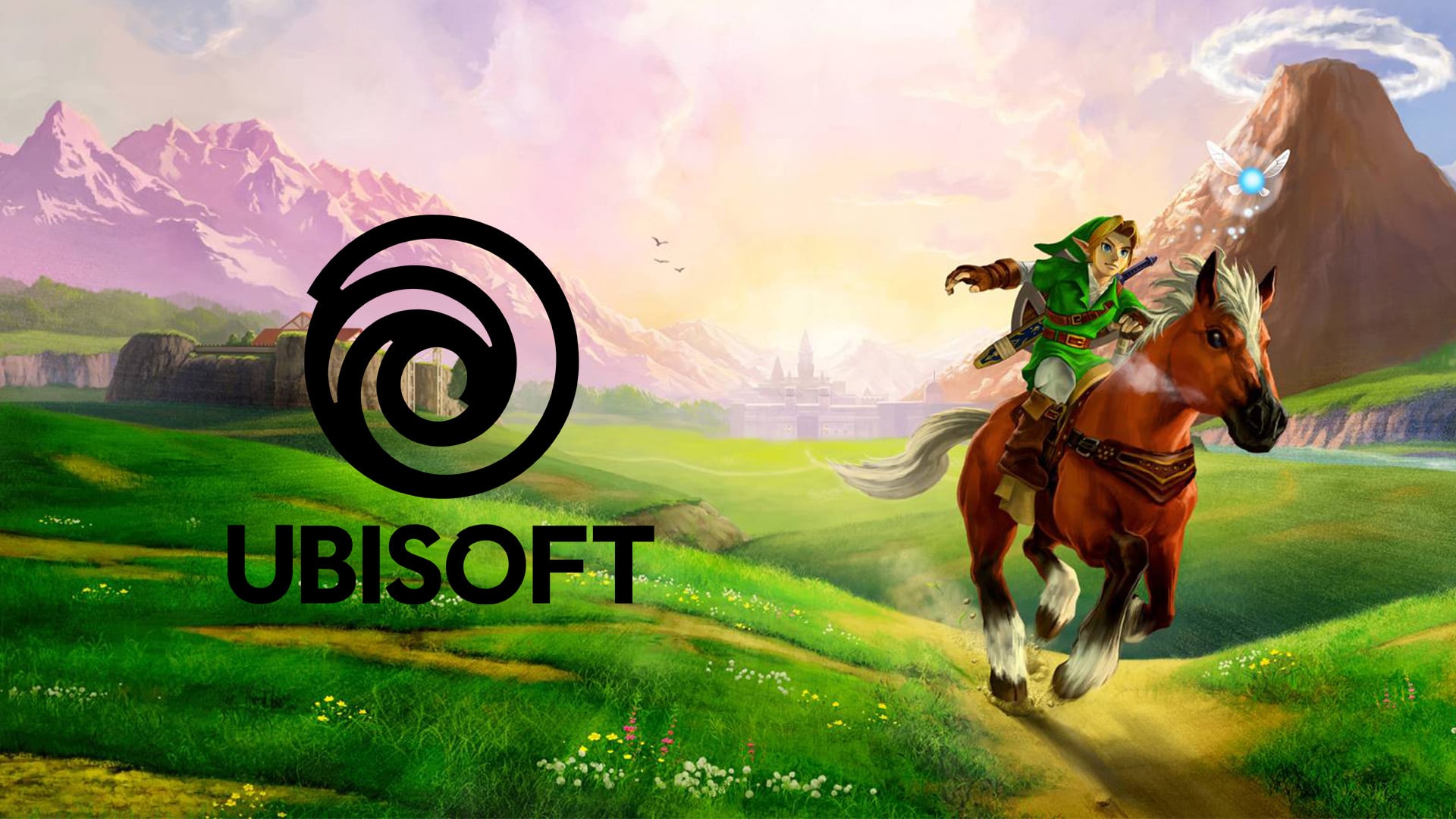
The Project That Could Have Changed Everything
In late 2022, Ubisoft and Nintendo were riding high. Mario + Rabbids Sparks of Hope had just shipped to solid reviews. Sales were modest — nothing that would shift quarterly earnings — but both companies saw a viable long-term franchise on their hands. It was the kind of collaboration that made executives nod approvingly in meetings: a lighthearted tactical spinoff from two brands that rarely shared shelf space.
What happened next would quietly unravel one of gaming’s most unexpected partnerships.
Ubisoft Milan, the studio behind Sparks of Hope, wasn’t interested in making Mario + Rabbids 3. Their lead, Davide Soliani, had spent nearly a decade building that formula and wanted something far bolder. According to reporting by Tom Henderson, Soliani and a small team worked through the winter of early 2023 on a pitch that would have been unthinkable a year earlier: a new Legend of Zelda game, developed by Ubisoft, set outside the main series timeline.
The working title was Goliath — an name that signaled exactly how large the ambition was.
From Original Protagonist to Ganondorf
The initial pitch was straightforward in its audacity: a Zelda spinoff starring a brand-new protagonist, someone players had never encountered in Hyrule before. It was the kind of creative risk Nintendo typically resists, which is precisely why its existence is notable.
Somewhere during concept development, the pitch shifted. Instead of an original character, the team began exploring the possibility of playing as Ganondorf — the Gerudo king, Link’s archenemy, one of the most recognizable villains in video game history.
This is the kind of pivot that sounds like a joke until you realize it came from a studio with a proven track record of licensed collaboration. Mario + Rabbids already proved Ubisoft could handle Nintendo IP with respect and humor. But Ganondorf? That territory had never been explored in a third-party-developed game, and Nintendo’s hesitation — if it existed at all — would have been the most interesting data point in the entire story.
There is no public record of Nintendo explicitly rejecting the Ganondorf angle. What we do know is that Ubisoft Milan was given a deadline around the end of 2023 to deliver a playable prototype that would justify moving the project forward to full production. By late November 2023, sources say Nintendo rejected the prototype. The reasons remain unclear.
The Aftermath Inside Ubisoft Milan
When Goliath died, the fallout was immediate and personal. The Milan team had staked their reputations on this project. It wasn’t just another assignment — it was their shot at something that could elevate the studio from a competent licensee to a cornerstone of Nintendo’s external development strategy. Several developers believed it could have made Ubisoft Milan one of the publisher’s flagship studios.
Instead, the team was dissolved. Some members were absorbed into other Ubisoft projects. A few, including Cristina Nava and Gian Marco Zanna, found themselves assigned to Beyond Good & Evil 2, a project that has been in development limbo for nearly two decades and has absorbed countless reboots. Others were placed on “availability” — Ubisoft’s internal term for developers without a project, which is essentially a professional holding pattern that signals you’ve been let go while the company figures out what to do with you.
Zanna later confirmed, in an interview with Italian publication Multiplayer.it, that the project’s cancellation was the reason he, Soliani, and several colleagues left Ubisoft. He was careful to frame it not as a falling-out with the company — “if circumstances had been different, we might still be here” — but the subtext was unmistakable. This was about a lost opportunity, not a toxic workplace.
Day 4 Night Rises From the Ashes
In July 2024, Soliani, Nava, and Zanna departed Ubisoft and formed Day 4 Night, joining forces with Christian Cantamessa, a veteran whose credits include Grand Theft Auto: San Andreas, Red Dead Redemption, and Forza Horizon. The studio was announced in October 2024, and development on its first game, Bradley the Badger, was already underway. It would be revealed at The Game Awards on December 11, 2025.
More developers from Ubisoft Milan eventually joined Day 4 Night, drawn by a combination of RTO mandates and the same sense of professional uncertainty that had driven the founders out. What looked like a dead end at Ubisoft became a restart elsewhere.
What This Says About the Nintendo-Ubisoft Relationship
The Goliath cancellation reveals something important about how Nintendo evaluates external collaborations. Mario + Rabbids Sparks of Hope was well-received but commercially middling. Nintendo clearly saw enough potential to greenlight further conversation. But when Milan came back with a Zelda proposal — arguably the highest-stakes collaborative pitch either company had ever considered — the response was a flat rejection of the prototype.
The timing matters. Late 2023, early 2024 was also when Nintendo was beginning to reshape its relationship with external partners more broadly. The cancellation of Goliath didn’t happen in isolation. It coincided with a period when Nintendo was reassessing which studios it trusted with its most valuable IP, and which collaborations were worth the creative risk.
Ubisoft had earned trust with Mario + Rabbids, but a Zelda game is a fundamentally different proposition. It requires a level of narrative stewardship and world-building fidelity that Nintendo has historically guarded closely. The fact that Milan was even discussing a Ganondorf-led spinoff suggests the relationship had reached a degree of confidence that surprised many observers — and that the rejection carried real weight for everyone involved.
The Bigger Picture
No one at Nintendo was likely thinking about Davide Soliani when they passed on the Goliath prototype. But the consequences for Ubisoft Milan were existential. A studio that had just delivered a successful franchise collaboration was suddenly unmoored, its best people leaving for competitors, and its remaining workforce absorbing the institutional knowledge that had made the place distinctive.
Day 4 Night is now building something entirely its own. Bradley the Badger is an indie-title-scale project compared to what Goliath would have been — but it is also a studio founded by people who were given a clear signal that their ambitions were too large for the organization that hired them. That is a dangerous combination to walk into the market with.
Nintendo has not commented on Goliath. Ubisoft acknowledged internally that a journalist had asked about it but did not respond to requests for comment. The project exists now only in the memories of the people who worked on it and in Henderson’s forthcoming book on canceled games. That silence is itself a story: in an industry where cancelled projects are routinely treated as non-events, the fact that this one still generates speculation speaks to how much was at stake.
The Zelda franchise generates billions. A third-party-developed entry in that universe would have been unprecedented. The fact that it almost happened — and then didn’t — is a reminder of how fragile these partnerships are and how quickly a single rejected prototype can reshape a studio’s trajectory.