How the Kirk Trial Could Reshape the Conservative Movement
The death penalty hanging over Tyler Robinson's head is more than a legal question — it's a political flashpoint that could redefine conservative strategy heading into 2028.
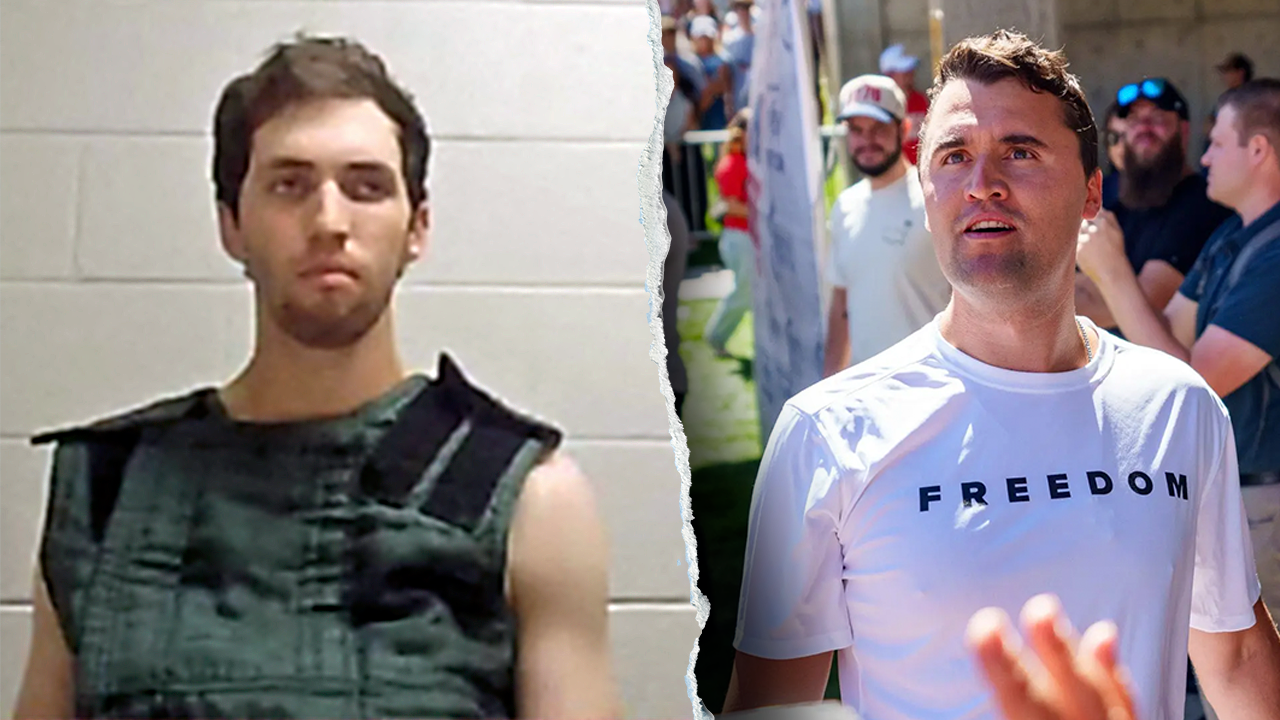
The trial that isn’t just about one man
Charlie Kirk’s death was not a normal political violence incident. It was a mass-casualty shooting at a Turning Point USA rally in front of thousands of young conservatives — and now the man accused of pulling the trigger, Tyler Robinson, is moving toward trial with the death penalty still very much in play. But what makes this case structurally different from other high-profile murders is what it does to the movement Kirk built. The courtroom in Provo has become the de facto headquarters for a political reckoning.
Judge Tony Graf’s ruling on September 1, 2026, was narrow in legal terms but enormous in political consequence. He found probable cause on all seven charges — aggravated murder, felony firearm discharge, two counts of obstruction of justice, two counts of witness tampering, and a Class A misdemeanor for committing a violent offense in the presence of a child. He also cleared the hurdle for the capital sentencing enhancement, meaning prosecutors can argue Robinson specifically targeted Kirk. That finding alone ensures the death penalty argument will dominate the case from opening statement to sentencing.
Who wins when the death penalty stays on the table
The most counterintuitive outcome of this case may be that Kirk’s death becomes the single most unifying force in American conservatism — and the death penalty is the mechanism. Not because conservatives universally support capital punishment, but because in this instance it is inextricably tied to a narrative of political martyrdom. Kirk was 31 years old. He had built Turning Point USA into an organization claiming over a million young members. His “American Comeback Tour” was designed to recruit and energize a generation that felt politically homeless.
Jeff Neiman, the attorney representing Kirk’s family, made this clear in court. “Charlie devoted his life to building a community of over a million young people rooted in faith and freedom,” Neiman told the judge. “He had hard conversations others were too afraid to have.” Then he turned directly to the defendant. “Firing a bullet into a crowd and assassinating him — that is hate.”
The word choice matters. Neiman did not say “murder.” He said “assassination.” That framing is not accidental. It transforms a criminal trial into a political statement about the nature of the act itself. And once that frame takes hold, it reshapes how every conservative institution in America will respond.
The family’s demand for speed is a political strategy
Perhaps the most strategically significant moment in Tuesday’s hearing was not the judge’s ruling but Neiman’s demand that Graf set a trial date immediately. “The United States Constitution guarantees criminal defendants many rights,” Neiman told the court. “The right to delay is not among them.”
This was directed squarely at defense attorney Richard Novak, whose public comments about Kirk drew Neiman’s rebuke. The defense has signaled it wants to slow the process — and in doing so, it risks making the trial itself a casualty of its own tactics. Every month of delay is a month where Robinson’s case generates headlines without resolution, keeping Kirk’s image alive in the public consciousness while also creating frustration that could fracture the movement’s enthusiasm.
The Kirk family’s statement after the hearing was equally calculated. They called the ruling an “important step” in their pursuit of justice but also reminded the public that Kirk’s children “will grow up without their father.” The emotional weight is real. The political messaging is precise.
What happens to Turning Point USA
The organization Kirk founded is now in an existential moment that has nothing to do with policy. TPUSA’s entire brand was built around Kirk’s personality — his media presence, his debate performances, his ability to draw young conservatives into rooms where they felt seen. With him gone, the question is whether the organization can survive as a personality-dependent movement or whether it must reinvent itself as something institutional.
The trial is the perfect storm for testing that question. If the death penalty proceeds to verdict and execution, Kirk becomes a martyr and the organization gains a powerful emotional anchor. If Robinson receives life without parole instead, the movement loses something — not just legally, but symbolically. The death penalty in this case is not primarily a legal issue. It is a narrative one. And narratives are the currency of TPUSA’s entire operation.
The cultural flashpoint ahead of 2028
Here is what English-language readers outside the United States rarely grasp about American political culture: assassination trials do not stay in the courtroom. They move into the general culture, shaping how movements see themselves and how opponents see them. The death penalty dimension of this case guarantees that it will not be contained.
Conservative media has already framed Robinson as an assassin, not a murderer. That distinction is the difference between a criminal justice story and a political story. When the trial begins — likely sometime after the October 23 status conference — it will not be covered as another capital case. It will be covered as the trial that defines what conservatism means in the post-Kirk era.
The witness tampering and obstruction charges add another layer. If prosecutors can prove Robinson attempted to influence witnesses, it suggests premeditation beyond the shooting itself — which strengthens the death penalty case and further cements the assassination narrative. If the defense can create doubt on those counts, it opens room for Robinson to be portrayed as a lone actor rather than part of a broader conspiracy, which would weaken the martyrdom framework.
The gamble on cameras
Graf’s decision to keep cameras in the courtroom despite defense objections is a small ruling with outsized consequences. Robinson’s attorneys cited intense publicity and online marketplace gambling tied to the case outcome as reasons for exclusion. The judge denied the motion. What this means practically is that every emotional beat of this trial — Kirk’s widow in the courtroom, Robinson’s reaction to testimony, the family’s statements — will be available for consumption in real time.
That transforms the trial from a legal proceeding into a cultural event. It also means the defense’s delay strategy faces an additional obstacle: every public appearance in front of cameras raises the political cost of stalling. Graf himself noted that the standard at a preliminary hearing is low — probable cause, not proof beyond a reasonable doubt. The fact that he found probable cause on the victim-targeting allegation means the death penalty argument has already cleared its first major hurdle.
What happens next
Robinson is due back in court October 23 for a status conference. A trial date could be set then. Whatever the timeline, the structural implications are already visible: the conservative movement is entering a period where its most prominent figure was killed by political violence, and the legal process surrounding that killing will shape the movement’s identity for years.
The death penalty is not just a sentence. It is a symbol. And symbols, in American politics, outlast statutes.