Huang Met a Rival’s CEO. Now Nvidia Might Buy It.
Jensen Huang's meeting with Revelation's Park Sung-hyun goes beyond a friendly chat — Bloomberg reports acquisition talks are underway. If Nvidia buys the Korean NPU maker, it neutralizes a rival and gains a foothold in Korea's sovereign-backed AI semiconductor push.
The Meeting Nobody Saw Coming
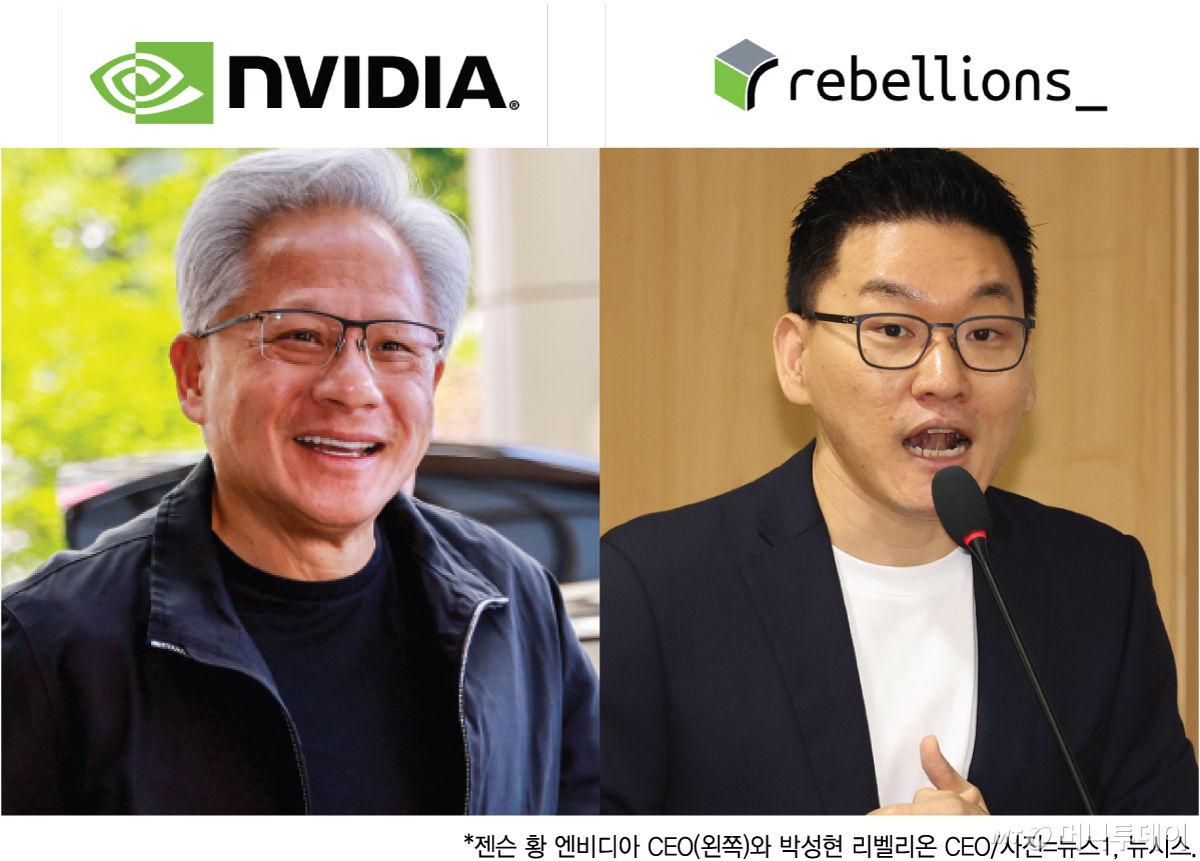
Jensen Huang visited Santa Clara and sat across from a man who publicly declared his company would be the #1 chipmaker outside Nvidia. That man is Park Sung-hyun, CEO of Revelation, a Seoul-based NPU designer that absorbed SAPon Korea — the former AI semiconductor arm of SK Telecom — and emerged with deep ties to three of Korea’s largest conglomerates.
Bloomberg reported Wednesday that the discussions went beyond technology cooperation and investment. Acquisition was on the table. Revelation confirmed the meeting took place but said it does not know what was discussed. That gap between what was confirmed and what was whispered is where the story lives.
Why Revelation Matters
Founded in 2020, Revelation builds neural processing units for data centers. Its claim to existence was always framed in opposition to Nvidia: Park said last January that AI training would remain locked to Nvidia chips for the foreseeable future, but that Revelation aimed to lead the non-Nvidia camp. The company then merged with SAPon Korea, inheriting not just technical talent but board seats held by KT, SK Telecom, and SK Hynix America — all classified in Revelation’s auditor report as entities with “significant influence.”
The financials are staggering for a company still private. In March, Revelation closed a 640 billion won ($430 million) pre-IPO at a 3.4 trillion won valuation. It was selected as the first direct investment target of the National Growth Fund, pulling in 3 trillion won in policy capital from the Advanced Strategic Industry Fund and Korea Development Bank alone. This is not a startup that found a backer. This is a company the Korean state decided was strategic infrastructure.
The Meta Precedent
Revelation’s potential acquirer is not the first global big tech firm to look at Korean NPU designers. Meta offered $800 million to acquire Furiobot AI earlier this year. Furiobot rejected it and chose to keep building its own chips. That decision signals how fiercely Korean semiconductor teams guard independence — and why an Nvidia offer, if it comes, would face a different calculus than Meta’s did.
Furiobot’s rejection was about sovereignty. Revelation’s situation is more complicated because its ownership structure already entangles it with Samsung, SK, and state funds. An Nvidia acquisition would not just buy a company. It would absorb a node in Korea’s national AI strategy.
Huang’s Korean Circuit
This meeting does not exist in isolation. Huang has been systematically deepening ties with Korea’s industrial leadership. Last month he met with SK Group chairman Choi Tae-won, Samsung Electronics chairman Lee Jae-yong, Hyundai Motor Group chairman Chung Eui-sung, and Naver board chairman Lee Hae-jin. On August 13, he signed an MOU with LG Group chairman Koo Kwon-mo covering humanoid robots, AI factories, and mobility.
Nvidia also announced a $1 billion strategic investment in Naver. The pattern is clear: Huang is not just selling chips to Korean companies. He is embedding Nvidia into the architecture of Korea’s AI economy — from cloud to robotics to consumer internet.
What Changes If Nvidia Buys Revelation
A transaction would give Nvidia several things it currently lacks inside Korea’s protected ecosystem. First, access to the 3 trillion won in policy capital flowing through the National Growth Fund — capital that exists specifically to build domestic semiconductor independence. Second, control of a NPU stack that is already running SK Telecom’s A.X K1 foundation model for inference workloads. Third, a pre-positioned foothold inside a supply chain that Korea is actively trying to decouple from foreign dependence.
For Korea, the trade-off is sharp. The government poured strategic funds into a company whose stated mission was to reduce dependence on Nvidia. Acquiring it would signal that even Korea’s sovereignty drive acknowledges the gravity of Nvidia’s dominance — and that integration, not decoupling, may be the more viable path.
For Park and his team, the question is whether their ambition to build a non-Nvidia camp was always meant to end with a sale, or whether that language was always a negotiating position. Either way, the fact that Huang sat across from him in Santa Clara suggests Revelation’s independence is now negotiable — and possibly nearing its end.
Who Wins, Who Loses
Nvidia wins by absorbing a competitor before anyone else does and locking in Korea’s AI semiconductor pipeline. Korean conglomerates with board seats at Revelation lose leverage — their investment thesis shifts from building an alternative to optimizing within Nvidia’s orbit. Korea’s policy apparatus faces an awkward contradiction: a state-backed champion of chip independence becomes a division of the very company it was designed to counter.
Furiobot’s decision to say no to Meta looks very different from the other side of this transaction. One company kept its chips. The other might keep its codebase and lose its company.
What Happens Next
Nothing is certain. Bloomberg described the talks as early-stage. Revelation declined to comment on substance. But the meeting happened, and in this industry, a meeting between a dominant chipmaker and a self-declared rival is never just a meeting. It is a probe.
If a deal emerges, it will likely be structured around Nvidia’s existing Korea investments — the Naver capital commitment, the LG MOU, the Samsung and SK relationships — with Revelation folded into the embodied AI and inference stack rather than competing against it. If no deal emerges, the relationship will reframe: Nvidia again, Park again, the same contest under different names.
Either outcome redraws the map of where AI chips are designed, by whom, and for which sovereign interests.