Human Neurons in Mice: The Stanford Experiment That Changes Everything
Stanford scientists grew human brain cells inside mouse embryos, creating hybrid rodents with millions of functioning human neurons. The breakthrough opens new doors for studying neurocognitive disorders — and ignites a fierce ethical debate about consciousness itself.
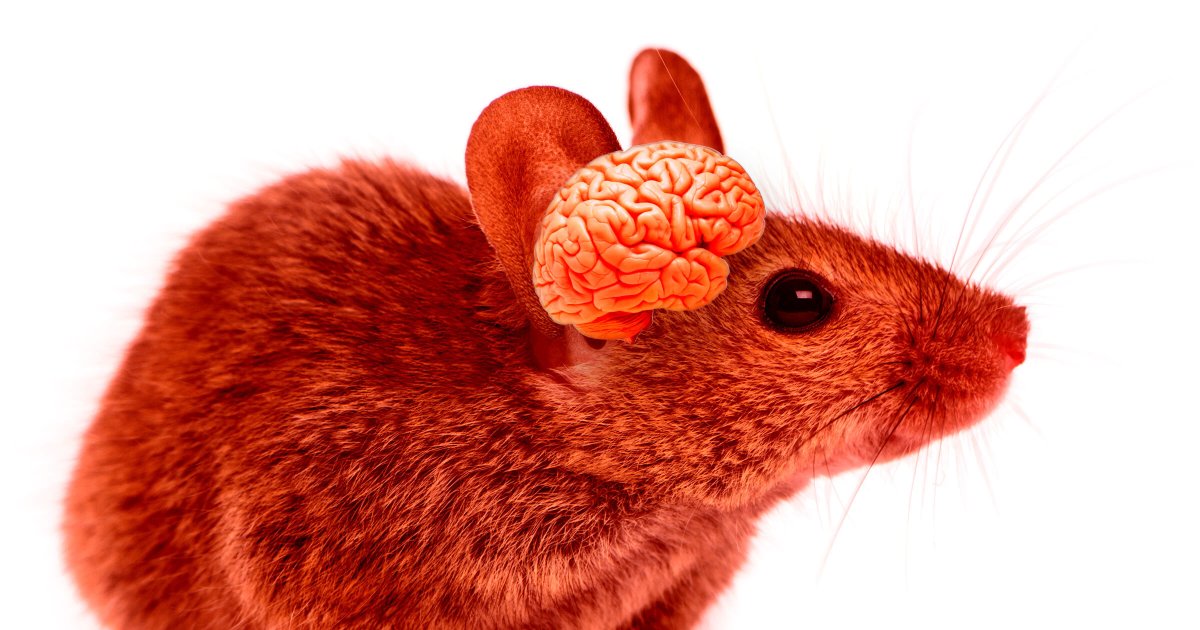
The Gap in the Mouse Brain
A mouse without a cortex is not much of a mouse. The cortex — that crumpled outer layer responsible for language, reasoning, and everything we’d recognize as distinctly human cognition — drives complex behaviors that rodents simply cannot perform without it.
So when Stanford researchers deliberately carved out the cortex from mouse embryos and blocked those animals from regenerating the tissue, they created a vacuum. Not just anatomical, but functional. And into that void, they placed something entirely different: human cortical neurons grown from reprogrammed skin cells.
The result, published in Nature, is the most dramatic demonstration yet that human brain cells can integrate into a non-human host nervous system. Hundreds of implanted neurons multiplied to several million. They formed connections with mouse circuits. The animals behaved largely normally despite having brains that were nearly half human by volume.
That last detail deserves emphasis. This is not a superficial graft. The human tissue did not sit on the surface like a foreign body. It became part of the wiring.
Why This Matters for Brain Disorders
For twenty years, the field has chased a single goal: building models of the human brain outside the human body. Organoids — lab-grown clusters of neural tissue — got us closer, but they remain suspended in dishes, disconnected from the circulatory and developmental systems that shape how brains actually form and function.
Xenocortication removes that limitation. The mouse embryo provides the architecture, the blood supply, the timing. Human neurons receive developmental signals that organoids in a petri dish never encounter. They mature in a context that resembles real brain development more closely than any alternative.
The study’s authors showed what this means in practice with two striking examples.
First, when they deprived newborn hybrid mice of oxygen — a common cause of brain injury in human infants — the animals exhibited signs of damage that normal mouse pups rarely show. Human babies suffer hypoxic-ischemic encephalopathy regularly; mice do not. The hybrid mice now do, because the human neurons within them responded to oxygen deprivation the way human neurons would in a human infant. This is a direct model of a devastating disorder that has been nearly impossible to study with sufficient fidelity.
Second, the researchers found von Economo neurons in the human portions of the mice brains. These are rare, spindle-shaped cells found only in highly social species — humans, great apes, whales, elephants. They are among the first neurons to die in frontotemporal dementia, a relatively rare but aggressive form of Alzheimer’s-like disease. No organoid model had ever contained them. Their presence in the hybrid mice opens a path to studying how these cells contribute to a disease that claims tens of thousands of lives annually and currently has no effective treatment.
Sergiu Pașca, the senior author and Stanford professor of psychiatry, put it plainly to NPR: the work won’t replace existing models, but it provides access to aspects of human brain function that were previously unreachable.
The Step Change
Previous attempts at chimeric research — mixing human and animal cells — produced limited results. Human cells tended to be outcompeted, failed to integrate meaningfully, or remained trapped in undifferentiated states. The Stanford approach sidestepped these problems through a simple logic: create space first, then fill it.
By genetically eliminating the mouse cortex and blocking regeneration, the researchers removed the competition. Human neurons did not have to fight an established rodent cortical circuit for territory. They inherited it.
The multiplication was extraordinary. Starting from a few hundred cells, the human population reached millions. That scale matters. A handful of integrated neurons might form a few connections. Millions can form networks — the kind of structural complexity required to model disease processes that emerge at the systems level.
The neurons themselves were not fully mature. They resembled third-trimester fetal cortex, which is precisely what you’d expect given the developmental timeline of the mouse embryo host. But that immaturity is not a flaw — it’s a feature. Most neurodevelopmental disorders manifest during fetal or early postnatal periods. A model stuck with adult human neurons would miss those windows entirely.
The Ethics Are Catching Up
If the science is moving fast, the ethical debate is moving faster.
Nita Farahany, a professor of law and philosophy at Duke Law who studied the paper, flagged something the researchers themselves acknowledged but did not fully grapple with: the experiments were halted when the mice reached six months of age, before the human neurons could form further connections to the rest of the mouse brain.
Her concern is not that the animals are conscious now. It is that the team stopped at a point that conveniently avoids the question of whether consciousness might emerge later.
“They’re trying to stop the study before the markers of consciousness, or the fact of consciousness, might emerge,” Farahany told NPR. “But that line itself is a line that you might start to wonder about.”
The question she raises cuts deeper than this particular experiment. If human brain cells can integrate into rodent nervous systems and function as part of a working brain, at what point does the moral status of the host animal change? Not because the mouse has become human — but because parts of its brain now operate with human cellular machinery capable of processing information in ways no pure mouse brain can.
John Evans of UC San Diego, who was not involved in the study, offered a simpler framing to the New York Times: the cortex is “the part of the brain that results in our humanness.” Placing human cortical tissue into a mouse brain is not a metaphor. It is a literal partial transference of human cognitive architecture into an animal body.
The research community has no consensus on where to draw the line. Farahany’s question — whether to stop a study before an animal develops consciousness if it has the potential to do so — has no answer in current regulatory frameworks. There is no threshold test for when a hybrid brain crosses from “model” to “entity with moral interests.”
What Comes Next
The immediate implication is that xenocortication will become a standard tool for studying human-specific neurological conditions: autism spectrum disorders, schizophrenia, hypoxic-ischemic injury, frontotemporal dementia, and potentially conditions like Creutzfeldt-Jakob disease where species-specific vulnerabilities have blocked progress for decades.
The longer-term implication is less certain but more consequential. Every year these experiments continue, the human neural tissue gains more time to develop in vivo. The six-month cap is arbitrary. The scientific pressure to push beyond it will be real, because the questions that matter most — about higher cognition, about social behavior, about the neural basis of consciousness — cannot be answered in six months of mouse life.
The researchers in this study did not claim their mice exhibited anything resembling human awareness. They behaved normally for rodents. But normal mouse behavior in a partially human brain is not the same as the absence of something new. The difference may be subtle, measurable only in techniques that do not yet exist.
What is clear is that the technology has crossed a threshold. The mouse is no longer just a stand-in for human biology. It has become a scaffold for human neural development in a way that was impossible a decade ago. That changes what is possible to study, and it changes what we are obligated to consider before we study it.
The science will not stop because the ethics are unsettled. It will accelerate, and the ethics will chase it, as they always do. The question for the next phase of research is whether the chase is fast enough.