Why Hyundai and POSCO Are Building a Steel Plant in Louisiana
Hyundai Steel and POSCO are jointly breaking ground on an $5.8 billion electric-arc steel plant in Louisiana — a rare alliance between domestic rivals that signals how Korean industrial giants are reshaping their strategy around US trade barriers, EV supply chains, and the rise of direct reduced iron.
The Alliance Nobody Saw Coming
Two domestic rivals are building a steel plant together — in someone else’s country.
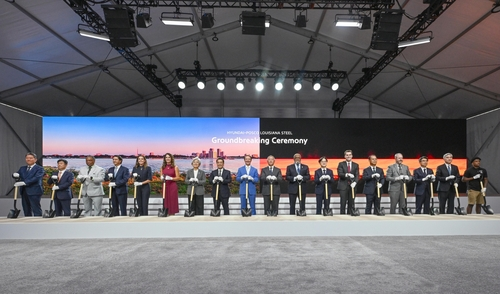
Hyundai Steel and POSCO, Korea’s number one and number two steelmakers, broke ground this week in Ascension Parish, Louisiana, on what they call HPLS: a $5.8 billion (8 trillion won) electric-arc furnace plant dedicated to automotive-grade steel. The ownership split reveals the real architecture of the deal. Hyundai Steel holds 50 percent. POSCO takes 20 percent. Hyundai Motor and Kia each contribute 15 percent. In practical terms, the Hyundai Motor Group controls 80 percent of the equity and is buying POSCO’s process technology and operational know-how.
This is not a minor partnership announcement. It is a structural pivot — one that acknowledges the American market can no longer be served from Korea, and that the two biggest Korean steelmakers would rather compete side by side in Louisiana than separately under US tariff pressure.
Why Louisiana, Why Now
The short answer is tariffs. The US government imposed a 25 percent tariff on imported steel last year and then doubled it to 50 percent. For a Korean steelmaker shipping auto-grade coil to Alabama or Georgia, that math does not work. Local production bypasses the barrier entirely.
But the longer answer matters more. The plant sits roughly 30 miles northwest of Baton Rouge, in a corridor that already hosts Hyundai’s Metaplant America assembly operation and is close to Kia’s Georgia plant. Supplying steel from a site within driving distance of both factories cuts logistics costs, reduces lead times, and — perhaps most importantly — lets Hyundai Motor Group trace its raw material back to a single origin for customers who increasingly demand it.
Construction starts in the fourth quarter of this year. First production is targeted for 2029. That timeline leaves eighteen months for permitting, foundational work, and equipment procurement — aggressive but achievable if the federal and state approvals move cleanly.
The Technology Bet
HPLS will be the first integrated electric-arc furnace plant in the US focused on automotive steel. The process melts steel scrap and direct-reduced iron in an arc furnace rather than running a blast furnace. Hyundai Steel says this cuts carbon emissions by roughly 70 percent compared with conventional basic oxygen steelmaking. The company notes that this figure is a target, not a verified result — no EAF auto-steel plant of this scale has operated at full output in the US before, so the real number will emerge only after commissioning.
That qualification matters. Producing consistent, high-strength automotive sheet in an EAF requires tight control over the input mix — particularly the ratio of scrap to direct-reduced iron. Scrap alone introduces trace elements that degrade surface quality and mechanical consistency. DRI is cleaner but expensive and energy-intensive to produce. The economics of running this plant will depend heavily on whether Louisiana can source DRI competitively, or whether the facility imports it.
POSCO is bringing its hydrogen-reduction steelmaking technology to the table, which could lower the carbon intensity of the DRI input. But that technology is still scaling in Korea, and transplanting it to a greenfield site in the US adds another layer of execution risk.
Who Wins, Who Loses
Hyundai Motor Group wins the most obvious play: vertical integration from scrap to stamped body-in-white at its Alabama plant. That supply chain resilience is valuable on its own, and it becomes strategically priceless if US tariffs expand to cover other inputs or if global scrap markets tighten further.
POSCO wins by staying relevant inside the Hyundai Motor Group ecosystem. Without this arrangement, POSCO’s automotive steel exports to North America would face the same 50 percent tariff wall. By partnering, it locks in a revenue stream and gains access to a market it otherwise could not serve profitably.
American automakers who are not part of the Hyundai chain — Ford, GM, Stellantis — may find themselves buying from the same facility on less favorable terms. HPLS plans to sell outside the Hyundai Motor Group as well, but the equity structure gives its parent companies first right of refusal on capacity allocation. In a tight market, that advantage is real.
Korean domestic steel production bears the greatest downside risk. If HPLS proves economically viable, it signals that the Hyundai Motor Group is willing to shift capacity offshore rather than maintain expensive domestic operations. The broader Korean steel industry could face margin compression at home as the group prioritizes its American supply chain.
The Bigger Picture
This plant is a centerpiece of Hyundai Motor Group’s $26 billion US investment plan through 2028. It also aligns with growing demand for steel in two unexpected sectors: EV battery enclosures and AI data center infrastructure. Both require high-strength, formable sheet — exactly the product range HPLS is designed to produce.
The political timing is noteworthy. Korean ministers and the US ambassador attended the groundbreaking, as did the Louisiana governor. The event was staged as a bilateral industrial cooperation milestone, not merely a corporate ceremony. That framing matters because US industrial policy now treats domestic steel capacity as a national security asset, not just a commercial one.
The risk that keeps this plant from being a straightforward success story is execution. EAF auto-steel production at this scale has never been attempted in the US. The carbon-reduction claims remain unproven. The DRI supply chain is untested on this side of the Atlantic. And the plant will not produce revenue until 2029 — by which time tariff policy, scrap prices, and global auto demand could look very different.
What is clear is that the era of supplying America from Korean mills is over. Hyundai and POSCO have chosen to build their way around the wall instead of waiting for it to come down.