Why Hyundai and POSCO Are Building a $5.8B Steel Plant in Louisiana
Two Korean steel giants are betting $5.8 billion on a low-carbon electric arc furnace plant in Louisiana, transforming from exporters to onshore producers as US tariffs and green-metal competition reshape the global steel trade.
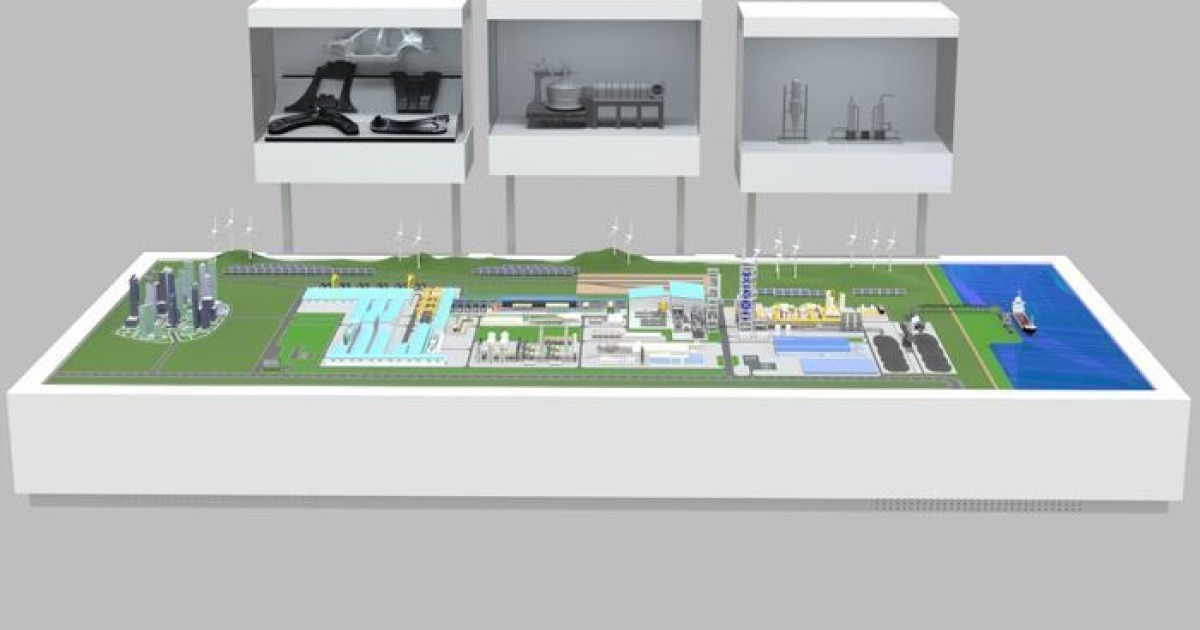
The quiet pivot no one in Seoul is calling a retreat
Hyundai Steel and POSCO are pouring $5.8 billion into an electric arc furnace steel plant in Donaldsonville, Louisiana — a move that looks like expansion on paper but functions as something else entirely: a structural exit from the old model of making steel in Korea and shipping it to America.
The cornerstone was laid on September 4 by Kim Jeong-gwan, South Korea’s minister of trade, industry and energy, who met separately with Louisiana Governor Jeff Landry to press for tariff relief on factory equipment and materials that the US struggles to produce domestically. His framing was careful — “connecting each other’s strengths” — which is diplomatic language for a simple fact: the era of exporting Korean-made steel into the American market is over, and the two companies are adapting before the door slams shut.
The plant will produce 2.7 million tons annually, mostly automotive-grade steel sheet for Hyundai Motor and Kia’s US factories in Alabama and Georgia, with the capacity to serve other North American industrial buyers. It is the centerpiece of Hyundai Motor Group’s broader $26 billion US investment plan announced at the White House last year. In other words, this is not a side bet. It is the central logistics play in a company that has committed nearly three times the steel plant’s cost to deepen its American footprint.
Why Louisiana, and why now
Donaldsonville sits on the Mississippi River, downstream from Baton Rouge, in a state that is already the US’s natural gas capital. That geography is the whole point. The plant will use electric arc furnaces instead of blast furnaces, melting scrap steel with electricity generated largely from the cheap, abundant natural gas of the US South. The design cuts carbon emissions by roughly 70 percent compared with a conventional Korean integrated mill. If clean hydrogen costs fall further — and the companies say they are actively preparing that transition — the fossil fuel link shrinks even more.
This is not environmentalism for its own sake. It is a calculation about what American buyers will demand, and what American policy will reward. The United States is already a net steel importer, consuming 90.87 million tons annually against 81.9 million tons of domestic production — a gap of nearly 9 million tons in 2025 that only widened as tariffs reshaped trade flows rather than closing it. That shortfall is the space HPLS, as the project is called, intends to fill.
Who wins, who loses
The immediate winners are clear. Hyundai Motor and Kia gain a stable, tariff-free supply of automotive steel at their US plants, removing a long-running vulnerability. For years, those factories have relied on rolled sheet shipped from Korea or produced at POSCO’s own US affiliate in Alabama, both of which sit exposed to tariff volatility and logistics friction. A dedicated EAF plant in Louisiana eliminates both risks.
Louisiana wins too, in a state that has been aggressively courted by foreign manufacturers as part of a broader energy-industry realignment. The plant will create hundreds of construction jobs and roughly 400 permanent positions, according to industry estimates, and will anchor a supply chain that stretches from local scrap yards to automotive assembly lines across the South.
The losers are harder to name but real nonetheless. Korean steelworkers at the existing integrated mills in Pohang and Gwangyang face slower growth trajectories as the group shifts capital and strategic priority overseas. The loss is not a closure — yet — but a signal about where the next generation of investment is flowing. Korean steel exporters who do not have a US production base are in a worse position, particularly smaller players who cannot absorb the Section 232 tariff regime that makes direct shipment economically unviable.
American blast furnace operators, already squeezed by import pressure, may see a small competitive edge from tariff protection, but they also face a new low-carbon competitor using cheap southern gas — a different cost structure that tariffs alone cannot neutralize.
The carbon angle is not symbolism
The 70 percent emissions cut is not a marketing number. It is the difference between selling steel into an American market that is moving toward embodied-carbon requirements and being locked out of it. The EU’s Carbon Border Adjustment Mechanism is already shaping procurement decisions for multinationals operating in Europe; US automakers sourcing for both markets are quietly building similar preferences into their supply contracts. A Korean-made ton of steel from a coal-fired blast furnace will carry a carbon liability that a Louisiana-made ton from an EAF will not.
The hydrogen pathway — swapping natural gas for green hydrogen in the reduction step — is still a future option, not a current reality. But naming it in the project design matters. It tells American regulators, buyers, and competitors that the companies are positioning themselves along the trajectory of decarbonization, not just the present.
What happens next
The Louisiana plant is not expected to begin production until after 2027, which means the investment will test the durability of current US trade policy before it delivers a single ton. If the Section 232 tariffs tighten further, or if new rules target steel made by foreign parents but produced domestically, the calculus shifts again. If they ease, the project becomes even more strategically valuable as a tariff-shielded supply source.
Other Korean manufacturers are watching. The HPLS model — export-capable parent companies partnering to build low-carbon, tariff-resilient capacity on American soil — could become a blueprint for sectors beyond steel, particularly automotive and battery materials, where supply chain sovereignty is already a Washington priority.
Kim Jeong-gwan’s request to Governor Landry for tariff relief on plant equipment is a small but telling detail. It reveals that even a project designed to bypass trade barriers still runs into them at the construction stage — a reminder that protectionism has a way of biting the hands that try to accommodate it.
The real story here is not that two Korean steel companies are building a plant in the American South. It is that they are no longer trying to sell American buyers steel made at home. They are trying to make sure that, when the next round of trade rules arrives, the steel they need is already here.