The 2026 Nobel Prize Goes to the Man Who Turned Ice Into a Telescope
Francis Halzen bet his career on Antarctic ice as a neutrino detector. The 2026 Nobel Prize vindicates that radical idea—and ushers in a new era where ghost particles reveal the most violent corners of the cosmos.
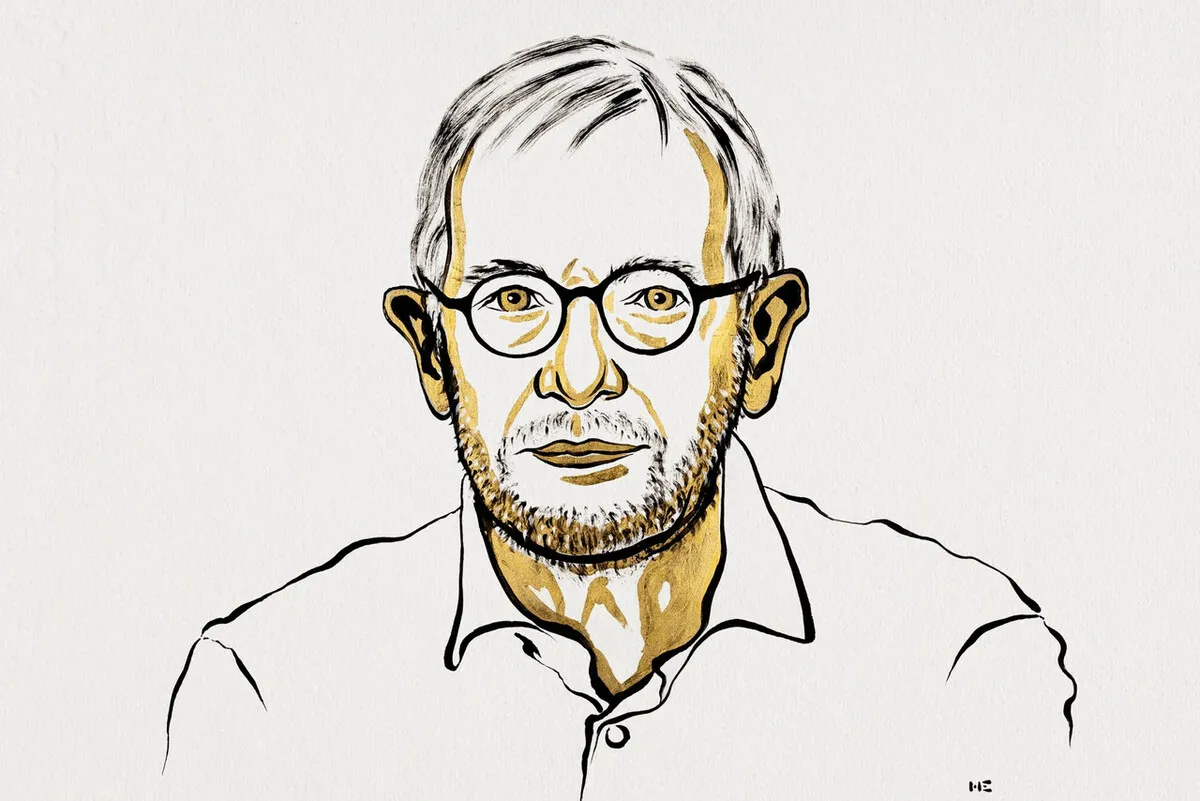
The Bet That Took Half a Century to Pay Off
Francis Halzen once proposed something that most of his colleagues found ridiculous: dig a cubic kilometer of holes into the Antarctic ice sheet, drop light sensors into them, and use the frozen continent as a neutrino detector.
It sounded like madness. Neutrinos rarely interact with anything. Chasing them through solid ice instead of conventional water tanks seemed like an expensive way to detect virtually nothing. But Halzen stuck with the idea through decades of skepticism, funding rejections, and the sheer logistical nightmare of building in Antarctica. The Nobel Committee rewarded exactly that stubbornness, awarding him the 2026 Nobel Prize in Physics for his decisive contributions to the IceCube Neutrino Observatory and the discovery of high-energy astrophysical neutrinos.
Halzen is a Belgian-born theorist turned builder, a rare combination that explains both his originality and his endurance. While others designed experiments around existing infrastructure, he looked at a blank continent and saw a detector. The 2011 completion of IceCube at the South Pole converted a cubic kilometer of naturally occurring glacial ice into the world’s largest neutrino observatory. It was, in effect, an alchemist’s dream made real: turning white ice into a window on the high-energy universe.
Why Ice? Why Now?
The choice of Antarctic ice over water tanks was not a detail. It was the entire point. Water-based detectors like Super-Kamiokande in Japan were brilliant instruments, but they were limited in size, exposed to background radiation, and constrained by geography. A neutrino detector the size of a building can catch something; one the size of a mountain range can see far beyond it.
Antarctic ice offered three advantages water tanks could not match. First, purity: the ice is among the clearest natural material on Earth, absorbing scattered light minimally. Second, volume: IceCube fills a cubic kilometer of ice, roughly ten times the detection volume of any previous neutrino instrument. Third, silence: the glacier sits on bedrock, geologically stable, insulated from the seismic noise that plagues other sites. The ice does not quiver. It waits.
Neutrinos themselves are the perfect messengers for this kind of work. They carry no electric charge, have near-zero mass, and pass through ordinary matter almost entirely unimpeded. When one occasionally collides with an atomic nucleus inside the ice, it produces a flash of blue light called Cherenkov radiation. IceCube’s optical sensors, deployed along 86 strings stretched nearly 2.5 kilometers deep, catch that flash and reconstruct the neutrino’s energy and direction.
The result is a telescope that does not collect light but collects ghosts—particles that have traveled directly from their sources without being deflected by magnetic fields or absorbed by intervening matter. For the first time, astronomers could point back along a neutrino’s path and identify what created it.
From Possibility to Practice
Previous neutrino Nobel laureates opened doors. Raymond Davis and Masatoshi Koshiba won in 2002 for detecting neutrinos from the Sun and a supernova, proving that neutrino astronomy was possible. Takaaki Kajita and Arthur McDonald won in 2015 for discovering that neutrinos have mass, solving the solar neutrino problem. None of those prizes, however, came for observing the high-energy neutrinos that IceCube now detects.
High-energy neutrinos are different from solar or atmospheric ones. They originate in the most violent environments in the cosmos—active galactic nuclei, gamma-ray bursts, the accretion disks around supermassive black holes. They carry energies millions of times greater than those produced in particle accelerators on Earth. Detecting them required an instrument of extraordinary scale, which is precisely why IceCube was necessary and why Halzen’s bet was so consequential.
Korea’s participation in the project underscores the global dimension of this work. Researchers from Chung-Ang University and Sungkyunkwan University are among the 450 scientists across 14 countries and 58 institutions in the IceCube collaboration. South Korea did not build the detector, but it contributes analysis and theory work that shapes how the data are interpreted.
Senior researcher Kang Sung-ju, formerly of the Korea Astronomy and Space Science Institute, framed the shift precisely. Earlier neutrino work proved that neutrinos could be used to study the cosmos. IceCube proved that they could be used to study the extreme cosmos. That distinction matters because it changes the question from whether neutrino astronomy is viable to what it can reveal.
The Dark Frontier
The real reward for Halzen’s decades of work is not the medal or the ceremony in Stockholm. It is the fact that IceCube has already begun answering questions that optical and radio telescopes cannot. Neutrinos escape dense environments that trap light. They travel in straight lines across billions of light-years. They carry information about the mechanisms that accelerate cosmic rays to energies far beyond what humans can reproduce.
The implications extend beyond high-energy astrophysics. Neutrino detection constrains models of dark matter decay and annihilation, because some dark matter candidates would produce neutrino signatures in regions like the galactic center. They test the limits of known particle physics at energies unreachable in laboratories. They provide a direct probe of environments where gravity, electromagnetism, and nuclear forces combine at extremes.
The Nobel Committee explicitly noted that IceCube’s ongoing neutrino interactions are providing knowledge about the environments where high-energy neutrinos are produced and pointing toward previously unknown cosmic phenomena. That is intentionally vague language, which is appropriate: the field is still young. But the direction is unmistakable.
A New Tool for a New Era
What Halzen won in 2026 is not simply recognition for one experiment. It is recognition for a method—using the Earth itself as a detector medium, leveraging geology and climate as tools rather than obstacles. The approach has parallels in gravitational-wave astronomy, where massive instruments detect ripples in spacetime, and in multi-messenger astronomy, where light, gravitational waves, and neutrinos are combined to study the same events from different angles.
IceCube was the first large-scale neutrino observatory. Others are being built or planned—KM3NeT in the Mediterranean Sea, P-ONE in Lake Baikal, future projects in the ocean basins. Each builds on the principle Halzen proved viable: that nature provides the detector if you have the patience to find it.
The 2026 prize arrives 37 years after Georges Charpak’s sole Nobel win in 1992, a rarity in an era where shared prizes are increasingly common. It also marks only the fourth time neutrinos feature in a Nobel citation, and the first for high-energy astrophysical neutrinos. Each previous award expanded the definition of what neutrinos could tell us. This one expands the definition of where we can look.
Halzen’s story is not a simple triumph of vision over doubt. It is a record of incremental persistence—an idea tested, refined, funded, and finally proven at a scale no one expected. The ice waited. The neutrinos arrived. And the universe, long hidden in its most energetic secrets, has begun to speak in a language we are only now learning to hear.