Korea's Solid-State Bet Against Chinese Battery Dominance
EcoPro BM and Samsung SDI are deepening their partnership to dominate next-generation solid-state batteries by 2027. The move is as much about breaking China's stranglehold on the global EV supply chain as it is about winning the battery race.
The 2027 deadline isn’t just a product roadmap. It’s a geopolitical signal.
When Samsung SDI and EcoPro BM announced a deepened strategic partnership focused on sulfide-based solid-state batteries, the headlines emphasized materials development and pilot plants. What the press releases left unsaid matters more: this collaboration is an attempt to leapfrog a supply chain that China has largely locked down.
China controls roughly 60 percent of global lithium-ion battery manufacturing and an even larger share of the precursor and cathode materials that feed it. The Korean battery industry spent the last decade competing on cost and scale within that framework. Solid-state batteries offer a chance to reset the board entirely — by introducing chemistry that requires different materials, different processing, and arguably, a different geography of production.
Who builds what, and why it matters
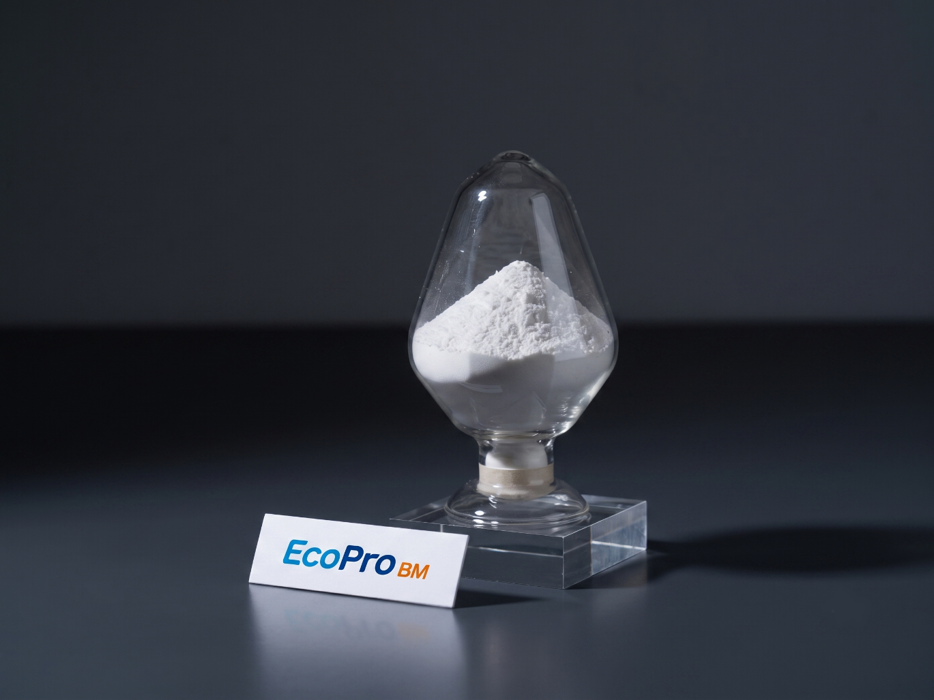
The division of labor in the EcoPro BM–Samsung SDI alliance is deliberate. Samsung SDI handles cell design and mass-production engineering. EcoPro BM owns the sulfide-based solid electrolyte powder — the single most critical and hardest-to-make component in this chemistry. That’s not a coincidence. It mirrors the vertical integration strategy that Japanese firms like Toyota have pursued, but with a crucial difference: the Korean players are trying to compress the timeline.
Toyota has been talking about solid-state commercialization for over a decade. Its timeline has slipped repeatedly. Samsung SDI and EcoPro BM are aiming for 2027 — which, if achieved, would make them the first major non-Japanese producers to bring sulfide-based solid-state cells to market at scale. That timing gap is the entire bet.
The Korean government is behind this with unusual force. Seoul has designated solid-state batteries a national strategic technology and is actively coordinating between companies, universities, and research institutes. The Ministry of Trade, Industry and Energy selected EcoPro BM for its Super Supplier project, providing 20 billion won in R&D support over seven years. This isn’t passive encouragement — it’s industrial policy with teeth.
The sulfide chemistry gamble
Sulfide-based solid electrolytes conduct ions well at room temperature but are notoriously sensitive to moisture — they degrade when exposed to air, releasing hydrogen sulfide gas. That makes manufacturing far more demanding than liquid-electrolyte production. The yield challenge is real, and it’s why EcoPro BM’s existing 40-ton pilot line is significant. It’s not a demo rig; it’s operational infrastructure with demonstrated powder-control capability, which is the bottleneck material in this entire value chain.
The technical barriers are substantial. Sulfide electrolytes require precise stoichiometry control, inert-atmosphere processing, and complex purification steps. Each ton of powder demands specialized equipment and skilled operators. The 40-ton pilot line represents years of incremental learning — every batch teaches something new about moisture control, particle size distribution, and electrical conductivity optimization.
EcoPro BM’s R&D head stated that mass-production line designs are complete and readiness for groundbreaking is conditional only on customer demand signals. BMW is widely expected to be the anchor customer, with preliminary supply agreements already discussed. This early OEM engagement is unusual — most battery makers wait until cells pass automotive qualification before securing offtake commitments.
China’s countermove is already underway
The race isn’t happening in a vacuum. Chinese battery makers, particularly CATL and BYD, are investing heavily in solid-state and semi-solid-state variants. CATL has demonstrated a condensed-battery product it calls a stepping stone toward full solid-state. The difference is in execution speed and vertical control. Chinese firms have closer access to the raw-material base — sulfur, nickel, lithium — and their domestic production ecosystem can absorb the cost penalties of new chemistry faster than Korean rivals.
Beijing sees solid-state batteries as another strategic battleground. The Made in China 2025 initiative explicitly targets next-generation battery technologies. Chinese state-owned enterprises are establishing dedicated research centers for solid-state electrolytes, and the country’s sulfur reserves — critical for sulfide chemistry — give it a structural advantage. Chinese firms can import precursor materials at lower cost and integrate electrolyte production directly into existing cathode manufacturing lines.
Second-order effects ripple across industries
The implications extend far beyond battery cells. Solid-state batteries could reshape automotive design — higher energy density allows thinner battery packs, freeing interior space or enabling longer driving ranges. For consumer electronics, the technology could mean smartphones that charge in minutes rather than hours. For grid storage, solid-state cells could offer longer cycle life and improved safety compared to liquid-electrolyte alternatives.
The materials supply chain will also shift. Sulfide electrolyte demand could create new markets for high-purity sulfur — currently a petrochemical byproduct with limited value. Specialized equipment manufacturers will benefit from the new processing requirements. Meanwhile, companies focused on liquid-electrolyte production face obsolescence risk if solid-state becomes dominant.
Investment flows are already responding. The Korea Investment Corporation, the national sovereign wealth fund, has increased stakes in Korean battery material suppliers. Private equity firms are targeting solid-state research startups. Even Japanese investors, traditionally conservative, are funding Korean solid-state ventures through cross-border partnerships.
Who wins, who loses
Samsung SDI stands to gain the most directly. Its partnerships with BMW and other Western automakers give it a ready customer base hungry for next-generation cells. The company’s existing manufacturing footprint in Europe and North America positions it well for localized production — a key requirement for tariffs and trade policy compliance. EcoPro BM’s strategic position strengthens as sole-source materials supplier for sulfide electrolytes — a chokepoint that gives it leverage over competitors.
Chinese cathode and electrolyte producers face displacement risk if sulfide-based solid-state cells become the dominant architecture. The material requirements shift away from the NMC and LFP chemistries where Chinese firms currently hold cost advantages. Companies specializing in liquid-electrolyte production may need to pivot quickly or face declining margins.
Toyota and other Japanese incumbents lose ground on timing. Their earlier moves generated credibility but also set expectations that kept slipping. A Korean commercialization by 2027 would reframe the narrative around who actually delivers solid-state technology first. Japanese automakers may need to reconsider their technology strategy — licensing Korean cells or accelerating their own timelines.
What happens next
The alliance will likely announce facility construction decisions soon. EcoPro BM’s R&D head indicated that mass-production line designs are complete and readiness for groundbreaking is conditional only on customer demand signals. BMW is widely expected to be the anchor customer.
The more consequential test comes after 2027. Can the 40-ton pilot output be replicated at 10,000-ton scale while maintaining the electrolyte purity that sulfide chemistry demands? That’s where the partnership’s real differentiation will be measured — not in announcements, but in yield rates, unit economics, and the willingness of Western OEMs to lock in supply contracts ahead of Chinese alternatives.
Korea’s bet on solid-state is a bet on escaping the cost competition that China wins. The materials alliance with Samsung SDI is the infrastructure for that escape. Whether it works depends on how fast the pilot line can become a factory, and whether the world’s largest EV buyers are willing to place their next-generation bets on Korean chemistry rather than Chinese scale.
The geopolitical stakes are clear: whoever masters solid-state battery production first controls the next wave of energy storage technology. The Korean alliance is betting that speed, specialization, and Western partnerships can overcome China’s manufacturing dominance. If they succeed, the global battery landscape shifts dramatically. If they fail, Chinese firms consolidate their position with even greater force.
The 2027 deadline isn’t just ambitious — it’s existential. This is Korea’s moment to redefine its industrial destiny or cede ground permanently to competitors who have invested more, earlier, and with deeper state backing.