India's Cockroach Protests Signal Democratic Stress
The crackdown on India's youth-led Cockroach movement reveals how far the government will go to silence dissent — and why it matters beyond India's borders.
The Cockroach Canary
India’s government has spent more than twelve years consolidating power. What’s different now is who’s pushing back.
The Cockroach movement — a youth-led campaign born from outrage over leaked exam papers — has survived repeated attempts to crush it. They forced the resignation of Modi’s education minister in July. Now they’ve pivoted to something far more dangerous to the government: challenging the integrity of India’s electoral machinery.
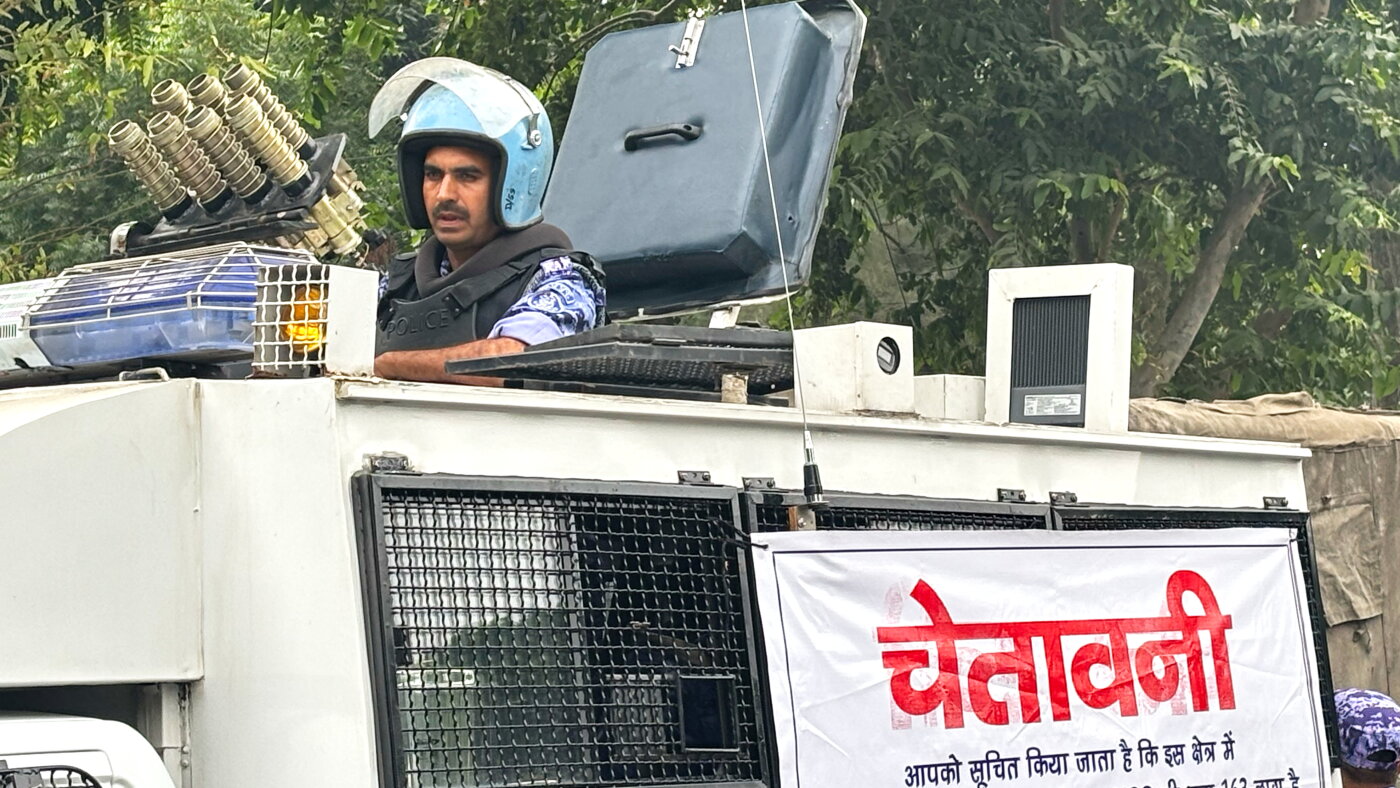
Saturday’s crackdown in New Delhi wasn’t just about preventing a protest. It was about decapitating a movement before it could gather momentum. Leaders were detained at the airport. Roads were blocked. Tear gas vehicles waited at key intersections. Internet access was restricted. The message was clear — the government views this not as dissent but as threat.
This wasn’t an isolated incident. Over the past six months, the movement has faced arrest warrants, social media takedowns, campus bans, and accusations of foreign funding — all standard tools in the government’s playbook. But each tactic has failed to stop it. The protest that began in March over exam leaks has evolved into something the government never anticipated: a sustained challenge to electoral legitimacy.
Who Wins, Who Loses
The immediate winner is the government. It stopped the protest. It detained the leaders. It sent thousands of young people home.
But the longer-term winner could be the movement itself. Each arrest, each cordon, each ban on gathering of five or more people creates a visual narrative that contradicts the government’s claim of being the world’s largest democracy. The images of students dragged from buses and bundled into police vans travel faster than any press release.
The losers are India’s institutional credibility. The Election Commission’s Special Intensive Revision has removed more than 130 million names from voter lists. The government says this eliminates duplicates and ineligible entries. The opposition says it disproportionately removes voters likely to support opposition parties. The evidence is disputed. What isn’t disputed is that the timing benefits the ruling Bharatiya Janata Party — especially with state elections coming next year in Uttar Pradesh and Gujarat.
Legal challenges are already mounting. Four state high courts have issued conflicting rulings on the revision process. The Supreme Court is expected to hear arguments in the coming months. Legal experts predict the case could reshape how India conducts its elections for decades.
Second-Order Effects
The crackdown’s impact extends beyond the immediate protest. Campus administrations across Delhi, Mumbai, and Bangalore have issued directives prohibiting student gatherings — a chilling effect on academic freedom. Several universities have suspended student council activities pending “security reviews.” Faculty members report increased self-censorship in political science and journalism departments.
Civil society organizations face their own pressure. Three NGOs working on electoral reform have had their bank accounts frozen under anti-money laundering provisions. Two human rights defenders have been denied exit permits. The government’s new rules for foreign funding of non-profits took effect last month, requiring annual audits that most small organizations cannot complete.
International partners are watching closely. The European Parliament passed a resolution last week expressing concern over India’s democratic trajectory. The United States State Department issued a statement calling for dialogue between the government and student leaders. Both responses were careful — neither triggered diplomatic consequences, but both signaled discomfort within the governing coalition.
Media coverage has shifted. Major English-language outlets continue reporting, but regional language coverage has narrowed significantly. Several broadcasters declined to air footage of the Delhi crackdown, citing “operational constraints.” Independent journalists report increased surveillance and occasional summons for questioning.
Why This Matters Beyond India
India occupies a unique position in global governance discourse. It is simultaneously a democracy and a development story that many low-income countries want to emulate. When India’s democratic credentials weaken, it sends a signal to authoritarian-leaning governments worldwide that democratic回退 is possible without catastrophic consequences.
The crackdown on youth protest is particularly significant because it targets the demographic most likely to engage with international institutions, social media, and global civil society networks. These are not isolated protesters. They are connected, informed, and increasingly organized.
Consider the broader pattern. Similar tactics have appeared in Hungary, Turkey, and Israel — governments that maintain democratic forms while steadily eroding their substance. India’s case differs in scale and visibility. With 1.4 billion people and the world’s largest electorate, any shift carries global weight. International investors monitor India’s institutional stability. Foreign policymakers track its democratic health. Academic researchers use India as a case study in authoritarian resilience.
The Cockroach movement started online. It moved to the streets. It survived the resignation of a cabinet minister. Now it’s confronting the electoral system itself. Each escalation shows a government that feels increasingly threatened by its own citizens — particularly young ones.
What Happens Next
National elections aren’t due until 2029. But state elections in Uttar Pradesh and Gujarat next year will test whether the government’s electoral manipulations actually work — or whether they backfire by discrediting the process.
If the voter list disputes remain unresolved, expect more protests. If the government continues cracking down, expect more international criticism. If the opposition rallies around the issue, expect electoral consequences.
Legal outcomes could be decisive. A Supreme Court ruling that orders the restoration of removed voters would force the government into damage control. A ruling that upholds the revision would legitimize a process many view as politically motivated. Either outcome carries implications for how India manages future elections.
The movement has shown it can adapt. It survived the exam paper scandal. It’s now attacking the electoral process. The government’s response — detention, censorship, force — suggests it doesn’t know how to handle a movement that won’t die.
That’s the real story here. Not the protest itself, but what its suppression reveals about a government that has learned to win elections but fears its own people.