Indonesia's Haze Crisis Is a Failing State, Not Just a Weather Problem
A super El Niño is making Indonesia's annual wildfire season worse again — but the real story is why Southeast Asia keeps failing to stop it. President Prabowo is revoking permits and arresting suspects, but experts say prevention has been abandoned for decades.
The Air Is the Weapon — and the State Can’t Stop It
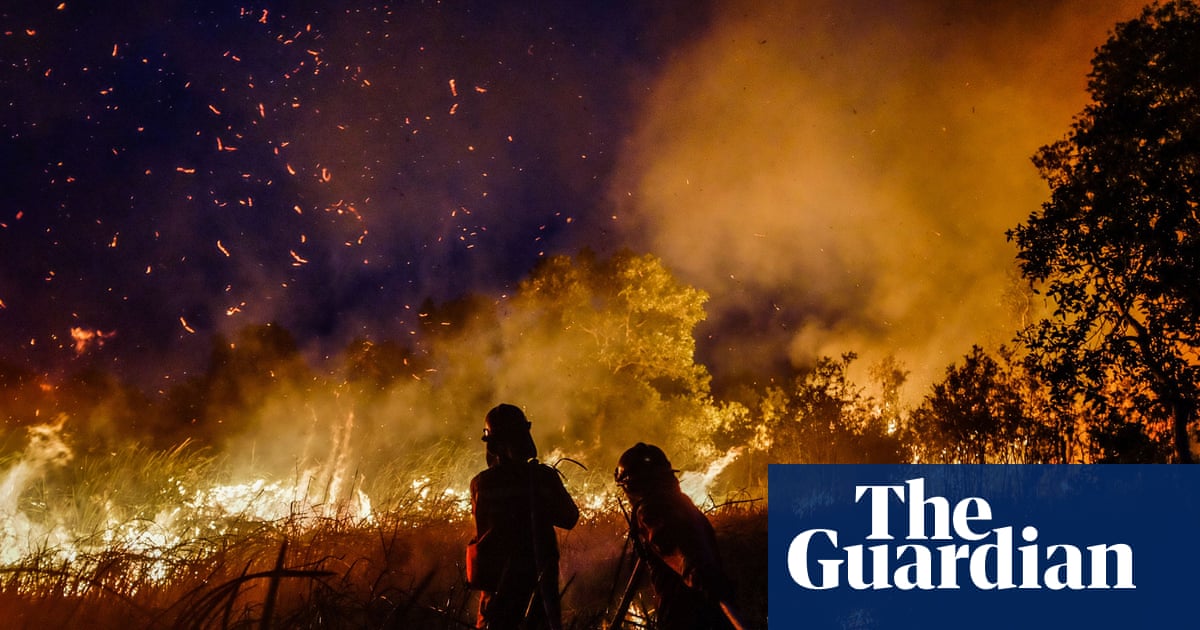
Suwadi in Indonesian Borneo describes each breath as “like smoking a cigarette.” He should know. He lives where the smoke does. What he and thousands of others in Kalimantan are breathing right now is not just a weather event. It is the visible symptom of a governance failure so deep that every El Niño cycle simply reconfirms it.
This year’s super El Niño, expected to peak in September, has turned a recurring seasonal hazard into a regional health emergency. Malaysia’s capital, Kuala Lumpur, was rated the most polluted city on earth by IQAir. Jakarta followed. Nearly 600 schools closed in Malaysian Sarawak. Singapore went on alert. In West Kalimantan alone, emergency room visits for respiratory symptoms have jumped tenfold — from roughly 500 patients a week in the first half of the year to about 5,000 since July, according to Indonesia’s health ministry.
The pattern is brutal in its familiarity. The 2015 El Niño burned more than six million acres across Indonesia. The haze that year sickened tens of millions across the region and caused an estimated 100,000 premature deaths, according to research published in The Lancet. Three years later, Indonesia’s government declared a nationwide state of emergency. Then it went quiet. Now it is happening again, with yet stronger winds pushing smoke into yet more cities, and yet another administration promising action that has not arrived.
The Permits Are the Problem
President Prabowo Subianto responded on Monday by ordering authorities to revoke business permits of corporations suspected of directing the land clearing, and police arrested 72 people in Borneo and Sumatra. The arrests are a signal, not a strategy. They target individual burners and small-scale operators while the structural engine of the crisis — the plantation economy built on drained peatland — keeps running.
Nearly 94,000 hectares burned nationwide in July alone, according to the forestry ministry. But the scar is older than this season. Indonesia’s peatlands, which normally hold water and resist fire, have been systematically drained through networks of canals dug to make them viable for pulp and oil palm plantations. The soil, once saturated, becomes fuel. Fires on degraded peatlands burn underground, smoldering through months, impossible to extinguish with helicopters and water pumps — the very tools Prabowo has promised to deploy.
Justin Sentian, a climate change professor at Universiti Malaysia Sabah, put it plainly: if authorities only act after hotspots appear, they will forever be playing catch-up. True prevention means halting the conversion of peatlands and actively restoring degraded areas. That has been the consensus among experts for over a decade. It has also been the policy that has never been implemented.
Who Wins, Who Loses
The winners are the companies that continue to operate with permits intact while the government investigates them after the smoke is already choking schools and hospitals. The Indonesian government benefits from a form of political theater — arrests, revoked permits, presidential promises — that looks like action without restructuring the incentives that drive the fires in the first place.
The losers are almost entirely ordinary people. Suwadi’s village in Kalimantan is now surrounded by fire. A traditional Sade village in Lombok was destroyed over the weekend by flames that spread through dry forest. Children continue to attend school in air that no adult would voluntarily breathe for more than a few minutes. Pregnant women, the elderly, infants — the groups most vulnerable to particulate damage — are told to keep living normally.
Regional neighbors lose too, but they lose unequally. Malaysia and Brunei are dragging the issue into ASEAN forums because their air quality depends on wind patterns they cannot control. Singapore has the infrastructure and wealth to filter its air and close its windows. Rural Kalimantan and rural Sarawak do not.
Why This Will Keep Happening
The science is settled. The economics are clear. The politics are the obstacle.
Indonesia is the world’s largest palm oil producer. The sector is embedded in national revenue, local employment, and export contracts that stretch from China to Europe to the United States. Peatland conversion is illegal under Indonesian law, but enforcement has been sporadic and often complicit. The 2019 fire season, which drew global attention and a temporary moratorium on new plantation permits, did not end the practice. It merely relocated it.
El Niño intensifies the crisis because it deepens the dry season. But the crisis existed before super El Niños. The 2015 event was severe, but not the first. The 2006 and 2010 seasons were also bad. The difference now is that the window between “bad” and “catastrophic” keeps narrowing as more peatland is drained and the climate warms.
Rains are not expected before November. That means at least two more months of open burning, smoldering peat, and school closures. The worst, experts warn, may still be ahead.
What Should Happen Next
Indonesia needs a peatland restoration mandate backed by enforcement, not just promises. The canals that turned ancient carbon sinks into fuses must be blocked. Permits for plantations on degraded peat should not just be reviewed after fires start — they should be denied before drainage begins. Corporations found responsible for starting blazes should face automatic permit suspension, not the delayed, discretionary revocations that arrive after the smoke has already crossed borders.
Regional cooperation through ASEAN is necessary but insufficient on its own. The mechanism exists. It has produced statements. It has not produced results. What is needed is binding cross-border air quality monitoring and a dispute mechanism that can impose consequences — trade, funding, diplomatic — when one member state’s fires poison another.
The world buys Indonesian palm oil. It should expect the supply chain to meet a baseline standard: no fire, no peat conversion, no impunity. That standard does not require ending the industry. It requires ending the permission to burn.
Until then, Suwadi will keep breathing smoke. The next El Niño will come. And the cycle will repeat.