Intel's Desperation Is Rewriting the Global Memory Chip Map
SK Hynix is reportedly exploring a deal to lease Intel's unfinished Ohio semiconductor campus — a move that could rescue Intel's US manufacturing ambitions while upending Korea's tech strategy. The US-China chip war just got a lot more complicated.
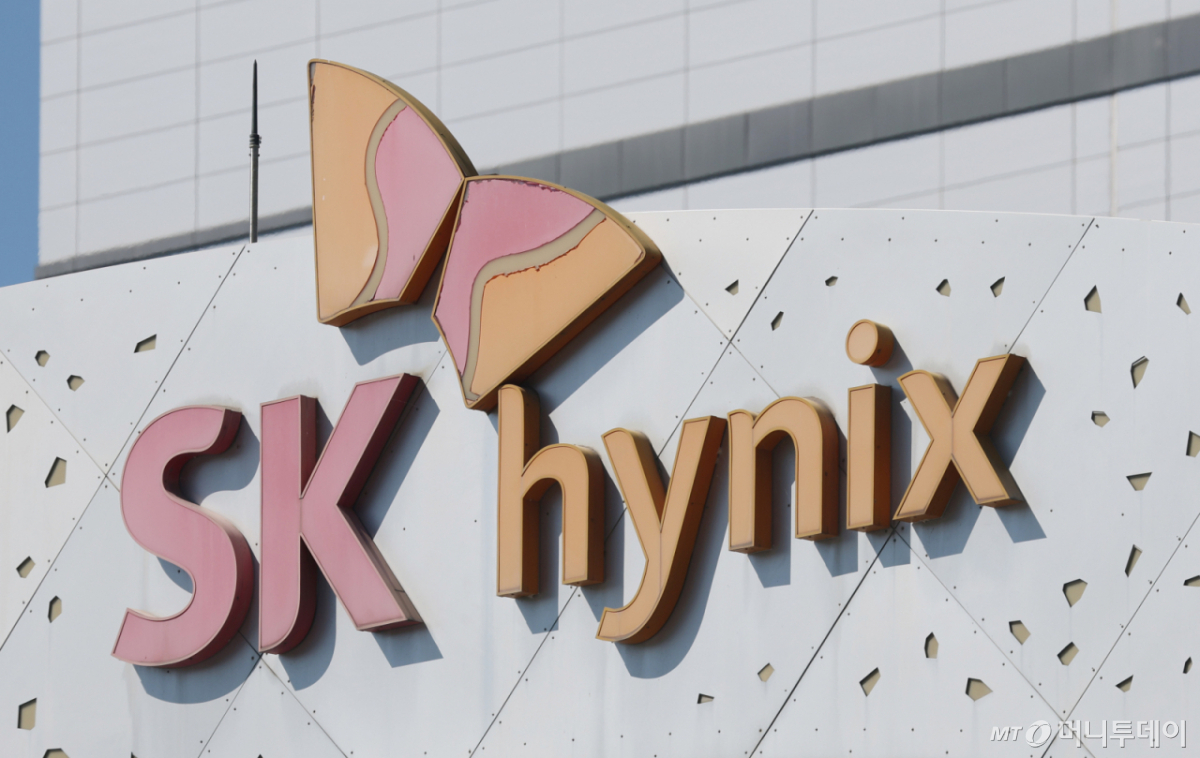
The Deal That Could Save Intel — and Upend Everything
SK Hynix is exploring a partnership with Intel to produce memory semiconductors on American soil, according to a Reuters report published September 16. The specifics are still fluid, but the outlines of what’s being discussed are staggering in their implications. SK Hynix could lease Intel’s unfinished Ohio fabrication campus. It could also form a joint venture with Intel’s cloud computing customers. If either path materializes, it would be the most consequential shift in the global chip supply chain since the CHIPS Act was passed.
For Intel, this is effectively a lifeline thrown across the Pacific. The company announced in 2022 that it would spend $100 billion building what it called the largest semiconductor complex in the world on 1,000 acres in Ohio. Three years later, the factories remain unbuilt. The company has been hemorrhaging market share in memory — its last move into that arena, the Intel High Bandwidth Memory joint venture with Samsung, never got off the ground. Meanwhile, competitors are capturing the AI boom. SK Hynix alone supplies roughly 50% of the high-bandwidth memory chips that power NVIDIA’s GPUs, the engines behind virtually every major generative AI model.
Leasing its Ohio fabs to SK Hynix would accomplish several things at once for Intel: it would generate revenue from assets that have been sitting idle, it would populate the园区 with a credible tenant that could attract other foundry customers, and it would give Intel a seat at the table in the memory business it can no longer win on its own. For SK Hynix, it means producing cutting-edge memory closer to its largest customers — the American cloud giants — while partially sidestepping the tariff threats hanging over Korean semiconductors.
The Tariff Stick
The Reuters report flags a crucial piece of pressure: US Commerce Secretary Howard Lutnick has threatened tariffs of up to 100% on semiconductor products made outside the United States by companies that haven’t built domestic capacity. That is not a subtle policy signal. It is a bludgeon.
SK Hynix Chairman Choi Tae-won has, according to the report, told journalists that he would prefer to build a new factory in America rather than lease one. But building is exponentially more expensive and slower than leasing. The economics of locating a state-of-the-art memory fab in the United States are brutal — labor costs, regulatory overhead, and the sheer difficulty of recruiting a skilled workforce in a region that has never hosted a major semiconductor cluster all work against it. SK Hynix’s home base in Korea already benefits from an ecosystem of suppliers, research institutions, and trained engineers that no American site can replicate quickly.
The tariff threat changes the calculus, though. It turns a question of cost competitiveness into a question of survival in the American market. For a company that sells a significant portion of its HBM output to American buyers — Microsoft, Google, Amazon, Meta — being locked out of that market is not an option.
Korea’s Dilemma
Here is where the story gets complicated for Seoul. Several sources told Reuters that the South Korean government could oppose the Ohio deal on grounds of technology transfer risk. HBM production involves proprietary process know-how that Korea has treated as a strategic asset — part of the reason it was added to export control lists during the China restrictions era. Allowing that know-how to flow into an American fab, even one owned by Intel, is a risk the government may not want to take.
There is also the domestic industrial policy angle. President Lee Jae-myung has publicly pushed for the development of a semiconductor cluster in Honam, the southern region of Korea that has long been overlooked in favor of the existing poles around Seoul and Pyeongtaek. Every major investment that SK Hynix directs toward the United States is an investment that is not going toward that domestic diversification strategy. And the economics work against overseas production regardless of politics — building in the US will be more expensive than building in Korea, and Korean officials know it.
These tensions are not new. They echo the debates that surrounded Samsung’s Texas fab and the ongoing friction between Korean chipmakers and US policymakers over export controls on advanced equipment destined for China. But the Ohio deal would be different because it involves leasing — not building from scratch — which means the technology transfer risk is harder to quantify and the political visibility is higher.
What Could Be Made in Ohio
n
Reuters noted that it is unclear which products SK Hynix would manufacture in the United States. The most likely candidates are the ones with the highest strategic value: HBM for AI training and inference, and possibly DRAM for data centers. NAND flash is less likely — it is a commodity business with thinner margins, and SK Hynix already has substantial NAND capacity in Korea and China.
The choice of product matters because HBM is the bottleneck of the AI arms race. NVIDIA’s Blackwell and upcoming Rubin architectures cannot ship without it. Every month of HBM supply constraint is a month of delayed AI deployment for the companies that matter most in Silicon Valley. If SK Hynix can bring HBM production online in Ohio, it would shorten the supply chain for American AI companies in a way that shipping from South Korea cannot match — and that speed advantage could be worth the premium.
Who Wins, Who Loses
For Intel, the upside is clear: a paying tenant for its Ohio campus, a foothold in memory, and a potential path back to relevance in theFoundry business. The downside is that it becomes the landlord for its most dangerous competitor in a technology segment Intel itself failed to capture — a humbling detail that may not sit well with shareholders who were promised an American TSMC.
For SK Hynix, the upside is market access. The downside is technology exposure and the precedent it sets for other Korean champions. If SK Hynix moves HBM production to Ohio, SK Telecom and Samsung will face the same pressure. The entire Korean semiconductor ecosystem risks being pulled into an American manufacturing orbit that Beijing will view with increasing suspicion.
For the United States, the deal delivers on the central promise of the CHIPS Act: bringing advanced semiconductor production closer to home. But it does so by handing the keys to a Korean company rather than building domestic capacity from scratch — a compromise that may satisfy Washington’s political needs without fully solving its strategic dependencies.
For China, the implications are sobering. Every advanced memory chip produced in Ohio is a chip that cannot be sold to Chinese AI companies under existing export controls. The deal would effectively close off a supply source that Beijing had hoped to access, reinforcing the technological decoupling that Washington has been building for years.
What Happens Next
Nothing is confirmed. Both SK Hynix and Intel have declined to comment on the specifics. The report notes that anonymous sources spoke to Reuters, which means the deal could still fall apart over technical, commercial, or political disagreements. The South Korean government’s posture alone could be decisive.
But the fact that these conversations are happening at all is significant. It signals that Intel’s foundry strategy — which has stumbled at every turn — is being rethought in real time, and that the US government’s tariff threats are moving Korean companies toward American soil faster than anyone expected. The global chip map is being redrawn, and Ohio, of all places, may be where the next chapter begins.
What English-language readers often miss is that this is not just a business deal. It is a stress test for the entire alliance architecture around semiconductors — how the United States, South Korea, and Taiwan coordinate when American industrial policy collides with Korean corporate strategy, and who gets to decide where the most important technology of the twenty-first century is made.