The 15,000-Year Shortcut: How One Seattle Startup Is Rewriting the Rules of Lunar Testing
A Seattle company claims to have compressed 15,000 years of solar wind into four hours inside a lab vacuum chamber. If validated, the technique could transform how NASA and commercial players test hardware for the Moon—slashing development timelines and reshaping the economics of lunar mining.
The Bottle-Neck Nobody Talking About
For all the excitement around returning to the Moon, there is a quiet bottleneck that rarely makes headlines: how do you prove hardware works on the lunar surface before you land it there?
The conventional answer is expensive and slow. You build a prototype. You send it to the Moon. You hope nothing breaks. For NASA’s Artemis program, that cycle repeats every mission—with increasing complexity and cost each time. For private companies, the risk is existential. One hardware failure in a resource-extraction prototype could erase years of investment.
Enter Interlune, a Seattle startup that claims to have found a shortcut. Not a metaphorical one. A physical one.
The company says it has compressed 15,000 years of solar wind exposure into four hours inside a laboratory vacuum chamber. If the technique holds up under scrutiny, it does not just make lunar testing faster. It changes the fundamental economics of how humanity builds infrastructure on the Moon.
The Scarcity Problem
To understand why this matters, you need to understand what the company is working with—and what it lacks.
The only significant repository of actual lunar material on Earth sits at Johnson Space Center in Houston. It holds roughly 300 kilograms of pristine regolith collected during the Apollo missions. That sounds like a lot. It is not, when you are trying to develop industrial-scale mining equipment.
“We’re living in this world of scarcity with the Moon,” Rob Meyerson, Interlune’s chief executive, told Ars Technica. “We have had very little operating time on the Moon. We have very little material to study. We have very little data.”
The problem goes deeper than raw volume. Most lunar simulants on the market are designed to mimic the geological properties of regolith—grain size, abrasiveness, electrostatic behavior. They are useful for testing how machinery moves across the surface. They are not useful for testing how those machines interact with the actual chemistry of lunar material, which has been constantly bombarded by solar wind for roughly 4.5 billion years.
Helium-3, the isotope that has captured the imagination of fusion researchers and energy strategists alike, is embedded in regolith grains through precisely this solar-wind implantation process. You cannot reproduce that chemistry with a generic simulant. You need material that has gone through the same ion bombardment that the real Moon has experienced.
The Four-Hour Fix
This is where Interlune’s approach diverges from convention.
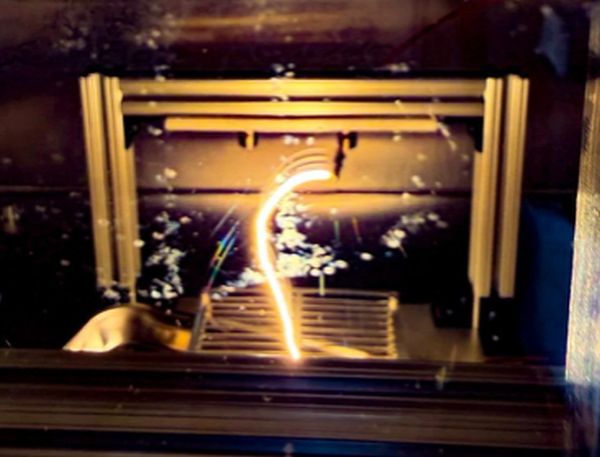
The company’s planetary science team, led by Elizabeth Frank, built a vacuum chamber at their Seattle offices and fired ionized helium into lunar regolith at accelerated rates. Four hours of operation. The equivalent of 15,000 years of natural solar wind implantation.
The validation step was critical. After implantation, the team heated the material and observed mineral decomposition through pyrolysis—the same process scientists use to study how helium-3 is released from actual Apollo-era samples. The temperatures at which helium emerged from Interlune’s simulant matched the temperatures observed in genuine lunar returns. That correlation is what separates a clever lab trick from a credible simulant.
“Similitude is a discipline,” Meyerson said. “You simulate the gravity, and in the past we’ve flown in a parabolic airplane to simulate one-sixth gravity, and you want to test in a vacuum because regolith flows differently in a vacuum than it does in an atmosphere. And now we can match the simulant as well.”
The implication is that Interlune is closing the loop on a testing pipeline that has always had a gap. Gravity can be approximated. Vacuum is achievable in a chamber. But the chemical signature of lunar material—the result of millennia of solar wind exposure—has been the missing variable. Now it is not.
What This Unlocks
Interlune plans to use the simulant first for its own hardware testing. The company is developing equipment to extract and process helium-3 from lunar regolith, and sending a prototype mission on a lunar lander later this decade. With a validated simulant, the company can stress-test that hardware in conditions that closely mirror the lunar environment without waiting for a launch window.
But the more significant play may be external. Interlune intends to sell the simulant to other lunar mining companies. The addressable market is small today but will expand rapidly if the Artemis program generates sustained human presence on the Moon—and if private ventures see commercial viability in lunar resource extraction.
Consider the timeline. Artemis missions are scheduled through at least 2030, with increasing complexity and payload mass each cycle. Every mission that lands hardware on the surface creates demand for pre-flight testing. Every commercial player in the lunar economy faces the same constraint Interlune faced: limited access to real lunar material and limited opportunities to test in authentic conditions.
A company that can provide that authenticity—on Earth, on schedule, at scale—occupies a uniquely valuable position in the supply chain.
Who Wins, Who Loses
The winners are clear. Companies that can validate hardware faster move from prototype to flight model in months rather than years. That accelerates everything downstream—mission planning, investor returns, regulatory approval, public confidence. In a sector where timelines consistently slip, speed is a competitive advantage.
NASA benefits indirectly. The agency does not need to maintain as large an internal testing apparatus if commercial suppliers can fill the gap. That frees resources for exploration rather than engineering verification.
The losers are less dramatic but real. Established testing contractors whose business models depend on lengthy, resource-intensive validation cycles face margin pressure. So do companies that built their lunar strategy around accessing Johnson Space Center’s regolith库—because the scarcity that gave those arrangements leverage is now diluted.
The Caveats
Several exist.
The most important is independent validation. Interlune’s pyrolysis results match Apollo sample data, which is encouraging. But the scientific community typically demands replication by separate laboratories before accepting a simulant as definitive. No third-party verification has been announced publicly as of this writing.
Second, simulating solar wind exposure is one variable. Lunar testing involves radiation, thermal cycling, regolith mechanics, dust electrostatics, and other factors. A better simulant does not solve all of them. Interlune acknowledges this—it still uses parabolic flights for gravity approximation and vacuum chambers for pressure simulation. The company is adding one more variable to an already complex testing stack.
Third, the economics of helium-3 extraction remain uncertain. Even if hardware works, the question of whether lunar helium-3 can compete economically with terrestrial fusion alternatives is unresolved. The simulant makes testing easier. It does not make the underlying venture profitable.
What Comes Next
Interlune plans to send a prototype mission on a lunar lander later this decade. That deployment will be the true test—not just of the hardware, but of the simulant itself. If the company’s Earth-based predictions match what the hardware encounters on the Moon, the technique gains credibility across the industry. If they diverge, the approach needs refinement.
For the broader lunar economy, the stakes are higher. The Artemis program and its commercial partners are racing to establish sustainable operations on the Moon. Every month of testing saved translates to earlier mission capability, lower costs, and faster iteration. In a sector where the gap between announcement and execution has historically been measured in decades, a four-hour alternative to 15,000 years of natural exposure is not just convenient. It is structural.
Whether Interlune’s claim holds up to independent scrutiny remains to be seen. But the direction of travel is clear: the companies that can compress time in the lab will control the pace of lunar development in reality.