How Iran's Hormuz Expansion Is Rewiring Global LNG Routes
Iran is expanding no-entry zones in the Strait of Hormuz into the Gulf of Oman and Arabian Sea, targeting vessels that pass without coordination. Japan — the world's largest LNG importer — faces a more acute exposure than any Western market.
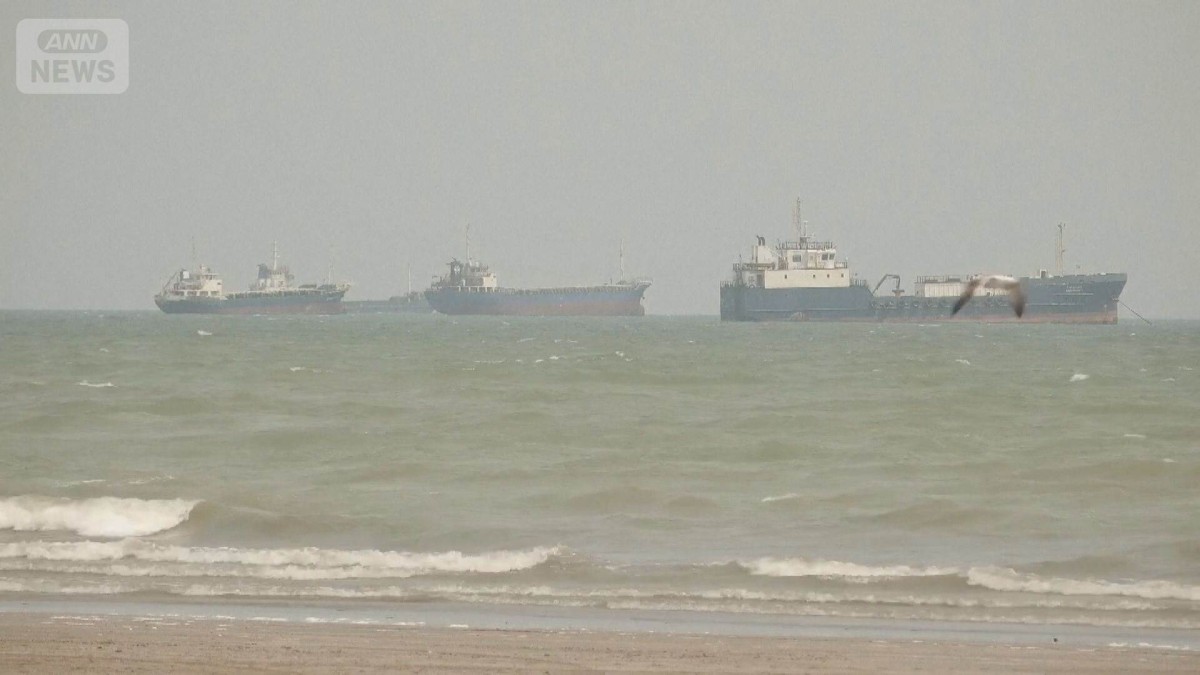
A No-Entry Zone That Keeps Growing
Iran’s Islamic Revolutionary Guard Corps announced on September 9 that any vessel navigating its newly declared “no-entry zones” in the Strait of Hormuz without prior coordination will face sanctions. The penalty is blunt: no support, no services of any kind for passage through the strait.
That announcement carried a second signal buried in the details. The zones are no longer confined to the strait itself. They now stretch into the Gulf of Oman and parts of the Arabian Sea — an expansion that goes well beyond what Iran’s National Security Council had disclosed days earlier.
The widening perimeter changes the calculus for every ship passing between the Persian Gulf and the open ocean. Vessels that previously transited the strait within a few miles of the Iranian coast now find themselves inside restricted waters simply by following established shipping lanes. The IRGC has not published exact coordinates for the new boundaries, which means ship operators must treat the entire corridor as contested until proven otherwise. That ambiguity alone is enough to alter routing decisions across the board.
Oil tankers, container ships, and LNG carriers alike are already adjusting. The Red Sea disruptions that began in late 2023 forced many vessels south around the Cape of Good Hope, adding weeks to Asia-Europe transit times. Now a second pressure point is emerging in the Persian Gulf, and the cumulative effect is reshaping the geography of global shipping risk.
Who Passes Through Matters More Than You Think
Roughly 21 to 25 million barrels of oil move through the Strait of Hormuz daily, according to widely cited estimates. But the number that actually matters for this story is smaller and more specific: the volume of liquefied natural gas.
Japan is the world’s largest LNG importer. It buys roughly 70 to 80 million metric tons per year, and nearly all of it arrives by tanker through the Hormuz corridor. Qatar — the single largest supplier — sits on the Persian Gulf side. Every Qatari shipment passes within or near the no-entry perimeter before emerging into the Gulf of Oman. The distance from the Ras Al Hadd junction to Tokyo is approximately 8,500 nautical miles, and nearly the entire route lies within or adjacent to the contested zone.
European buyers have alternatives. LNG arrives at Rotterdam and Bilbao from the United States, Nigeria, and increasingly from new projects in West Africa. The United States alone exported 14 million metric tons of LNG to Europe in 2024, up from less than 2 million just three years earlier. Asia has fewer shortcuts. South Korea and Taiwan also depend heavily on Hormuz-bound tankers, but Japan’s absolute volume and its lack of overland energy infrastructure make it the most exposed single market on earth.
The exposure is compounded by Japan’s storage architecture. Unlike Europe, which has interconnected pipeline networks and large-scale underground salt-cavern storage, Japan relies almost entirely on regasification terminals situated at coastal ports. There is no national gas grid that can reroute supply from one region to another. If a single port is disrupted or if LNG cargoes are delayed, there is no buffer within the country itself.
The Real Target Is the Schedule, Not Just the Ship
The IRGC’s announcement is strategically designed to create uncertainty, not simply to block traffic. By declaring sanctions against vessels that enter without coordination, Iran shifts the burden of risk onto shipping companies and charterers. The goal is not to shut down the strait — which would cost Iran its own crude exports as well — but to make every transit a negotiation.
Ship owners now face a choice that did not exist before the zone expansion: reroute around the southern tip of Oman and add days to transit time, or attempt passage through the no-entry area and risk having all support services cut off mid-voyage. The second option is particularly dangerous for tankers carrying pressurized or cryogenic cargo. LNG carriers cannot simply idle at sea the way a crude tanker might. Methane containment requires continuous refrigeration, and a carrier drifting without port access or tow assistance represents a liability far greater than a grounded oil tanker.
Insurance premiums for war-risk coverage in the Gulf of Oman have already risen since the announcements. P&I clubs are treating the new zones as active risk areas, and underwriters are pricing in the possibility of vessel detentions, cargo delays, and emergency diversions. Those costs do not disappear when tensions ease. They become part of the baseline rate structure for every voyage through the region.
Chartertime rates for VLCCs and LNG carriers moving through the region have been volatile since the conflict escalated. A sustained period of uncertainty would widen the premium further, and the premium would fall disproportionately on buyers who cannot easily swap suppliers. Spot LNG contracts from Qatar are denominated in dollars but priced against Japanese benchmark indices. When Hormuz transit times increase, those indices rise — and Japanese utilities that signed long-term contracts tied to oil prices feel the squeeze immediately.
Trump Is Watching the Calendar, Too
President Trump told reporters on September 9 that the conflict with Iran would end after the November midterm elections, and that elevated crude prices would not come down before then. He also suggested Iran is economically exhausted and could not sustain the pressure much longer.
That framing suggests Washington is treating the Hormuz escalation as a bargaining chip that Iran will eventually drop — not as a permanent structural shift in global energy geography. The administration has not issued new sanctions targeting Iranian naval operations in the Gulf of Oman, nor has it deployed additional naval assets to escort commercial shipping through the expanded zones. The military posture remains calibrated to deter outright closure, not to guarantee free passage for every vessel.
But the Iranian zone expansion is happening regardless of American electoral timelines. The no-entry areas are being enforced on the water now, and the shipping industry is adjusting its routes in real time. Markets do not wait for election cycles. The IRGC has already begun intercepting and inspecting vessels in the new restricted waters, and those inspections introduce delays that ripple through just-in-time supply chains. A 48-hour hold at anchorage in the Gulf of Oman translates into missed loading windows at overseas terminals and cascading schedule disruptions across the LNG trade.
Second-Order Effects: Pipelines, Alternatives, and Quiet Reroutes
The most immediate consequence of the Hormuz expansion is not a shortage of gas but a restructuring of how that gas moves. Qatar has existing pipelines to Bahrain and a second pipeline project under discussion with Saudi Arabia — the Arab Gas Pipeline extension that would connect Qatari fields to Jordan and Egypt, and ultimately to European markets via Mediterranean LNG terminals. Those routes currently handle only a fraction of Qatari output, but even modest expansions would divert tens of millions of tons annually away from the Hormuz corridor.
Australia is already the second-largest LNG supplier to Japan, and Australian cargoes do not touch Iranian waters at all. New projects in Western Australia and Queensland are coming online each year, and Japanese buyers are beginning to lock in longer-term supply agreements with Australian producers as a hedge against Middle Eastern volatility. The shift is gradual but structural. Every new contract signed with an Atlantic or Pacific supplier reduces Japan’s exposure to Hormuz-dependent flows.
China presents a different calculus. Chinese LNG imports are increasingly routed through the Malaysia-Singapore corridor and direct Asian basin trades that bypass the Persian Gulf entirely. Chinese state-owned buyers have also been negotiating pipeline imports from Myanmar and Uzbekistan, further diversifying away from maritime chokepoints. That diversification is partly driven by the same strategic logic that is now playing out in Japan — the desire to reduce dependence on any single maritime route vulnerable to political disruption.
What Happens Next
The most likely outcome is not a full closure of the strait but a prolonged period of selective disruption. Tankers carrying non-aligned or non-coordinated cargo face higher insurance premiums, longer routing, and the occasional incident that feeds the next round of price spikes. The Strait of Hormuz will remain open — Iran has no incentive to sever the artery that carries its own crude exports to world markets — but the cost of passage will reflect the new reality of contested waters.
Japan’s response will determine how much of that pain gets absorbed at home. Tokyo has strategic petroleum reserves, but those cover oil, not LNG. Gas storage in Japan is limited compared to European terminal capacity, and the country has no pipeline connections to diversify supply. If Hormuz shipping slows for even a few weeks during peak winter demand, the price impact in Asia will be sharper than in Europe. Japanese utilities, already operating on thin margins after years of post-Fukushima energy restructuring, will face renewed pressure to pass higher costs to consumers or absorb them through government subsidies.
Qatar has hinted at the possibility of redirecting some LNG to existing pipelines that bypass Hormuz, but those routes are currently constrained and would not replace the full volume transiting the strait. The kingdom of Saudi Arabia has expressed willingness to host expanded pipeline infrastructure, but building that capacity takes years, not months. In the interim, the risk premium on Persian Gulf LNG remains baked into every spot contract and every voyage insurance policy.
The bigger lesson is structural. The Strait of Hormuz has functioned as a reliable chokepoint for decades because its passage was predictable. Shipments left Doha or Fujairah and arrived at Yokohama or Kobe on schedules that underwriters, charterers, and terminal operators could plan around. Iran’s zone expansion turns predictability into a liability. Shipping companies will build that uncertainty into their pricing models, and the cost of gas from the Persian Gulf will rise relative to Atlantic-basin supply — not because the fuel is more expensive to produce, but because the route is now contested.
For Japan, that means every barrel and every cubic meter of LNG arriving from the Middle East carries a new political risk premium. The question is not whether Tokyo will pay it — it has no realistic alternative for Middle Eastern gas in the short term — but how long it will tolerate the cost before accelerating the diversification of its supply base. The answer will shape not just Japan’s energy posture but the broader architecture of Asian LNG trade for the next decade.