Iran's Hormuz Gambit: Hard Lines and Quiet Backchannels
Iran is renewing demands for Hormuz's reopening through Qatari intermediaries while publicly ruling out any nuclear concessions—a carefully calibrated dual track that keeps de-escalation alive without giving Trump a diplomatic victory.
The Choreography of a Chokepoint
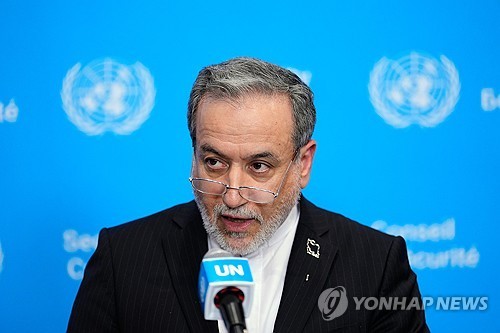
Iran’s foreign minister, Abbas Araghchi, told reporters in New York on September 28 that Qatar had relayed a fresh set of proposals to the United States regarding the reopening of the Strait of Hormuz. He expressed hope the process would wrap up by the following day. The subtext mattered more than the timeline: Tehran was keeping a diplomatic exit ramp open while loudly making clear how wide the ramp’s entrance had become. Araghchi specified that the Qatari delivery included written terms, not verbal assurances — a deliberate move to create a paper trail that both sides could parse internally without the risk of a single misquoted phone call derailing the process.
The seven conditions Iran proposed — a US naval blockade lift, return of frozen assets estimated at roughly $10 billion, a cease-fire on all fronts including Lebanon and Syria, sanctions exemptions for Iranian oil exports, a formal US acknowledgment of Iran’s regional security sphere, release of detained Iranian nationals, and a mutual non-aggression framework — were already dismissed by Donald Trump as the bargaining posture of a defeated opponent. His framing was blunt, delivered at a press event in Mar-a-Lago on September 26: Iran wanted a deal because it had lost too badly to walk away proud. The question now is whether both sides can find a version of pride that lets them step back without looking like they surrendered.
The Nuclear Wall
What Araghchi made unmistakably clear — and this is the detail Western analysts often gloss over — was that Tehran would not trade its nuclear program for Hormuz relief. When asked by Al Jazeera’s Faisal al-Asaad whether Iran might show flexibility on enrichment levels or IAEA inspections in exchange for strait access, he called the suggestion “completely false” and rejected it forcefully, turning slightly toward a colleague in the hall as if to signal the answer needed no elaboration. This isn’t ambiguity. It’s a deliberate boundary drawn in front of an audience that includes domestic hardliners, Gulf neighbors watching nervously from the balcony, and Washington’s own negotiating team monitoring the feed from Doha.
Qatari mediators, reportedly working out of the Emir’s personal office rather than the foreign ministry, have been pushing Iran toward exactly that kind of flexibility for three separate rounds of shuttle diplomacy since July. The message from Doha and other intermediary capitals has been consistent: de-escalate the strait crisis, and you create space to discuss the nuclear question on different terms — perhaps a time-bound freeze rather than a permanent cap. Iran’s answer so far is no. But the fact that Qatar remains in the room, that Araghchi is still speaking to them publicly at the UN General Assembly, and that a Qatari delegation was photographed entering the Iranian mission in New York on September 27 suggests Tehran hasn’t burned the bridge. It has merely lit a flare at both ends.
The Two Audiences
Araghchi’s remarks in New York served a dual purpose. On one level, he was communicating with Washington through Doha. On the other, he was addressing a global audience gathered at the UN, explaining why the strait remains blocked and who bears responsibility for unblocking it. He referenced the Supreme Leader’s conditions explicitly, framing Iran not as an aggressor but as a party holding the line until its demands are met. The language tracked Khamenei’s address to the judiciary on September 15, where the nuclear program was described as “a matter of national sovereignty, not a bargaining chip” — a phrase now repeated verbatim in every subsequent Iranian statement.
This is standard statecraft in Tehran’s playbook, but the precision of this moment’s staging is noteworthy. The September 22 meetings with Trump’s envoy Steve Witkoff and son-in-law Jared Kushner in a location that neither side has officially confirmed produced no tangible breakthrough. Yet Araghchi continued engaging with Qatari intermediaries days later, and a separate track through Omani diplomatic channels reportedly carried a parallel, less formal signal: that Iran would accept a phased reopening if the naval restrictions eased first. The pattern suggests Iran is hedging: keeping backchannel lines active while refusing to let any single channel become the only channel — a strategy that preserves leverage regardless of which Washington gatekeeper holds the phone, particularly given the tension between Witkoff’s transactional style and the State Department’s more structured approach.
Energy Markets and the Seven-Day Clock
The economics are unavoidable. The Strait of Hormuz carries roughly 21 million barrels of oil per day — about a fifth of global consumption. Every week the strait remains closed or partially disrupted, insurance premiums for tankers climbing to levels last seen in 2008, spot prices spiking, and refineries from India to Japan recalibrating supply chains that were never designed for this level of chronic uncertainty. Brent has traded in the low $90s since early September; Asian benchmark prices carry a five- to seven-dollar premium, and two Japanese LNG importers have already activated contingency contracts for Russian and Qatari cargoes routed around the Cape. The seven-day window Iran attached to its reopening proposal wasn’t just a deadline; it was a signal that Tehran understands how the market counts pressure, and that each additional day of closure converts into a concrete revenue loss that makes the economic cost of inaction visible to any president who cares about a falling energy price in his second-year midterms.
The second-order effects ripple further. China, which receives roughly 45 percent of its oil imports through Hormuz, has quietly increased strategic stockpiles and is pressuring OPEC+ members to use spare capacity to offset the shortfall — a diplomatic nudge that Beijing frames as “market stability” but that Riyadh reads as a demand for production flexibility that undermines the group’s agreed quotas. Saudi Arabia, meanwhile, has accelerated its own Red Sea pipeline expansion, effectively building a workaround that reduces the strait’s leverage over Gulf export economics within eighteen months. The strait closure, in other words, is reshaping infrastructure investment decisions that will outlast whatever deal emerges in October.
Trump’s rejection of the seven conditions doesn’t close the economic loop. It simply shifts the calculus from “deal or no deal” to “damage limitation.” Markets price in the possibility of escalation faster than diplomats negotiate de-escalation. The next move from Washington — whether it comes as a formal response to Qatar’s relay, a private signal through Oman or Iraq, or something delivered entirely off the record — will determine whether the seven-day clock resets or the strait enters another month of managed instability.
What Changes Next
Three things to watch. First, whether Qatar returns with a modified American position before the end of September 29, as Araghchi suggested was possible — specifically whether any version of the nuclear-cap issue can be carved out of the seven conditions and addressed in a separate, time-boxed track. Second, whether Trump’s camp reframes its rejection as a demand for prior nuclear concessions — which would effectively shift the bargaining ground without changing the public posture of having already said “no.” Third, whether Iran escalates beyond rhetoric: additional port inspections in the Gulf of Oman, increased maritime incidents, or further restrictions on commercial traffic through the Iranian-controlled waterways near the UAE and Oman, which together could push effective global throughput down another three million barrels per day.
The most likely path forward isn’t a grand agreement. It’s a narrow, transactional arrangement: perhaps a limited resumption of shipping under heightened security guarantees, decoupled from the nuclear question for the moment, with a review mechanism every ninety days. Both sides have said enough publicly that a full restoration of trust is impossible. But neither side has shown interest in a war that would guarantee the closure of the strait they both need open — Iran for oil revenue that funds its proxy network, the United States for the credibility of its alliance with Gulf partners that underwrites the entire regional security architecture. The choreography at the chokepoint continues. The next step, whenever it comes, will be danced through Doha first, logged in triplicate, and released to the press only after both sides have confirmed the wording they can live with. The strait won’t reopen because someone shakes hands. It will reopen because the paperwork clears. And that paperwork, for now, is still in transit.