Iran Is Losing Its Grip on the Strait of Hormuz
Shipping traffic through Hormuz has surged five-fold in two weeks, but 80 percent of liquid cargo is now using a US-backed Oman corridor or sailing with transponders off. That's not normalization — it's a signal that Iran's coercive control is fraying, and the world's energy markets haven't fully absorbed what that means.
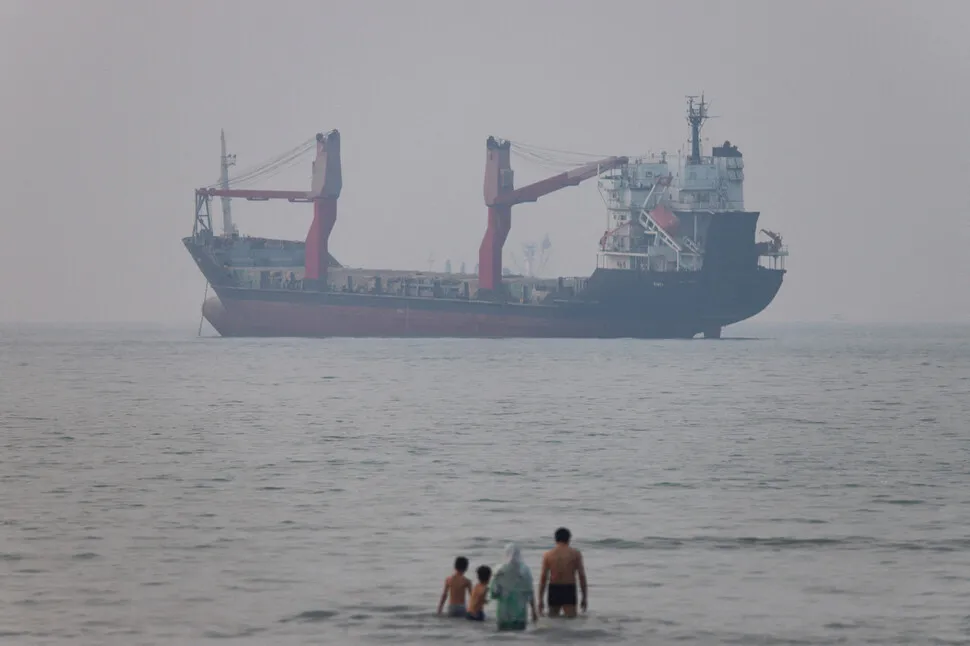
The Spike That Isn’t a Spike
Shipping traffic through the Strait of Hormuz has surged five-fold over the past two weeks. On the surface, that looks like normalization. It isn’t.
According to the UK Maritime Trade Operations (UKMTO), 192 vessels passed through the strait in the most recent seven-day period, up from 151 the week before and just 39 two weeks prior. Inbound and outbound numbers tell the same story: 103 entered and 89 exited, compared with 76 and 75 the previous week, and a mere 18 and 21 two weeks earlier.
But here is what those figures don’t show: total traffic through Hormuz remains roughly 20 percent of pre-war levels. The February 28th baseline — before Iran and the US exchanged blows — is the reference point that matters. A five-fold recovery from a near-zero base is not a return to normal. It is a partial, fragile re-opening.
And the route those ships are taking reveals the deeper story.
The Oman Shortcut
The data from Kepler, the shipping analytics firm, is the critical detail. Over the past two weeks, more than 80 percent of liquid cargo vessels passing through the Hormuz corridor did so using one of two workarounds: they sailed the Oman-recognized route — a US-backed, International Maritime Organization–approved alternative — or they operated with their vessel tracking transponders switched off.
Kepler estimates that a significant portion of the dark-signature ships were likely using the same Oman corridor. Ships flying Panamanian and Liberian flags dominated the numbers, and roughly half the traffic consisted of tankers and bulk carriers. Flag state is not the same as ownership, of course, but the pattern is clear enough: the majority of cargo is deliberately avoiding Iranian-controlled waters.
That avoidance is the real metric. Iran has spent decades treating the Strait of Hormuz as its leverage — the narrow chokepoint through which roughly a fifth of global oil trade passes. The threat has always been implicit: cooperate with us, or we make your ships pay. What Kepler’s data suggests is that the threat is losing its teeth.
“Iran is progressively revealing that it has lost at least partial control of the strait,” Homayoon Falakshi,原油分析責任者 at Kepler, told the Hangyoreh. Dan Pickering, founder of Pickering Energy Partners, put it more bluntly: the Oman route is simply the most rational choice for ship operators who no longer want to pay Iran’s informal toll.
How the Workaround Happened
The Oman corridor isn’t new. It has existed as a fallback since tensions first escalated. But its usage has shifted from exception to default, and that shift was enabled by sustained US military action.
American forces have struck Iranian radar and surveillance systems, degraded missile and drone capabilities, and positioned fighter aircraft to protect tanker transit. The result is a strait where a ship can pass without immediately triggering an Iranian response — or at least, where the response is no longer guaranteed.
That doesn’t mean the danger has vanished. Five vessels were struck by Iranian projectiles in the past week alone. Two people were killed. The ships sustained damage but did not sink. The incidents are reminders that coercion hasn’t disappeared; it has simply become less effective as a tool of control.
US President Donald Trump declared on March 18 that Hormuz was “open and operating normally” with all mines cleared, then pivoted the next day to threatening “unprecedented economic warfare” through fresh sanctions. Iran’s Mossan Rezai, secretary of the Supreme National Security Council, responded in kind: retaliation “like an earthquake,” and a warning that any country cooperating with US sanctions would be treated as an enemy.
The rhetoric is escalating on both sides. The operational reality on the water tells a different story.
What This Means for Global Supply
The immediate implication is straightforward: oil is still moving, but it is moving around Iran rather than through Iranian-controlled waters. That matters for pricing, for insurance, and for the psychology of supply risk.
When ships sail the Oman corridor, transit times lengthen slightly and insurance premiums reflect the residual threat. When vessels turn off transponders, they accept legal and operational risk in exchange for flexibility. Both are cost inputs that eventually feed into the price of a barrel.
But the longer-term signal is more important. If Iran can no longer reliably enforce passage through the strait on its own terms, its primary card in any confrontation with the West is weakened. The leverage was never about physically blocking the waterway forever — it was about creating enough uncertainty to extract concessions. That uncertainty is eroding.
For East Asian buyers, the implications cut both ways. China and Japan, the region’s largest importers of Gulf crude, have long balanced their energy needs against the risk of Hormuz disruption. The Oman workaround offers a partial hedge: supply continues to flow, but at higher transaction costs and with reduced Iranian ability to weaponize the chokepoint. India, which also depends heavily on Middle Eastern oil and maintains complicated ties with Tehran, faces the same calculus.
The Fragility Ahead
This recovery is fragile for several reasons.
First, the 20-percent-of-normal traffic level means the corridor is far from stable. Any escalation — a major ship attacked, a significant mine incident, a broader military exchange — could collapse the traffic again with little warning.
Second, Trump’s promised fresh sanctions add a new variable. Rezai’s warning that cooperating nations would be treated as enemies creates diplomatic friction with countries that are simultaneously trying to keep oil flowing and avoid American penalties. The space for hedging is narrowing.
Third, the shadow fleet itself introduces risk. Ships operating without transponders are harder to monitor, harder to insure, and harder to respond to if something goes wrong. The Oman corridor is IMO-approved, but it sits in waters where Iranian forces remain active and where accidental escalation is always possible.
What Western desks often miss is that this is fundamentally an Asian supply-risk story. Hormuz isn’t just a Middle Eastern issue — it is a lifeline for the economies that consume the most oil on Earth. The fact that a Korean newspaper is already connecting the traffic spike to Iran’s declining control, while much of the English-language coverage treats the numbers at face value, suggests there is still ground to cover.
The five-fold increase in Hormuz traffic is real. But the ships making that increase aren’t sailing through Iranian waters — they are sailing around them. That is the distinction that matters, and it is one the markets are still learning to price in.