Iran's October Surprise: How the Strait of Hormuz Could Decide America's Midterms
The Republican National Convention in Dallas was supposed to energize midterm voters. Instead, Washington is bracing for a 21st-century version of the Iran hostage crisis — this time played out through oil prices and swing-state gas pumps.
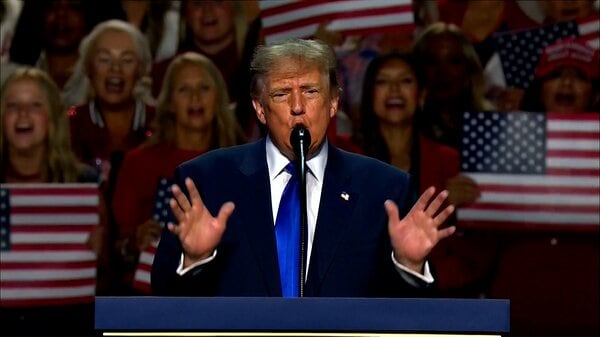
The Dallas Convention That Wasn’t Supposed to Exist
The Republican National Convention in Dallas last week broke with everything voters have come to expect about party nominating processes. Instead of the traditional four-year presidential nomination ritual, the GOP held its first-ever midterm election convention — a three-day mobilization effort aimed squarely at energizing base voters ahead of November’s congressional races.
But the real story wasn’t the speeches or the strategy. It was what Washington was quietly preparing for: an Iranian October Surprise that could upend the entire electoral arithmetic before a single ballot is cast.
What the Original October Surprise Taught Us
The term entered American political vocabulary in 1980, born from a crisis that still haunts debates about executive power and electoral timing.
Jimmy Carter was seeking re-election when 52 Americans were held hostage in Tehran since November 1979. The crisis consumed his presidency — and his campaign. Ronald Reagan’s team feared the unthinkable: that Iran might release the hostages just before Election Day, handing Carter a foreign policy victory he needed but hadn’t delivered for over a year.
William Casey, then Reagan’s campaign chairman, reportedly dubbed the scenario the “October Surprise.” Years later, allegations surfaced that the Reagan campaign itself had secretly encouraged Iran to delay the release until after the election — claims that, while never substantiated by congressional investigation, left a permanent stain on the narrative.
The hostages were indeed released on January 20, 1981, minutes after Reagan’s inauguration. Whether that timing was coincidence or design remains one of modern American politics’ most persistent conspiracy theories.
AEI’s Warning: Iran as Kingmaker
Now a conservative think tank is raising the same alarm bells — with striking specificity.
On June 22, the American Enterprise Institute published an essay titled “Trump Must Expect an Iranian October Surprise.” The argument was blunt: Iran has studied American politics more carefully than most US diplomats, and it understands something crucial about leveraging time as a weapon.
The piece argued that by designating the Islamic Revolutionary Guard Corps as a foreign terrorist organization and escalating tensions throughout 2019, Trump had effectively handed Iran the power to influence the November midterms — making the IRGC an unwitting kingmaker in American electoral outcomes.
The mechanism is straightforward enough to be terrifying. Disrupt shipping in the Strait of Hormuz in October, and crude prices spike. Gas prices follow within days. Voters in swing states — Pennsylvania, Michigan, Wisconsin, Arizona — fill their tanks at significantly higher prices. Anger at inflation and perceived weakness on foreign policy flows directly toward the party in power.
Trump’s Unintentional Confession
Perhaps the most revealing moment came on September 9, when Trump told reporters about the possibility of war with Iran:
“I think the war will end right after the midterm elections.”
The statement sounded like confidence. Read differently, it was an acknowledgment that his administration has no clear path to ending the Iran crisis before November 3. If there were a solution, there would be no reason to suggest it would only materialize after the votes are counted.
That framing — conflict escalation now, resolution later — is exactly the kind of timeline that makes an October Surprise plausible. It gives Tehran both the incentive and the window to manipulate events.
The Hormuz Chokepoint
The Strait of Hormuz is the narrowest point where 21 million barrels of oil per day flow — roughly 21 percent of global petroleum consumption. It is the single most consequential maritime chokepoint on Earth.
Any disruption there doesn’t just move markets. It moves voter sentiment. Every dollar added to the gallon at the pump in Suburban Pittsburgh or suburban Phoenix is a dollar that gets attributed to whoever occupies the White House.
The logistics of modern American politics are brutally simple: energy prices are the oldest political scoreboard in Washington, and no administration has ever survived a sustained gas price surge heading into November.
Asian Central Banks Are Already Moving
While American politicians debate October scenarios, Asian central banks are quietly adjusting reserve positions — a telling signal that institutional investors see the risk as real and immediate.
Japan’s Ministry of Finance has been accumulating US Treasuries at a pace not seen since 2020. South Korea’s central bank has reduced its yuan exposure while increasing dollar-denominated reserves. China’s state banks have begun shifting some offshore holdings away from Middle Eastern energy instruments.
These are not dramatic moves. But they are directional — and they precede public market reactions by weeks. When institutional reserve managers start repositioning for Hormuz disruption, the question isn’t whether prices will move, but whether American voters will notice before the ballots are marked.
The Democratic Counter-Surprise
If the Republicans fear an Iranian October Surprise, Democrats should be asking whether the reverse is possible. Could a well-timed announcement — a diplomatic breakthrough, a prisoner swap, a controlled de-escalation — benefit the opposition party in exactly the same way?
History suggests the answer is yes. The 1980 hostage crisis taught Americans that foreign policy timing can be weaponized. The question now is whether that weapon is pointed at one party or both.
Why This Time Feels Different
The original October Surprise operated through human drama — hostages, negotiations, television coverage. The current scenario plays out through commodity markets and shipping lanes. But the political mechanics are identical: an external event, timed precisely against the electoral calendar, that reshapes voter calculations.
The difference is scale. A hostage release captures headlines for days. A Hormuz disruption reshapes the global economy in hours — and American voters feel the impact at the pump before they hear the analysis on cable news.
By the time pundits are debating whether an Iranian escalation constitutes an October Surprise, voters will already have decided. The gas price will have spoken first.
The Kingmaker in Tehran
AEI’s essay concluded with a proposition that should chill any American strategist: Iran understands American electoral timing better than most American politicians do. The Revolutionary Guard Corps has been watching American campaigns for decades, learning which levers produce which political outcomes.
If they decide to pull one in October — disrupting shipping, spiking prices, creating the appearance of executive weakness — the damage to Republican midterm prospects could be structural rather than episodic. Not a single scandal or gaffe, but a sustained economic narrative that plays across every swing district from Detroit to Denver.
The convention in Dallas was meant to rally troops. But the real battle may be fought not in congressional districts, but in maritime chokepoints thousands of miles away — where the timing of a single decision in Tehran could determine who controls Washington come January.