Iran Exports Zero Oil as Middle East Surpasses Pre-War Levels
Middle Eastern oil exports have surged past pre-war levels while Iran ships nothing — a stark divergence revealing how the U.S. naval blockade is strangling Tehran even as regional supply chains recalibrate around the Strait of Hormuz.
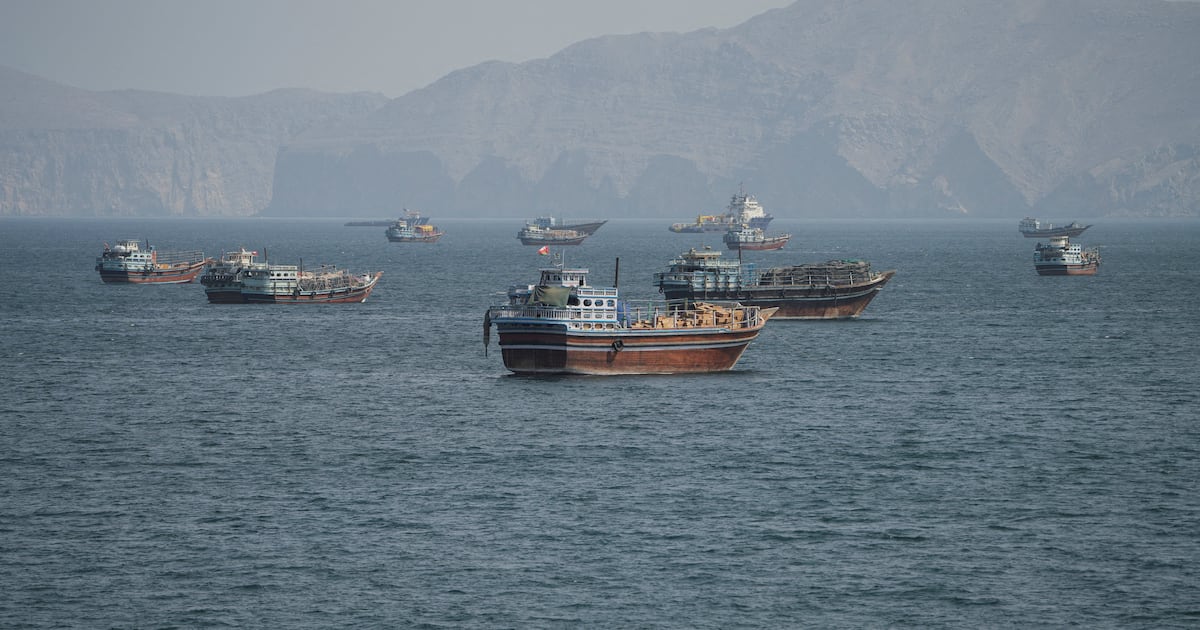
Iran Is Dry. The Region Isn’t.
For the first time since the 1979 Islamic Revolution, Iran has exported zero barrels of crude in a full month. That single data point — delivered quietly by the shipping tracker Kpler on October 5 — is more stark than any headline from the conflict.
Meanwhile, Middle Eastern oil exports excluding Iran have not merely recovered. They have surpassed pre-war levels, running at roughly 18.5 million barrels per day as of early October, compared to about 18 million before the U.S.-Israel strikes began in late February.
This divergence tells a story that most coverage of the war has missed. It is not simply a tale of American naval power punching above its weight. It is a story about how global energy markets adapt to chokepoint warfare — and why adaptation comes with a price nobody wants to pay.
The Blockade That Works — For Now
The United States has committed roughly 20 percent of its naval power to the task: two nuclear-powered aircraft carrier strike groups, including the George Washington and the George H.W. Bush, supported by about a dozen Aegis destroyers. Their mission is narrow and absolute — seal off Iran’s ports and patrol the waters outside the Strait of Hormuz so thoroughly that no Iranian tanker can load a single barrel.
It has worked. Iran was exporting approximately 1.8 million barrels per day before the war. In September, Kpler confirmed zero shipments. The remaining inventory that Iran managed to push through before the blockade tightened in mid-July — roughly 90 million barrels, mostly destined for China — is expected to be exhausted by mid-October. After that, there is nothing left to sell.
Iranian President Masoud Pezeshkian acknowledged the strangulation at the UN General Assembly last month. “The money we have in China is frozen,” he told Fox News. “We can’t even withdraw our funds from countries that supplied us with goods.”
The economic consequences are severe. Iran’s inflation is projected at nearly 69 percent this year. GDP is shrinking for a second consecutive year. The rial has collapsed from around 35,000 to the dollar in 2018 to 1.66 million just before the war, and has since hit 2.7 million — a 62 percent decline from the pre-war level alone. Oil revenue, which funds roughly a third of the government budget and serves as a critical financial lifeline for the Islamic Revolutionary Guard Corps, has simply vanished.
Hormuz Is Not Closed. It Is Transformed.
The Strait of Hormuz remains open. But it is not the same chokepoint it was before the war.
Pre-war, about 83 percent of Middle Eastern crude flowed through Hormuz. Now it is closer to 60 percent. The remaining 40 percent takes a longer, more expensive route — through Saudi and UAE pipelines to the Red Sea, or via transshipment, where tankers dump their cargo onto smaller vessels near the strait and reload onto larger tankers once clear of the contested zone.
The cost of this rerouting is visible in freight rates. Shipowners are demanding premiums roughly ten times what they would have charged before the conflict. That is why global oil prices have not crashed despite the return of most Middle Eastern supply. Brent crude has stubbornly stayed above $100 a barrel. The market is pricing in the insurance premium of a region where the primary maritime artery is under intermittent attack.
Iranian oil is gone from the market. But the fear of more Iranian disruption keeps the floor under prices.
Hamid Rezai Ajizi, a senior Iran analyst at the International Crisis Group, told the New York Times that Iran’s overarching strategy — keeping oil prices high enough to inflict pain on the United States and the wider economy — is still functioning, even as Tehran itself bleeds.
The Seven-Day Offer and the October Gamble
In late September, Iranian Foreign Minister Abbas Araghchi proposed a seven-day plan to the United States: lift the port blockade and unlock $12 billion in frozen assets, and Iran would reopen Hormuz within four to five days. President Trump rejected it immediately. There is no incentive to negotiate from a position of strength when the other side is already losing.
But the blockade cannot hold forever. Maintaining two carrier strike groups in the Central Command area of operations pulls resources from Europe, the Indo-Pacific, and the Pacific Fleet. The United States cannot keep this posture indefinitely without creating vulnerabilities elsewhere.
That opening creates risk. Iranian officials and analysts have suggested the regime believes it can outlast the political cost of the blockade for Washington. If oil prices drop sharply or the U.S. considers renewed military action, some analysts warn Iran could choose escalation — striking Saudi or UAE production infrastructure with missiles, or launching what Israeli and American officials have long feared: an October surprise timed to disrupt the U.S. midterm election cycle.
The question is not whether Iran can export oil again. The question is what it does when it cannot.
Who Wins, Who Loses, What Comes Next
The United States has achieved its immediate objective: Iran’s oil exports are at zero, and the strategic messaging is clear. The Iranian regime is under unprecedented financial pressure from a source it cannot redirect — the global market it once used as a weapon.
Saudi Arabia and the UAE are absorbing the logistical burden. Their pipeline capacity to the Red Sea is being stretched. Freight costs are eating into margins. But they are still moving product, and that continuity matters to global supply.
China remains Iran’s last buyer and seller. The roughly 90 million barrels in transit will likely reach Chinese ports, but payment collection could drag into December — and even then, the Trump administration has made it harder for shadow fleets and intermediary companies to move money. After those barrels are gone, China gets nothing unless the blockade lifts.
Global consumers pay the toll. Oil above $100 a barrel is a tax on every economy that imports crude. That is Iran’s leverage, and it is working — even as Iran’s own economy free-falls.
The fragile equilibrium will hold as long as the U.S. keeps warships in the Gulf and Iranian missiles stay on their mounts. The moment either side miscalculates, the recalibrated supply chain that has kept prices elevated could snap into something far more dangerous.