Iran’s Strait Deal Is a Play for Deterrence, Not Just Oil
Iran’s proposed joint management of the Strait of Hormuz with Oman signals a strategic pivot toward institutionalizing chokepoint control as deterrence—directly challenging US naval freedom of navigation and testing whether Washington’s threats translate into action.
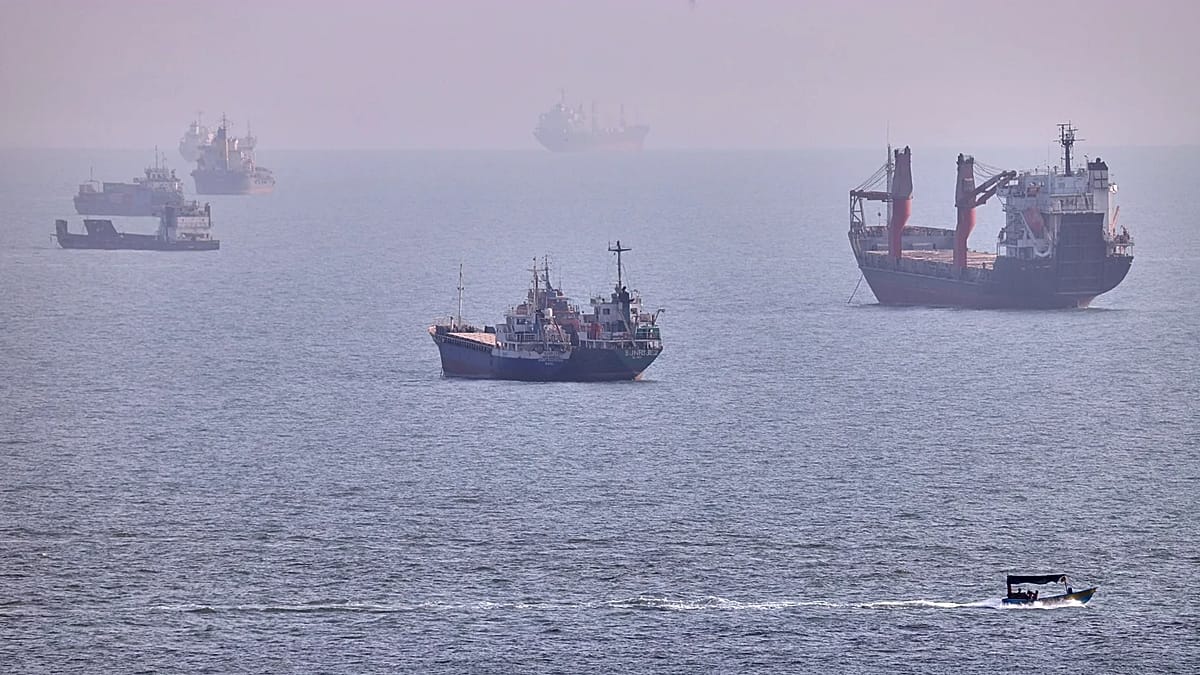
The Chokepoint Gambit
Iran and Oman have sketched out a deal that, on its face, sounds like routine maritime management. Commercial ships inbound to the Persian Gulf would sail through Iranian waters. Outbound traffic would share the passage between Iran and Oman. Military vessels? They are simply not welcome.
What Western headlines are treating as an oil-supply headline is actually something more consequential: Iran is moving to codify, bilaterally with a neighbor, a principle it has long practiced but never formalized at this scale—that it controls the strait, and that foreign warships must ask permission or go elsewhere.
The Strait of Hormuz is the narrowest point between the Gulf and the open ocean, roughly 21 nautical miles wide at its tightest. Around a fifth of global petroleum consumption still flows through it. But the real signal here is not the volume of oil at stake. It is the diplomatic architecture Iran is building around it.
Who Wins, Who Loses
Iran wins the most. For years, its strategy in the strait has been asymmetric—swarm boats, mines, anti-ship missiles, the occasional seizure of a tanker. Effective, but deniable and episodic. A formal agreement with Oman shifts the narrative from coercion to governance. Iran is no longer just disrupting traffic; it is co-administering it. That is a far more durable position.
Oman wins less clearly. Sultan Haitham has long positioned his country as a quiet interlocutor between Tehran and Washington. This deal extends that role, but it also makes Muscat a target. Donald Trump’s Wednesday warning—that the US would bomb Oman if it “gets in the way”—is not idle rhetoric. The US has already told Oman it opposes joint management of the exit route and is unhappy about voluntary fees collected from vessels, even if those fees are framed as covering security and environmental protection.
The United States loses something subtler but important: credibility in its guarantee of freedom of navigation. For decades, the Fifth Fleet’s presence in Bahrain has signaled to allies from Saudi Arabia to Singapore that the US will keep these waters open. An Iran-Oman agreement that legally excludes US and allied warships from transiting the strait in wartime or crisis directly undercuts that promise. If Muscat is managing the exit corridor and Washington is not invited to the table, the message to Tokyo, Seoul, and Delhi is not reassuring.
The Timing Matters
The conflict with Iran is approaching the six-month mark. Trump said Wednesday he has “no time schedule, whatever it takes,” and claimed the US is “winning very big.” He also said Iran’s new supreme leader, Ayatollah Motjaba Khamenei—who succeeded his father, Ayatollah Ali Khamenei, after the elder was killed at the war’s start in late February and was reportedly badly wounded in the attacks—is “very seriously wounded, but not dead.”
Motjaba Khamenei has remained out of public view throughout the conflict. That opacity cuts both ways. It makes him unpredictable. But it also means the deal with Oman may have been negotiated by figures who are less exposed to direct US targeting and more willing to take bold diplomatic steps. The 30-to-60-day window Iran and Oman set for a permanent maritime traffic plan is a deadline that runs parallel to, not subordinate to, any US timetable.
Meanwhile, Iran’s Foreign Minister Abbas Araghchi sent a letter to the United Nations on Tuesday accusing the US of “economic onslaught,” echoing Treasury Secretary Scott Bessent’s recent declaration. Araghchi framed the sanctions regime as deliberately depriving Iranian civilians of food, medicines, medical equipment, and energy. Whether that framing gains traction at the UN is uncertain, but it shows Iran is fighting a diplomatic war on two fronts: the strait and the narrative.
What Happens Next
Three scenarios are plausible.
The first is de-escalation through ambiguity. The Iran-Oman agreement remains “potential,” as Gharibabadi described it. The routes are temporary. Washington pressures Muscat to water down the provisions, and the deal lingers in a state of negotiated suspension. This is the outcome Oman probably prefers and the one most consistent with its historical role.
The second is confrontation. Trump follows through on his threat. US forces strike Omani infrastructure or intercept ships under the deal’s framework, turning a maritime disagreement into a direct military clash with a neutral state. That would be a dramatic escalation, but it is not inconceivable given the administration’s tone. Trump has already shown willingness to threaten allies when they diverge from his preferred posture.
The third, and most underappreciated, is institutionalization. Iran and Oman finalize a permanent traffic-management regime, create a joint coordination center, and begin charging fees that fund maritime safety and environmental cleanup. Over time, the arrangement hardens. US warships find themselves navigating around an established legal framework rather than simply asserting right of passage. This is the slow, structural win that matters most.
The Bigger Picture
The Strait of Hormuz has never been merely a shipping lane. It is the central node of the Persian Gulf order. Whoever shapes the rules of transit there shapes the region.
Iran’s move is not a sudden shift. It is the logical extension of a strategy that began with the 1988 mining of the strait, continued through the 2019 tanker seizures, and evolved through the 2020s drone and missile campaigns. What is new is the diplomatic packaging. Iran is no longer just breaking the rules of the strait. It is rewriting them with Oman as its partner.
For countries that depend on Persian Gulf energy—Japan, South Korea, India, China—the implications are immediate. Their navies cannot simply sail through when Washington decides it cannot or will not guarantee passage. They will need to negotiate directly with Tehran and Muscat, or accept altered insurance and routing costs that effectively tax every barrel that moves through the strait.
The US faces a harder question. It cannot patrol every inch of the Persian Gulf indefinitely, especially while drawing down commitments elsewhere. But abandoning the strait’s open-navigation principle, even implicitly, would reshape the entire alliance architecture in Asia and the Middle East.
Iran’s Strait of Hormuz deal is not just about keeping military ships out. It is about making Iran the gatekeeper, by agreement, not just by force. How the US and its allies respond will define the next phase of the conflict—and the post-conflict order in the Persian Gulf.