Iran Strikes U.S. Bases in Jordan and Iraq—Asia Is Already Reeling
Iran's first direct attack on U.S. military installations in allied Arab states marks a qualitative escalation. Asian markets are already pricing in the fallout for energy supply and capital flows.
The Line That Was Crossed
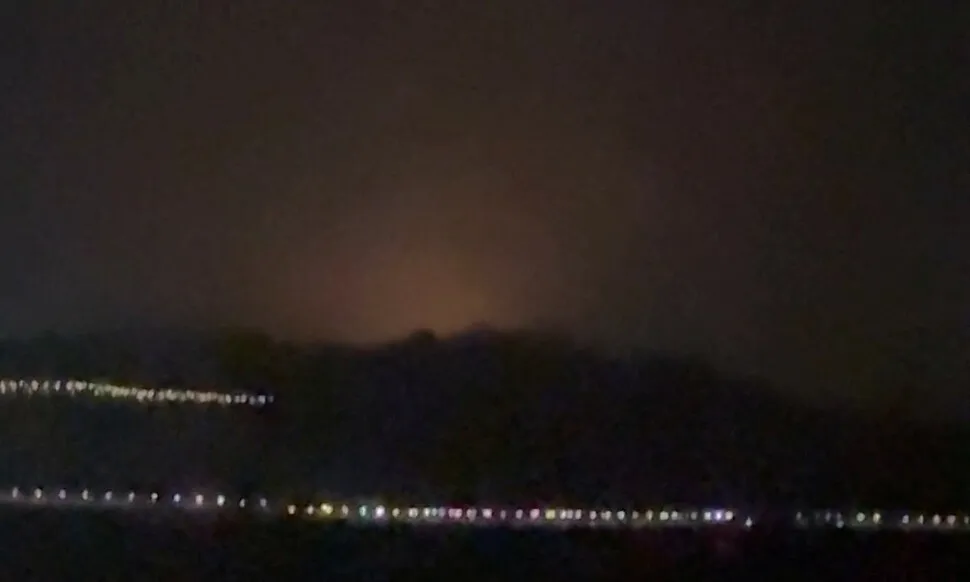
Iran did not fire at a U.S. warship this time. It fired at a U.S. airbase inside Jordan — a country that is not a battleground state but a quiet ally. And before that, it struck the Arbil garrison in Iraq, targeting maintenance facilities, warehouses and fuel depots.
The Islamic Revolutionary Guard Corps claimed it destroyed hangars housing RQ-4 and MQ-9 drones at Prince Hasan Airbase and killed several pilots and maintenance personnel. The United States has not confirmed any casualties. But the implication of the strikes is not about body counts. It is about geography.
Jordan and Iraq are sovereign states hosting U.S. forces under bilateral agreements. Attacking those bases turns American personnel into host-nation casualties and forces the allies into a calculus they have spent two decades trying to avoid: how much do you accommodate when the missiles come over your sky?
What the U.S. Did First
The chain of events began with U.S. strikes along Iran’s southern coastline. CENTCOM said it targeted IRGC positions near Bandar Abbas, Chabahar, Konarak and Sirik, framing the operation as a response to Iranian attacks on commercial shipping and U.S. troops in the Strait of Hormuz.
The strike on Sirik hit a civilian wedding. Iranian state media reported five dead and 68 wounded, including four children. The International Federation of Red Cross and Red Crescent Societies confirmed at least four child fatalities and more than 50 injured. Whether the target was deliberately military or erroneously civilian, the blowback inside Iran was immediate and severe.
Iranian Foreign Ministry spokesperson Esmaeil Baghai called the attack a crime against the Iranian people and promised a firm response. The IRGC then delivered on that promise with coordinated strikes across at least three countries.
Why Korean Media Is Not Treating This As Local News
The Hani report on the strikes carries a byline from correspondent Cheon Ho-seong. What is notable is not the coverage itself — Korean outlets track Middle East events routinely — but the framing. Iranian retaliation on Jordanian and Iraqi soil is being read in Seoul as a structural risk to Asian energy security, not as another headline in a long regional conflict.
Korea and Japan import roughly 70 percent of their crude through the Strait of Hormuz. A single week of disrupted tanker traffic raises spot prices by tens of dollars and tests central banks already navigating stubborn inflation. The Korean press has been mapping those connections since the strikes began, treating the Hormuz corridor as a shared vulnerability rather than a distant problem.
That reading is not paranoia. It is arithmetic. The two countries combined consume roughly 12 million barrels per day of imported oil, the majority of which transits waters Iran has threatened to close on multiple occasions in the past decade.
Who Gains, Who Loses
Iran gains tactical leverage. By striking U.S. bases in allied territory, it has shifted the cost of its retaliation onto governments that have little appetite for an expanded war. Jordan’s monarchy now faces pressure from a public already frustrated by regional spillover. Iraq’s government must balance between Iranian influence and its security relationship with Washington. Neither outcome serves American strategy.
The United States gains a justification for escalation. CENTCOM’s framing of the Hormuz strikes as defensive — a response to Iranian attacks on shipping and troops — gives the Pentagon a ready narrative for further action. But justification is not the same as strategy. The question remains whether additional strikes will degrade Iran’s capacity or simply provide it with new grievances.
Asian economies lose regardless of who wins the exchange. Oil above $100 a barrel compresses household spending in import-dependent Asia. Bond yields spike as investors price in inflation risk and capital flight. The Korean won and Japanese yen, already vulnerable to carry-trade unwinds, face renewed selling pressure the moment headlines turn to Hormuz closure scenarios.
The Real Flashpoint Is Not the Base — It Is the Strait
The strikes on Jordan and Iraq are dramatic, but the strategic question is the Strait of Hormuz. The IRGC stated that the U.S. bombing only strengthened its resolve to deter external interference in the strait. That is not rhetorical posturing. Iran has repeatedly demonstrated its ability to disrupt shipping in the area, from seizure attempts to drone strikes on tankers.
If Iran were to close or heavily restrict the strait, even for a matter of weeks, the impact on Asian markets would be immediate and severe. Singapore’s fuel bunkering volumes would drop. Shanghai’s refinery margins would compress. Seoul’s petrochemical sector — a cornerstone of Korean manufacturing — would face input cost shocks it has not seen since 2022.
The Korean press is tracking these linkages with unusual urgency. That urgency reflects a simple reality: the Middle East has never been geographically distant to Asia. It has always been economically proximate.
What Comes Next
Three scenarios are plausible in the near term.
The first is contained escalation. The United States responds with targeted strikes on Iranian military sites, Iran labels the response disproportionate and the cycle continues at a manageable intensity. Oil prices rise but do not break. Asian central banks watch and wait.
The second is a broader regional war. Iran opens a second front, proxies activate across the Levant and the Persian Gulf, and the strait becomes a contested waterway. This is the scenario Asian policymakers fear most, and the one the Korean media treats as systemic risk rather than worst-case speculation.
The third is a diplomatic de-escalation brokered by unseen channels. It happens less often than analysts admit, but it is not impossible. A prisoner swap, a backchannel message, a mutually inconvenient stalemate — any of these could pause the spiral.
For now, none of those outcomes is visible. What is visible is a conflict that has moved beyond proxy warfare into direct strikes on allied soil, and an Asian press corps that understands this moment differently than Western audiences do.
The Middle East has always mattered to Asia. This escalation makes that intimacy impossible to ignore.