Iran Turns the World's Most Critical Chokepoint Into a Bitcoin Toll Road
Iran's new crypto exchange has been routing Strait of Hormuz shipping tolls into bitcoin since June, a real-world test of how sanctioned states can rewrite global trade settlement — and why Washington's sanctions playbook is already behind the curve.
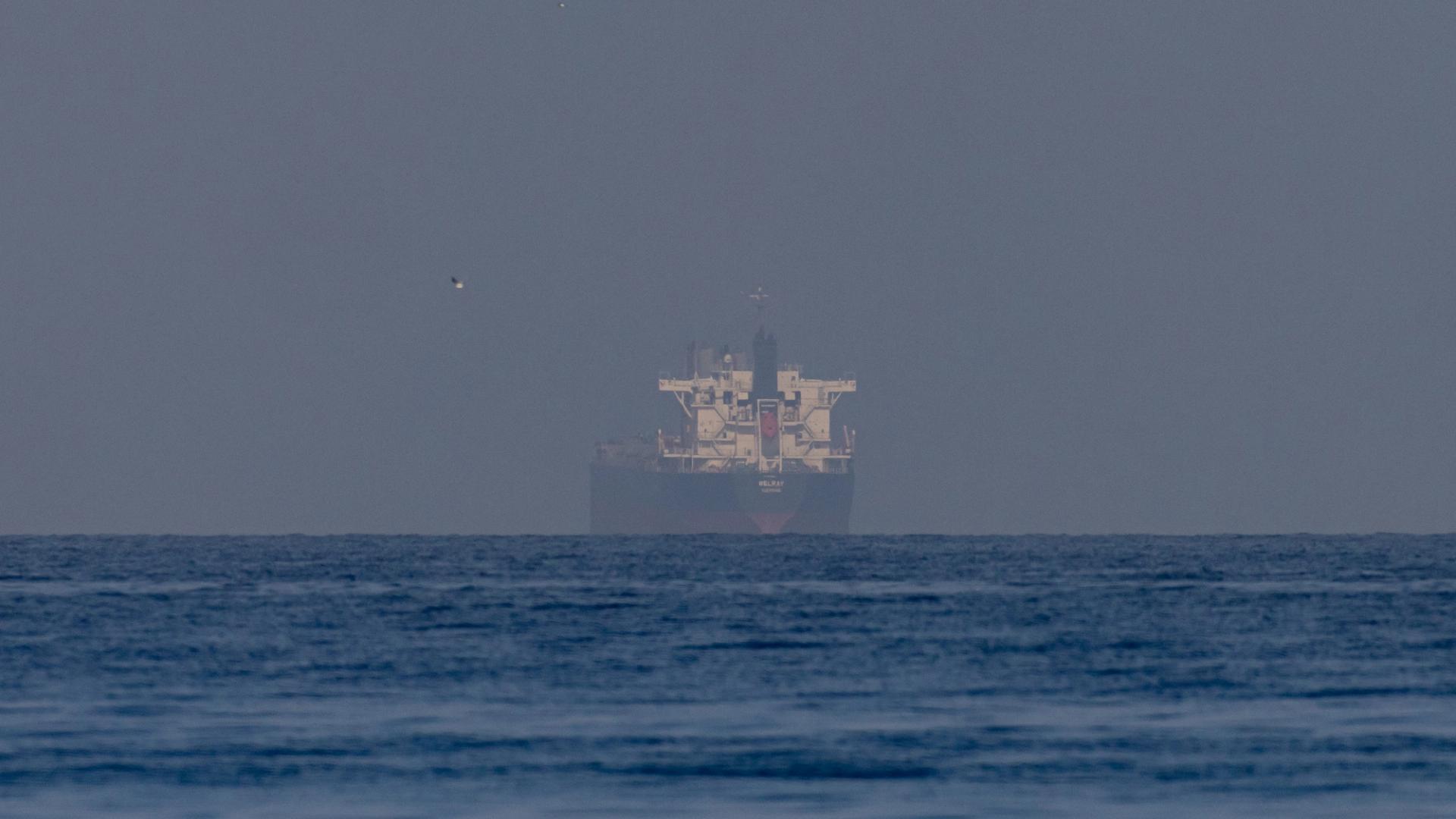
The Strait Just Got More Expensive — and More Crypto
Since June, every tanker threading the Strait of Hormuz has been paying a toll that no one officially acknowledged until this week. The U.S. Treasury says BitBank, a Tehran-based cryptocurrency exchange, has been processing payments collected by Hormuz Safe Marine Services Authority — the Iranian state outfit that charges vessels between $1 million and $2 million each for “safe passage” through the waterway.
That is $100 billion-plus of global oil transit flowing past a single chokepoint every year. And now we know at least some of it has been converted to bitcoin and routed through a domestic exchange.
This is not a niche experiment. It is a sanctioned state using cryptocurrency to process revenue from one of the world’s most strategically vital maritime corridors. The U.S. designation of BitBank and its developer, Pishtaz Simorgh Electronic Trade Company, published September 18, confirms what local reports had already suggested: Iran has built crypto infrastructure specifically designed to convert hard-to-collect maritime fees into liquid digital assets that bypass the dollar clearing system entirely.
The Architecture of a Workaround
The setup is straightforward once you see it. HormuzSafe charges tankers for insurance, traffic control, and emergency response services at the Strait. Shipping lawyers have flagged the arrangement as a violation of transit rights under the Law of the Sea — Iran is effectively monetizing a global commons. But the legal question is secondary to the financial one.
Under the old system, a tanker operator paying Iran would need a bank that was willing to process a transfer to a sanctioned entity. That was always difficult, though not impossible, given Iran’s deep trade networks. Under the new system, the tanker company pays in crypto — or, more likely, pays a local agent who converts the funds into bitcoin, which BitBank then collects and redistributes to IRGC-linked entities.
The result is a two-layer insulation. First, the payment never touches a traditional correspondent banking relationship. Second, the destination — the Islamic Revolutionary Guard Corps — receives funds that are already denominated in a global asset, not in Iranian rials that would need conversion and would leave a paper trail through Tehran’s banking system.
This is the playbook for sanctioned-state crypto adoption, and Iran is executing it at scale.
What the Treasury Didn’t Say Matters
The most notable detail in Wednesday’s OFAC action is what was left out. The designation names BitBank and its software developer. It freezes their U.S.-jurisdiction property. It threatens secondary sanctions against any foreign institution that processes transactions for them. But it does not identify a single cryptocurrency wallet address.
This is a significant gap. In January, when OFAC designated the Chinese exchange Zedcex, it published seven Tron wallet addresses alongside the designation. Those strings are what compliance teams at global banks and exchanges load into screening software like Chainalysis and Elliptic. They are the operational backbone of crypto sanctions enforcement.
No addresses means no actionable intelligence for the firms that actually police this space. It also suggests one of two things: either the wallets have already been rotated and the Treasury is working with incomplete information, or Iran has built a system robust enough that a single wallet designation would be meaningless.
Given that BitBank was only established in 2024, the first scenario seems more likely. The exchange is still early in its operational lifecycle, and the Treasury may simply not have obtained the specific wallet data needed for a fully operational designation. That changes everything about how serious this enforcement action will be.
The Secondary Sanctions Lever
The real teeth in the Treasury’s action are the secondary sanctions provisions. Foreign exchanges in Dubai, banks in Istanbul, payment processors in any jurisdiction that chooses to handle BitBank’s flows face exclusion from the U.S. financial system. No American need ever touch the transaction for the penalty to apply.
This is the standard OFAC approach for designations with an international footprint, and it works because the dollar remains the settlement currency for the vast majority of global trade. A Dubai exchange that loses access to U.S. correspondent banks faces an existential problem, even if its primary business is crypto-to-crypto transactions in Tehran.
But secondary sanctions only deter firms that value dollar access. For exchanges operating in jurisdictions hostile to U.S. financial policy, or for smaller operators who see opportunity in serving sanctioned clients, the threat is calculable rather than prohibitive. The question is whether the risk-reward ratio for handling Iranian crypto payments has shifted since June.
The Bigger Picture: Sanctioned States and Digital Settlement
Iran is not the first sanctioned state to experiment with cryptocurrency. Venezuela has been moving toward crypto settlement for oil exports for years. Russia has explored crypto channels for energy payments following the 2022 sanctions regime. North Korea’s Lazarus Group has been siphoning crypto for decades.
But Iran’s case is qualitatively different because of where it is happening. The Strait of Hormuz is not a bilateral trade corridor. It is a global commons chokepoint that handles roughly 20% of global oil supply and 25% of global liquefied natural gas. The payments flowing through it are not the product of a covert barter deal between two governments. They are fees extracted from commercial shipping — routine, high-volume, transparently collected, and now partially digitized.
This means the precedent Iran is setting is far more dangerous than any state-level sanctions evasion before it. If Iran can successfully route Strait transit fees through cryptocurrency without triggering the kind of compliance crackdown that would shut down the operation, other sanctioned or semi-sanctioned states will do the same with their own chokepoints and toll systems. The model is replicable. The infrastructure is open source in the sense that any exchange operator in any jurisdiction can build the same system.
What Comes Next
The Treasury’s announcement came on a Thursday. OFAC has a history of going back for follow-up designations with wallet addresses when the initial action is incomplete. Expect BitBank’s operational wallets to be identified within weeks, not months, if the Treasury has the data.
The more important question is structural. HormuzSafe was developed by Iran’s economy ministry and began collecting fees before the Treasury designation. The underlying revenue stream — $1 million to $2 million per tanker — is not going away. Even if BitBank is crippled, another exchange will fill the gap. That is the fundamental limit of asset freezes against a payment system that operates across dozens of counterparties, jurisdictions, and wallets.
Washington’s answer has to move beyond designating individual entities. It needs a screening infrastructure that can monitor Iranian-origin crypto flows at the protocol level — something the Treasury has talked about for years but has not yet built at the scale this operation demands.
Until then, the Strait of Hormuz remains open, tankers keep passing through, and the tolls keep flowing into wallets that U.S. regulators cannot yet name.