Ireland Is Taxing Data Centers Now. Other Countries Should Watch.
Ireland's growing anger over hidden data center subsidies on household electricity bills is forcing a policy reckoning. The 23 percent grid-share figure is a warning shot for every country courting AI infrastructure.
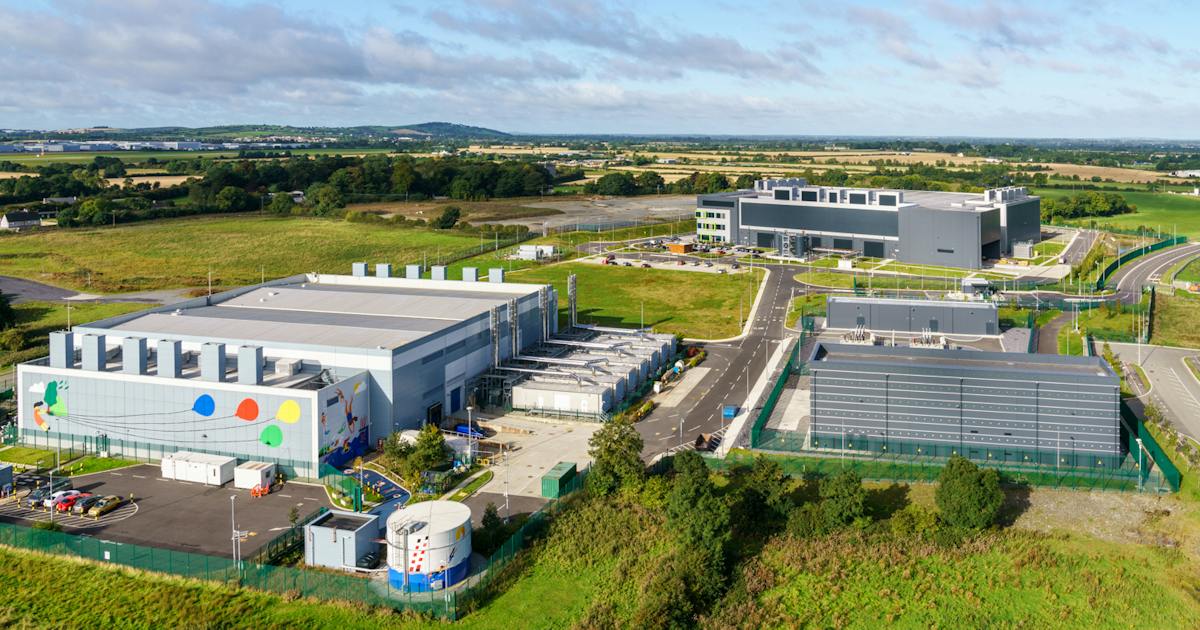
The Subsidy That Became a Tax Bill
Rosie Leonard stands in lines at the grocery store in Dublin and does the arithmetic most people try not to do. She lives in a country where data centers — those windowless behemoths humming with GPU clusters and cooling towers — consume 23 percent of the national electricity grid. Ireland’s population is under 5.5 million. The data centers belong mostly to Google and Microsoft. The bills belong to everyone else.
Her group, Friends of the Earth Ireland, has been blunt about what this means: ordinary households are paying a de facto data center tax disguised as an energy subsidy. The government courted hyperscalers for decades with cheap power and generous incentives. Now the bill is coming due, and the political backlash is real.
Why 23 Percent Is Not Normal
The number itself is the headline that rarely travels. A 23 percent data center share of national grid consumption is extraordinary. The United States averages 3 to 5 percent. Europe sits in the same band. Japan, famously cautious about land and energy trade-offs, runs at 1 to 2 percent nationally.
Virginia is the only American benchmark that comes close, touching 25 percent in some estimates — and even there, the political response has already started. Virginia introduced a data center electricity tax precisely because the subsidy model became unsustainable. The arc is predictable: lure the hyperscalers with cheap power and deregulated zoning, watch the share climb past the point where the public tolerates it, then reverse course when the voters show up.
Ireland is simply further along that curve.
The Cable Lottery
Ireland’s advantage was geographic luck compounded by policy patience. Nearly three-quarters of the Northern Hemisphere’s subsea cables route through its waters. That gave early hyperscalers low-latency access to transatlantic traffic and a natural landing point for the fiber that powers the cloud. The government leaned in during the 1990s, offering a business-friendly regime that promised stable energy costs and straightforward permitting. It worked — perhaps too well.
The irony is that Ireland never had cheap energy in any absolute sense. It is an island with limited domestic generation and a heavy reliance on imported fossil fuels. What it offered was a regulatory environment where data centers could externalize their true grid cost onto residential and commercial ratepayers. The subsidy was structural, not announced.
Who Wins, Who Loses
Google and Microsoft win. They get the land, the fiber, the regulatory certainty, and for years, the discounted grid access. The Irish state wins in a narrow fiscal sense — corporate tax receipts flow in, employment numbers look good in tech-adjacent roles, and the narrative of Ireland as a digital gateway holds.
Households lose through elevated electricity prices and grid congestion risk. Regional communities near data center sites face visual and infrastructural disruption without proportional benefit. Environmental groups see renewable energy targets strained by demand that grows faster than the grid can decarbonize.
The Japanese connection matters here. Nikkei’s coverage flags this not as a parochial European story but as a policy template with global legs. Japan’s national data center electricity ratio sits at 1 to 2 percent — but that masks a sharper regional concentration. The Kanto and Kansai corridors, where most of Japan’s population and demand already sit, are projected to reach 7 percent by 2030 if current trends hold. That is a long way from Ireland’s 23 percent, but the direction is identical.
Osaka Prefecture has already launched a public-private council to accelerate data center development as part of a broader capital dispersal strategy. Shikoku, particularly Ehime and Kagawa, has formed similar organizations. The government is effectively repeating Ireland’s early-move playbook: locate infrastructure in regions that need economic stimulation and offer the regulatory ease that attracts capital.
The Virginia Rehearsal
Virginia’s pivot is the most useful case study for other countries watching Ireland. The commonwealth drew massive hyperscaler investment under a similar subsidy framework. When the grid share hit roughly 25 percent, the political math changed. Consumers felt the price pressure. Lawmakers responded with an electricity tax targeted at data centers.
The structure of the tax matters. It is not a blanket levy — it is calibrated to the disproportionate grid burden that data centers impose. That distinction will define the next round of policy debates everywhere. A broad energy tax would choke growth. A targeted surcharge on the highest-demand industrial users signals that the subsidy window is closing without shutting the door entirely.
What Happens Next
Ireland’s debate will not end with a single tax. It will unfold across multiple policy fronts: grid connection queues that favor or penalize certain projects, planning permissions that become harder to obtain, renewable procurement mandates that shift the cost structure, and ultimately, a redefinition of what constitutes a fair energy price for energy-intensive industry.
Countries still in the attraction phase — Japan included — face a timing decision. They can continue the subsidy race and hope the political backlash stays distant, or they can set terms now while the grid share is still manageable. The second option is harder politically but avoids the sharper reversal Ireland is living through.
Japan’s dilemma is slightly different from Ireland’s. Its data center share is low enough that there is room to adjust the rules before anger reaches a breaking point. But the Kanto-Kansai projection of 7 percent by 2030 means that window is narrowing. Regional dispersion policies could spread the load, but they also spread the political friction. Every new site becomes a local referendum on whether a data center belongs in a community’s backyard.
The Real Lesson
The data center tax debate in Ireland is not about punishing technology companies. It is about acknowledging that the old bargain — cheap land and cheap power in exchange for investment — has reached its limit in markets where grid capacity is finite and public tolerance is thinning.
The countries that manage this transition cleanly will be the ones that redefine the bargain now: data centers get access, but at a price that reflects their true cost to the grid. Households stop subsidizing infrastructure that primarily serves offshore profit centers. And governments keep their credibility intact instead of reversing course under electoral pressure.
Ireland is five years ahead of most other markets on this question. Its anger is someone else’s rehearsal.