IRENA Chief Turns the Nuclear-for-AI Argument on Its Head
The head of the global renewables body just argued that solar and wind beat nuclear for powering AI datacenters and chip fabs — not because renewables are perfect, but because they deliver power today at lower cost. Korea sits at the center of that debate.
The argument that flipped
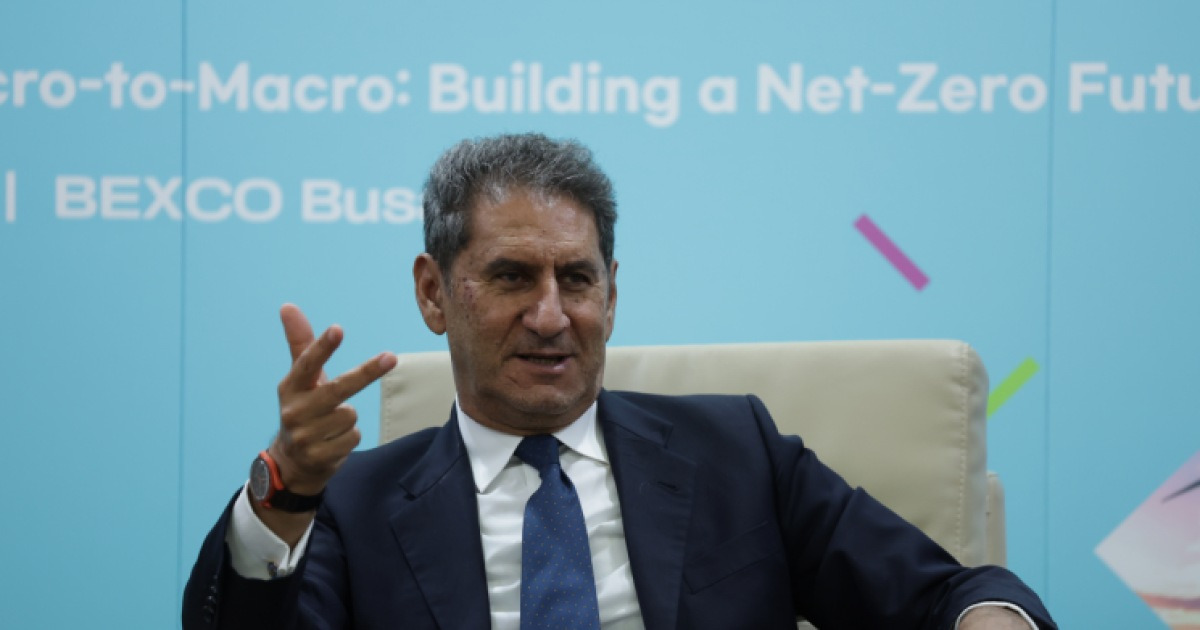
Francesco La Camera, secretary-general of the International Renewable Energy Agency, dropped a line at a press briefing in Busan last week that should rattle a lot of energy strategists.
He was answering a pointed question: with AI datacenters and semiconductor fabs consuming vast amounts of power, isn’t nuclear — or its newer cousin, small modular reactors — the more logical choice?
His response turned the question around. “Which would you choose: energy that is available today at a low price, or energy that arrives tomorrow at a high price?”
The implication is sharp. Nuclear’s promise for the AI era rests on two claims — that chips and datacenters need dense, constant baseload power, and that renewables simply cannot deliver at that scale. La Camera agreed with neither. He said nuclear plants take seven to nine years to build. SMRs, even newer, are not fast. Renewables can be scaled up now, and they are the cheapest source of new electricity globally.
This is not a radical claim inside climate circles. What makes it noteworthy right now is who is saying it, and when. We are in a moment when governments from Seoul to Washington are rushing to reassure chip companies that their power supply is secure — and the default assumption has been that the answer lies in restarting reactors or building new ones.
La Camera is pushing back on that reflex.
Why it matters for Korea’s chip strategy
South Korea is a first-class semiconductor player. Samsung Electronics and SK Hynix together account for a dominant share of global memory-chip output, and both are expanding aggressively to meet AI demand. Each new fab is a massive electricity load. A single advanced semiconductor facility can draw hundreds of megawatts — comparable to a small city.
Korea’s current renewable share sits at roughly 9 to 10 percent of total generation. The government has set a target of 35 percent by 2035. That is an ambitious jump, and La Camera called it achievable, pointing to domestic capabilities in perovskite solar cells, power cables and energy-storage systems.
But the geography problem is real. Unlike the European grid, which interconnects across borders and can balance supply in real time, Korea runs an isolated system. There is no physical tie to a neighbor’s grid. When the sun sets and the wind drops, there is nowhere to import from — and the country already consumes more electricity per capita than most advanced economies.
La Camera acknowledged the constraint but did not treat it as a wall. He argued that energy-storage systems, pumped hydro and a upgraded transmission grid could absorb the variability. He also pointed to a second-order benefit: if Korea ever builds cross-border interconnections, it could export competitively priced renewable electricity rather than importing it.
That export possibility is the part most English-language coverage will miss. Korea’s grid isolation is usually framed as a vulnerability. In a future where regional interconnection exists — something China and Japan are both exploring — an isolated grid with excess renewable capacity becomes a selling point. The revenue stream from power exports could help subsidize the grid upgrades that the country needs anyway.
The bottleneck is not technology — it is permission and wires
La Camera named the real obstacles plainly: permitting and grid infrastructure.
He did not say Korea’s permitting process is uniquely slow. He said it is slow in the same way that Italy’s is slow — a universal feature of modern energy transitions where local opposition, environmental reviews and layered approvals eat into timelines. The lesson is that even a technically capable country can stall if its bureaucracy cannot keep pace with its ambitions.
The grid problem is more concrete. Renewable generation capacity and transmission capacity are two different things, and Korea has built far more of the first than it has rushed to connect to the second. Without transmission investment, new solar and wind farms sit behind the meter or get curtailed. This is not a Korea-specific failure. La Camera noted that grid readiness is a common bottleneck across many countries.
The cost argument — and the trap it sets
One of La Camera’s sharpest lines cut against a narrative that has shaped energy policy in several capitals. He rejected the claim that investing in renewable infrastructure raises electricity prices. “If that logic were true,” he said, “nobody would invest in infrastructure at all.”
His point is straightforward: capital-intensive sectors like energy have always been justified by long-term cost declines that outpace upfront spending. The alternative — relying on legacy systems while deferring investment — tends to produce higher costs later, not lower ones.
The trap in this argument is that it assumes price stability for renewable capital. Solar panel costs have dropped dramatically over the past decade. Battery costs have followed a similar curve. But if AI-driven demand triggers a surge in global renewable deployment — and therefore in critical minerals, transformers and grid components — those cost curves could flatten or reverse temporarily. That is the risk that nuclear advocates will seize on.
Who wins and who loses
Several players feel the immediate pressure of La Camera’s framing.
Nuclear vendors and regulators in Korea and Japan face a harder case to make for new builds when the alternative arrives years sooner and at lower cost. Japan, which has flirted with restarting reactors and is investing in SMR development, now has to explain why speed and price favor renewables in the AI era — not just in the abstract, but for fabs that need power contracts signed today.
Chipmakers stand to gain. Samsung and SK Hynix have long complained about electricity costs and supply security. A faster, cheaper pathway to renewable power reduces one source of operational risk. It also opens the door to green-certified power, which increasingly matters to customers — especially in Europe, where the Carbon Border Adjustment Mechanism will eventually apply to embodied emissions in manufactured goods.
The losers are slower movers on permitting and grid reform. Korea’s 35-percent-by-2035 target is plausible on paper. Execution depends on whether local approvals speed up and whether transmission projects move from plan to operation without dragging into the next decade.
The 35 percent tipping point
La Camera described the 2035 renewable target not as an arbitrary number but as a threshold. Past a certain share, the economics of electrification begin to feed back into further renewable adoption. Cheaper clean electricity drives more electric demand — in industry, transport, heating — which in turn justifies more renewable buildout. That feedback loop is what he called a virtuous cycle.
Reaching that point requires a sustained push. Korea’s 9-to-10-percent base makes the climb steep. But the country already has much of the industrial base required: solar manufacturing, battery production, offshore-wind supply chains and a strong state-owned grid operator.
The question is no longer whether renewables can power the AI era. The question, following La Camera’s intervention, is whether nuclear can arrive fast enough to matter — and whether its higher price tag is justifiable when cheaper alternatives are available today.
For Korea, the answer will be written in permitting records and transmission milestones over the next three years.