Israels Ammo Crisis Is Forcing Koreas Defense Industry Into Overdrive
Israel has burned through 30 years of ammunition in under three years, triggering urgent demand for Korean defense exporters. The production squeeze reveals how a Middle Eastern war is quietly redirecting East Asian industrial strategy.
The Tanker in the Red Sea Nobody Is Talking About
A single merchant vessel called the Ibizak sank in the Red Sea this month after what the US Navy called a direct drone strike. It was carrying ammunition bound for Gaza. The ship burned for days and eventually capsized. The cargo was lost.
This is the kind of supply chain reality that sits beneath Israel’s current ammunition crisis, and it is one of the reasons South Korea’s defense industry is suddenly receiving urgent contracts that have nothing to do with the Korean Peninsula.
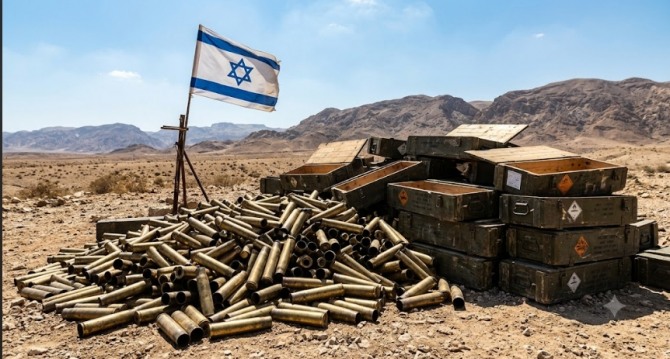
Israel has consumed roughly 30 years’ worth of ammunition in under three years of conflict. Its air force is operating at nine years’ worth of peacetime sortie volume. Thousands of tank and armored vehicle engines have been replaced. The reserve force is holding roughly 53,000 soldiers on active duty every single day. The monthly cost of maintaining those reservists is approximately 21 billion shekels — enough to fund seven F-35 fighters or seventy Merkava tanks.
The numbers tell a story about strain. The industrial story underneath them tells a story about opportunity.
Why Korea Matters Right Now
Korea sits in an unusual position in global defense manufacturing. It has heavy industrial capacity that can scale quickly. It produces 155mm howitzer shells — the same caliber used across NATO and by Israel — at a fraction of the cost of Western manufacturers. And it has a domestic supplier ecosystem that is concentrated in a single geographic cluster near Daegu and Ulsan, which makes coordination faster than in countries where defense firms are spread across rival regions.
Poongsan is one of the companies feeling the pressure. It produces 155mm howitzer ammunition, and Israeli orders for large-caliber artillery shells have pushed it to discuss expanding production capacity. The company has been reportedly evaluating whether to add a second shift at its primary facility, a move that would increase output by nearly 40 percent within six months if approved. Hanwha Aerospace, meanwhile, is building self-propelled howitzer systems and producing propellant charges for both domestic and export markets. Both companies are receiving orders that did not exist at this scale even two years ago.
The timeline matters here. Production ramps in the Munhak Industrial Complex and the surrounding facility network do not happen overnight. Tooling changes, material sourcing, and quality certification take time. If Israel’s war continues at current consumption rates through 2027, the demand will outpace whatever expansion schedule is currently planned. The bottleneck is not just factory space — it is the availability of high-grade steel and propellant chemicals, which are themselves subject to long lead times and competing global demand.
A second-order effect is beginning to surface. Korean defense subcontractors — smaller firms that supply precision machining, electronic components, and raw materials — are also seeing order books fill. These companies, many of which previously relied on seasonal government contracts, are now running at or near capacity. Their expansion is more difficult than Poongsan’s or Hanwha’s because they lack the capital reserves to invest in new equipment without financing, and banks are still assessing whether the demand is durable or temporary.
The US Factor That Changes Everything
The existing US-Israel defense cooperation agreement, covering 2018 through 2028, includes $38 billion in total support over ten years — $33 billion of it in grants. That agreement is approaching its expiry window. Prime Minister Benjamin Netanyahu is reportedly exploring ways to reduce Israel’s dependence on American military aid, which signals a strategic shift toward diversifying suppliers rather than relying solely on Washington.
That diversification plays directly into Korean advantages. Seoul already has a defense cooperation framework with Tel Aviv that predates the current war. Korean-made weapons systems are being tested and potentially integrated into Israeli defense architecture. If Israel moves toward a multi-source procurement strategy, Korean manufacturers stand to gain market share that might otherwise have gone exclusively to American or European firms. There is already evidence of this: Israeli military officials have publicly praised the reliability of Korean 155mm shells and flagged the shorter delivery cycles compared with American alternatives, which sometimes face their own production backlogs.
There is also a secondary dynamic at play. NATO countries themselves are struggling to replenish their own ammunition stocks after years of drawing down reserves. Germany, Poland, and other European nations are competing with Israel for the same 155mm shells. Korea is one of the few countries with the manufacturing base to serve both markets simultaneously — something that American and European producers cannot easily do at the same volume. This dual-market position is precisely what makes Korean exports strategically valuable to Washington as well as Tel Aviv, even as it creates diplomatic friction when Berlin and Warsaw raise concerns about their own supply.
The Risk of Overexpansion
Not everyone is bullish on the expansion path. There is a real possibility that an early ceasefire in Gaza or Lebanon would reduce demand pressure overnight. Western nations are also accelerating their own ammunition production plans, which could capture demand that would otherwise flow to Korea. And if the US extends its aid agreement with Israel on favorable terms, Israel may continue sourcing heavily from American suppliers rather than shifting orders.
Defense contractors in Korea are aware of these scenarios. Their investment decisions will depend on which outcome materializes. The key indicators to watch are not Israeli battlefield updates but rather NATO ammunition production targets, US congressional appropriations for military aid extensions, and the actual pace of Korean factory expansions through the rest of the decade.
A further complication is the labor dimension. South Korea’s defense industry has been grappling with a shrinking workforce for years. The country’s birth rate remains among the lowest in the world, and recruiting skilled welders, machinists, and quality-control inspectors for round-the-clock production shifts is not straightforward. Wage pressures are already visible in the Munhak area, where competing employers — both defense firms and civilian manufacturers — are bidding for the same pool of technical workers. If the war winds down before companies solve this labor constraint, they could be left with idle capacity and inflated payrolls.
What Comes Next
What is clear is that the war in the Middle East has created a feedback loop between the Red Sea front and Korean shipyards and munitions plants. The sinker of a tanker called Ibizak was not the only casualty of recent Houthi attacks. A broader assumption about how defense supply chains work is also sinking — the idea that Korean factories serve primarily as backup capacity for Western allies. In 2024 and beyond, Korea appears to be moving into the center of the supply chain itself.
The next twelve months will reveal whether this shift is structural or cyclical. If Israel’s conflict extends and NATO continues to strain its own replenishment pipelines, Korean defense exporters will consolidate their position as indispensable mid-tier suppliers — a role that carries both commercial reward and geopolitical exposure. If the fighting shortens and Western production ramps as expected, Korean companies may have overinvested, leaving them to manage excess capacity in a recalibrated market. Either way, the relationship between Middle Eastern demand and East Asian manufacturing has been fundamentally rewired, and the factories around Daegu and Ulsan are now part of a supply chain that no longer runs through Detroit or Munich.