Japan's 80,000-Drone Bet Is an Industrial Policy Play, Not Just Defense
Tokyo is targeting 80,000 domestically produced defense drones by 2030 with ¥4 trillion in public-private investment. Terra Drone's stock surge reveals who is already positioned to win.
The Number That Changes Everything
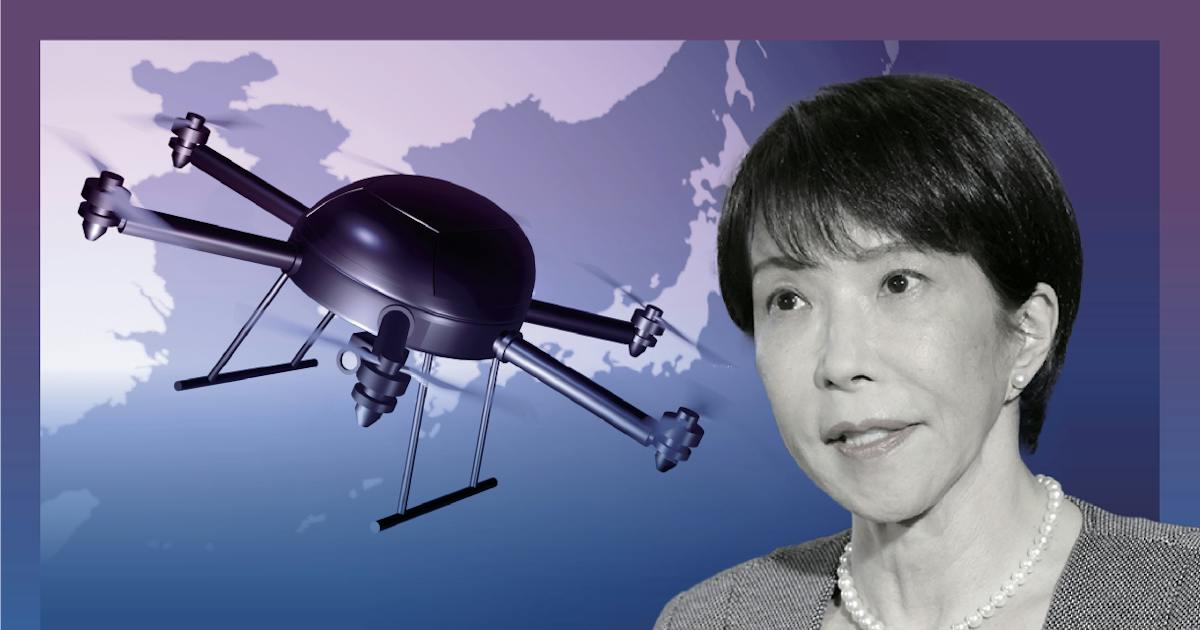
Eighty thousand drones. That is the number Japan’s Defense Ministry has set as its domestic production target by 2030. It is not a vague aspiration. It is the centerpiece of a formal industrial policy that treats defense manufacturing as a growth engine, not a cost center.
The math behind it is stark. Japan currently produces virtually none of these systems at scale. The target implies a supply chain that does not yet exist, built from scratch within four years. That is either a bold bet or a desperate one. The market seems to have decided it is both.
But the number itself deserves scrutiny. Eighty thousand is not a stockpile target — it is a production rate. The Defense Ministry envisions replenishing and expanding forces continuously, not purchasing a one-time batch. That shifts the entire calculus from procurement to industrial capacity, which is precisely where Tokyo has historically been weakest. Japan’s defense industrial base contracted dramatically after the Cold War, atrophying into a system designed for low-volume, high-complexity platforms like Aegis destroyers and F-35 assembly lines. Small drones are a different world entirely. They demand modular manufacturing, rapid iteration, and supply chains that can flex between civilian and military output. Japan is attempting to build that muscle on a compressed timeline, which means the government will likely subsidize not just purchases but the factories, tooling, and workforce development that make scaled production possible.
The Money Follows the Signal
When news of the 80,000-drone target surfaced, Terra Drone’s stock surged 20 percent intraday. That reaction tells you who the market thinks is ready to deliver. Terra Drone is not a legacy defense contractor. It is a civilian drone company that has been flying agricultural and inspection drones for years, and it moved fast to reposition itself for military contracts. Last month, the company began delivering interception drones to the Japan Self-Defense Forces. It has also made several equity investments in Ukrainian drone companies, bringing combat-tested know-how back to Japanese soil.
The stock move was not abstract speculation. It was a vote on who can scale fastest. What investors priced in was Terra Drone’s existing relationship with the Ministry of Economy, Trade and Industry, its proven civilian production lines, and — critically — the transfer of battlefield data from Ukraine. Every hour of combat flight logged by a Ukrainian operator is data that can be fed into targeting algorithms, flight stability improvements, and swarm coordination protocols. Terra Drone is not just selling hardware; it is positioning itself as the conduit for a capability that Japan’s own R&D pipeline cannot replicate within the same timeframe.
Smaller competitors are already circling. Several startups based in Osaka and Fukuoka have registered with the Defense Procurement Agency, anticipating contract releases. The race is not yet settled, but the early signal is clear: companies that can demonstrate dual-use capacity and combat-adjacent experience will capture disproportionate share of the initial orders.
Why This Is Bigger Than Defense
The Takaichi administration has bundled defense industrial policy with economic growth strategy. Defense is listed as one of 17 priority fields in the government’s strategic framework. The public-private investment roadmap, finalized in July, envisions ¥4 trillion — roughly $27 billion — flowing into small aviation drones by fiscal 2040. That money is meant to de-risk private investment, fund joint research, and create a guaranteed demand floor that lets companies build capacity without betting everything on military contracts alone.
The logic is deliberate. Dual-use technology is the bridge. A drone built for military interception can also map farmland, inspect infrastructure, or monitor coastlines. A manufacturing line calibrated for defense-grade reliability can serve civilian markets, too. The government is not just buying drones. It is buying the industrial base that produces them — and in the process, revitalizing regions that have suffered from decades of manufacturing hollowing out. Several prefectures, including Shimane and Kagoshima, have already announced plans to host drone assembly facilities, hoping to capture jobs and tax revenue that migrated overseas during the 2000s.
This is also a geopolitical message. Japan’s security architecture has long depended on the United States, with a secondary reliance on Western allies for critical technologies. The ¥4 trillion roadmap is an explicit statement that Tokyo intends to reduce that dependency, even if full autarky is impossible. The goal is strategic autonomy at the margin — enough domestic capacity to survive if supply lines are disrupted, enough industrial depth to influence regional balance without triggering an arms race.
The Ukraine Lesson Japan Is Reading Carefully
What makes this pivot credible is that Japan is not designing its strategy in isolation. Defense analysts at the National Institute for Defense Studies, including policy researcher Sugio Takahashi, have been studying what actually worked in Ukraine. The consensus there is blunt: the hardware matters less than the system around it.
Ukraine’s advantage in the war was not that it built more drones than Russia. It was that it built a data-processing layer — the Delta system — that automated target recognition, coordinated drone swarms, and fed real-time intelligence directly to commanders. Russia also flew massive numbers of drones. It lost because it lacked that software backbone.
Japan is watching this closely. The 80,000-drone target is only half the equation. The other half is the command-and-control architecture that makes those drones useful in a fight. The government has not published detailed plans for the software side, but the inclusion of Ukraine-focused investments by companies like Terra Drone suggests Tokyo understands that hardware without software is just expensive metal. Defence officials have privately acknowledged that Japan’s current battlefield data infrastructure is ill-suited for rapid drone deployment — legacy communication protocols, fragmented command chains, and limited AI-assisted targeting all present bottlenecks that no amount of hardware spending can resolve.
The implication is that future procurement rounds will increasingly weight software integration capability alongside hardware specifications. Companies that can demonstrate sensor fusion, open-architecture design, and interoperability with existing JSDF networks will enjoy a structural advantage. Those that treat the program as a pure hardware contract risk being sidelined once the government recalibrates its evaluation criteria.
Who Wins and Who Loses
Terra Drone wins today. It has civilian experience, military contracts in hand, and partnerships in a country that has already tested its drones at scale. The stock surge confirms it.
Mitsubishi Heavy Industries, too, is moving. The company announced it is accelerating its own drone development program, citing the same competitive pressure. Legacy defense primes are waking up to a reality they ignored for decades: the fastest path to capability may not run through their own R&D departments. Lockheed Martin and Boeing are monitoring the situation closely, recognizing that their traditional dominance in Japanese defense procurement faces a new variable — a government increasingly willing to bet on non-traditional suppliers when strategic autonomy is on the line.
Foreign suppliers face the hard part. The ¥4 trillion roadmap explicitly prioritizes domestic production. China-made drones are politically nonviable for Japan. American drones remain an option, but Tokyo’s stated goal is independence from both powers. That leaves companies in Europe and Israel with a narrow window to partner rather than compete. European firms like Airbus and French startup Parrot are exploring joint ventures with Japanese manufacturers, but the timeline is tight and the terms favor technology transfer over simple supply agreements. Israeli defense companies, long admired for their drone innovation, now face the same structural headwind — Japan wants expertise, not products.
The Second-Order Effects
The ripple effects extend well beyond the defense budget. Semiconductor manufacturers are already exploring drone-grade chip production lines, recognizing that the demand for rad-hardened, low-power processors will grow regardless of geopolitical outcomes. Battery producers see an opportunity to scale energy-dense cells for industrial drone use, which could also benefit electric aviation. Even insurance companies are taking note — drone liability frameworks are being drafted for the first time, creating a new subsector of risk assessment that did not exist eighteen months ago.
Labor markets will feel the pressure. Japan’s engineering talent pool is shallow relative to the scale of this ambition. The Defense Ministry has indicated it may fast-track visa approvals for foreign drone engineers, a significant shift for a country that has historically resisted large-scale immigration. Domestic technical colleges are already revising curricula to include swarm intelligence and autonomous systems — subjects that were absent from most programs until this year.
There is also a diplomatic dimension. South Korea, which has been developing its own drone capabilities, may view Japan’s ¥4 trillion commitment as either a model to emulate or a competitive threat. China’s drone industry, led by companies like DJI and CHIC, operates at a cost structure that Japan cannot match without subsidies. The question of whether Tokyo can achieve meaningful cost parity while maintaining quality standards will test the industrial policy experiment in real time.
What Comes Next
The next twelve months will reveal whether this is a real industrial policy or a political announcement dressed in budget details. The Defense Ministry will publish procurement contracts. Companies will announce factory expansions or hiring sprees. Terra Drone’s Ukrainian partnerships will either yield deployable systems or remain publicity stunts.
Investors should watch two leading indicators: the pace of subcontractor onboarding and the specificity of software integration requirements in early contract awards. If Terra Drone and its peers begin subcontracting to smaller firms at scale, the industrial base is genuinely forming. If contracts remain concentrated among a handful of large players with minimal supply chain diversification, the ambition may outpace the infrastructure.
The 80,000 target by 2030 is ambitious enough that missing it by a wide margin would damage credibility across multiple ministries. But meeting it would be transformative — for Japan’s defense posture, for its manufacturing sector, and for how Washington and Beijing view Tokyo’s capacity to act independently. A Japan that can produce tens of thousands of combat-effective drones domestically changes the calculus in the East China Sea and the Pacific approach in ways that no single weapon system ever could.
The bet is already placed. The question is whether the industrial base can deliver — and whether the government sustains the political will to protect this sector from the inevitable lobbying pressures that emerge when billions in subsidies are on the table.