Japan's Global Hawk Crash Exposes a Fragile Pacific Surveillance Network
A US-made Global Hawk drone lost contact and likely crashed off Tottori while conducting an unspecified non-training mission. The incident is rattling Tokyo and Washington over what was being surveilled and what gap it leaves in an already stretched Pacific monitoring architecture.
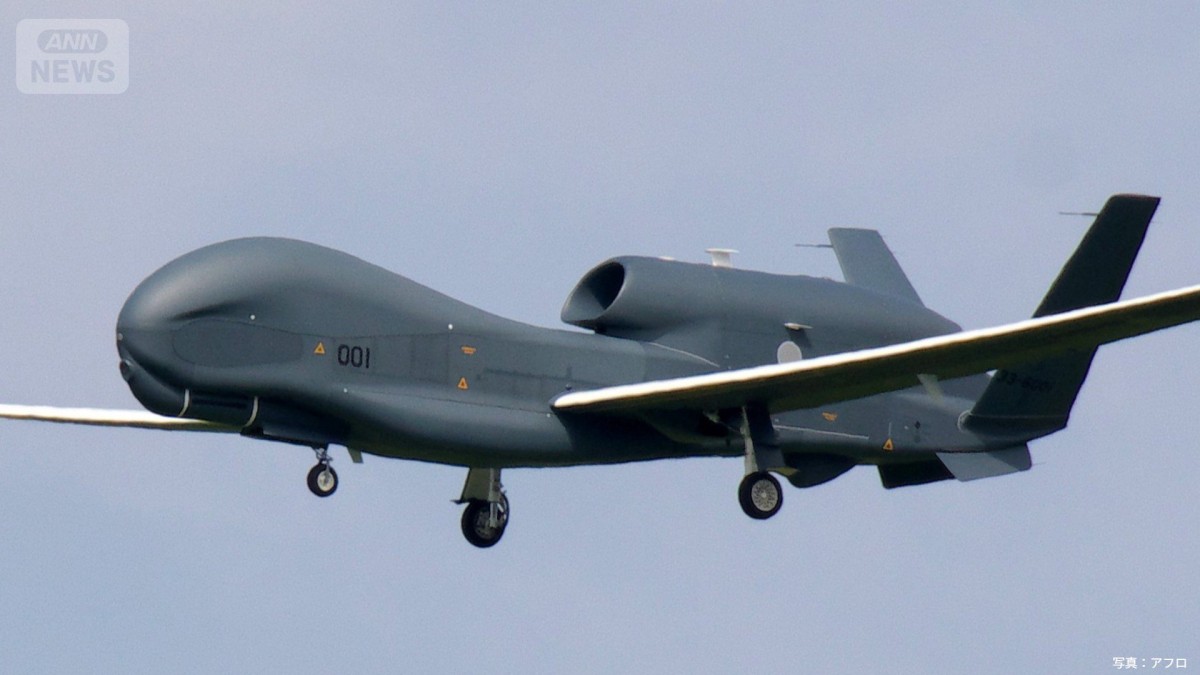
A Drone Vanishes Off Tottori, and Questions Multiply
Japan lost a RQ-4B Global Hawk on Tuesday afternoon when its communications link failed roughly 50 kilometers off the Tottori coast. The Maritime Safety Agency later spotted floating debris consistent with the aircraft’s airframe. The Aviation Chief of Staff confirmed the drone was not on a training mission — a detail that immediately intensified the seriousness of the incident.
The sequence unfolded quickly. The aircraft departed Misawa Air Base in Aomori Prefecture at 10:20 a.m. Local time. At approximately 12:55 p.m., a connection fault struck the communication system. Three minutes later, the drone was silent.
Cabinet Secretary Hidehiko Ishiba stated there were no reports of damage or injury on the ground. That much is expected — the drone was over water. But the absence of civilian impact does not diminish the strategic puzzle this crash creates.
What Was the Global Hawk Doing?
The most pressing question is not how the drone fell from the sky but what it was watching. Senior Japanese officials declined to specify the mission profile beyond confirming it was operational rather than routine training. That refusal to disclose is itself telling. The Global Hawk, operating out of Misawa, has increasingly served as a critical node in the surveillance architecture that tracks Chinese naval movements, North Korean missile tests, and broader regional military activity.
Misawa itself sits at the center of this equation. The base hosts a dual-use mission shared between the Japan Air Self-Defense Force and the United States Pacific Fleet. American and Japanese personnel operate these drones together. The intelligence collected feeds directly into joint command structures. When a RQ-4B goes down off the coast of western Japan, it is impossible to know whether it was monitoring waters near Chinese naval activity, tracking North Korean maritime movements, or conducting some other classified patrol.
The lack of transparency works against open analysis. But it also underscores why this crash matters beyond the immediate loss of hardware.
The Cost of Losing a Global Hawk
Japan operates a small fleet of RQ-4B Global Hawks — approximately five to six airframes — each valued at roughly $200 million to $250 million. They are not easily replaced. Delivery timelines extend well past two years, and the Block 30 variant carries technology that is not produced at scale. The United States itself operates fewer than two dozen of these drones across all services.
The financial loss is significant but secondary. The operational gap is where the real cost lies. Japan has been investing heavily in long-endurance unmanned ISR — intelligence, surveillance, and reconnaissance — as part of a broader strategy to counter an increasingly active Chinese military presence in the Western Pacific. Every Global Hawk lost shrinks the surveillance net.
China’s navy has expanded dramatically in recent years. Its aircraft carriers, submarines, and surface combatants now routinely operate within the first island chain and beyond. Japan’s eastern and western maritime approaches require continuous monitoring. A single drone crash off Tottori may seem like an isolated incident, but it removes an asset from a portfolio that was already tight.
What This Means for the US-Japan Intelligence Framework
The Global Hawk program is one of the most visible expressions of US-Japan defense integration in the air domain. Misawa serves as the primary operating base for Japan’s fleet, and the drones rely on a communication and data-link infrastructure built jointly by American and Japanese contractors. The intelligence generated feeds into both national command structures.
This crash will trigger a formal investigation. The Japanese Ministry of Defense and the US Strategic Systems Command will likely share findings. But the investigation’s scope and conclusions will almost certainly remain classified. That is standard procedure. It also means the public — including policymakers in Washington and allied capitals — will operate without full visibility into what went wrong or what the drone was doing when it fell silent.
For the United States, the implications cut both ways. On one hand, losing a partner’s asset highlights the interdependence of the two militaries. On the other, it raises uncomfortable questions about maintenance protocols, communication system reliability, and whether the rapid pace of drone deployment is outstripping the support infrastructure needed to sustain them.
A Pacific Surveillance Architecture Under Strain
Japan is not the only actor in this theater wrestling with ISR limitations. South Korea operates a handful of Global Hawks of its own. Australia relies heavily on its RQ-4B fleet. The United States is simultaneously managing its own Global Hawk fleet while investing in next-generation systems like the MQ-4C Triton and the Broad Area Maritime Surveillance platform. All of these programs face budget pressure, technical challenges, and operational demands that exceed available assets.
The crash off Tottori is a reminder that the Pacific surveillance architecture is thinner than it appears. It depends on a handful of high-value platforms that are expensive, complex, and slow to replace. When one falls, the gap is immediate and difficult to fill.
Japan’s response will matter. The government has committed to recovering debris and investigating the cause. But the deeper question is whether Tokyo will accelerate procurement of replacement drones, expand reliance on alternative platforms such as the Boeing P-8 Poseidon or new unmanned systems under development, or seek deeper integration with American ISR capabilities to close the gap.
The answer will shape Japan’s posture in the Western Pacific for years to come. A single Global Hawk crash should not be read as a systemic failure. But it should be read as a warning — one that comes from a region where the margin for surprise is shrinking by the day.