Trump's Diesel Deal With Putin Is a Midterm Power Play
Trump's agreement to import Russian diesel while publicly disparaging Zelenskyy reveals how energy markets are being weaponized for domestic politics. The move threatens to fracture NATO cohesion just as Washington claims to be pushing Kyiv toward peace talks.
The Deal That Redraws Alliances
Donald Trump told reporters at the White House on October 10 that Ukraine needs a new president. The remark came minutes after he announced a deal with Vladimir Putin to import Russian diesel — up to 4.8 million tons — into the United States, with an immediate first shipment of more than 300,000 tons. Treasury officials moved quickly to ease sanctions on Russian diesel sales, clearing the legal path for the cargo to flow.
The sequence is not accidental. Trump has spent weeks tying record-high diesel prices — above $6 a gallon — to Ukrainian strikes on Russian refineries. He said he asked Kyiv to stop those attacks six times. Each time, according to a US official speaking to Axios, Zelenskyy refused. That refusal, Trump argued, is what keeps fuel expensive for American farmers and ranchers.
The logic is brazen. Ukraine’s targeting of Russian energy infrastructure is a military decision made in a war of survival. By framing it as a grievance against American consumers, Trump reframes Kyiv’s defensive choices as obstacles to US prosperity. The message to Zelenskyy is unmistakable: stay in line, or step aside.
How Energy Prices Become Election Leverage
Midterms are won and lost on kitchen-table issues. Gas prices have always been one. This cycle, food inflation and the lingering price shock from Iran’s instability have kept the pressure on the White House. A deal that promises cheaper diesel and, by extension, lower food transport costs, is exactly the kind of tangible win a sitting president can point to at the ballot box.
Trump’s team has already begun spinning it that way. White House spokesperson Katie Wright Jacobson told Fox News the deal would give Americans cheaper gasoline and groceries. The framing is deliberate — it connects a geopolitical transaction directly to the shopping cart.
But the math is far from settled. The 4.8 million ton figure sounds large until you compare it to US diesel consumption, which runs roughly 20 million barrels per day — about 280 million tons annually. Even if every ton arrives on schedule, the deal covers only a fraction of a percent of demand. The price effect on pumps could be marginal. The political effect, however, is designed to look larger than it is.
Who Pays the Price in Europe
Zelenskyy did not mince words. He called the arrangement an unjust gift to Putin and warned that allowing Russian oil products back onto global markets is equivalent to investing in a protracted war. The assessment from Kyiv is clear: Trump is buying short-term consumer relief with long-term strategic surrender.
European capitals are watching with growing alarm. Poland, the Baltic states, and much of the Eastern Flank built their security posture on the assumption that American commitment to Ukraine was structural, not transactional. A deal that normalizes Russian energy exports while disparaging the country being invaded looks like the opposite of structural.
Chuck Schumer captured the anger on the Democratic side, calling the deal a pact with the devil that helps Iran and enables Putin. But the criticism cuts deeper within NATO itself. If the United States is willing to relax sanctions on Russian energy while publicly questioning a European ally’s leadership, the credibility of the entire transatlantic framework frays. Poland and the Baltics will recalibrate. Germany and France will be forced to choose between hedging and filling a vacuum no one wants them to fill.
The Constitutional Question Nobody Is Ignoring
There is another layer to Trump’s remarks that goes beyond energy. Zelenskyy has remained in office since May 2019, extending his term under martial law imposed after Russia’s full-scale invasion in 2022. His five-year term expired in May 2024. Ukraine’s constitution permits postponing elections during martial law, and the Constitutional Court has upheld that position. No other European leader has governed under similar conditions for this long, and the arrangement remains legally defensible within Ukraine’s own courts.
Trump’s implication that Ukraine needs a new president is an implicit challenge to that arrangement. It is a deviation from the standard US posture of respecting Kyiv’s sovereignty. Whether deliberate or improvised, the remark signals that Washington may be preparing to treat Zelenskyy as expendable — not because of any democratic failure, but because his continued resistance does not serve the deal Trump wants to close.
What Comes Next
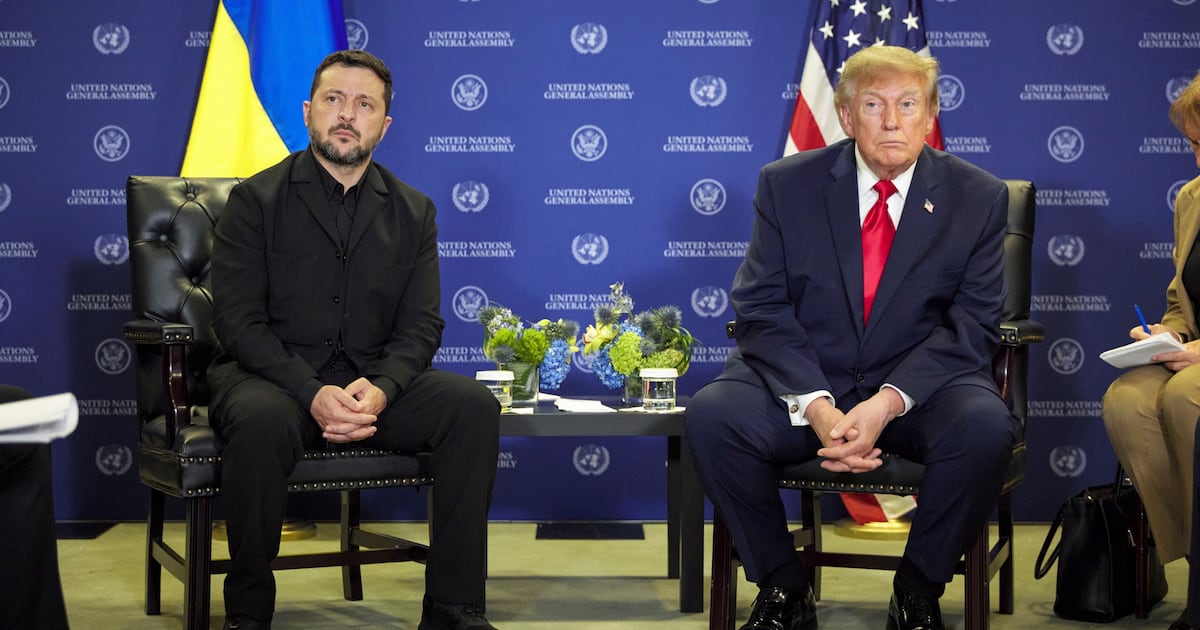
US, Ukrainian, EU, and NATO representatives held discussions in Miami on October 9 covering postwar security arrangements and territorial questions. That same week, Trump and Zelenskyy met in New York. The scheduling is telling. Peace talks and public pressure are moving in parallel, and both appear aimed at shaping the terms on which Kyiv will eventually negotiate.
The diesel deal changes the calculus. Russia gains sanction relief and a revenue stream it has been missing. Trump gains a campaign-ready narrative about cheaper fuel. Ukraine gains nothing directly and loses strategically — its military choices are being treated as leverage against it, and its president is being publicly told he has outstayed his welcome.
If the deal holds and diesel prices drop, Trump’s domestic positioning strengthens heading into November. If European allies object forcefully, the administration will face a choice between managing coalition anger or pressing forward regardless. Either path weakens the transatlantic bond in different ways.
The more immediate consequence may be on the ground in Ukraine. Ukrainian forces have targeted Russian refineries to degrade the logistics supporting the invasion. Telling a country under attack to stop striking its enemy’s war-fighting capacity — and then threatening replacement if it refuses — is a doctrine that rewards aggression and punishes resistance. That lesson will travel far beyond Eastern Europe.
For now, the diesel is just fuel. The political engine behind it is something else entirely.