Japan's Last Domestic Freighters Are Flying Out
Yamato and JAL are grounding Japan's only domestic cargo-only aircraft by June 2027, a shift that reveals how currency weakness and fuel costs have upended air cargo economics — and what it means for last-mile logistics across East Asia.
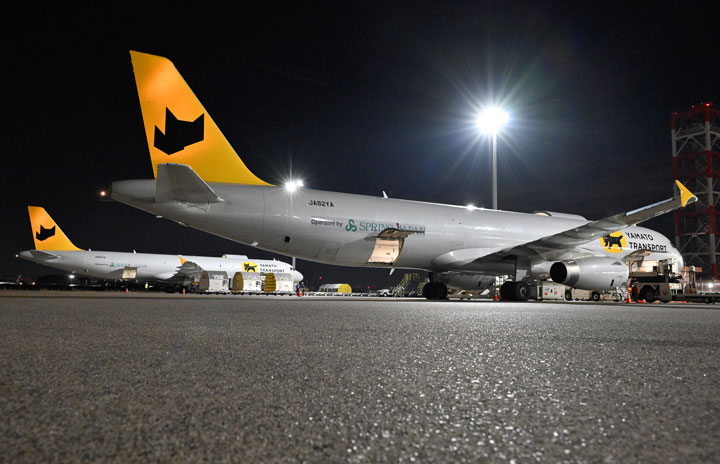
The Last Freighter Fleet Bows Out
Yamato Holdings and Japan Airlines are ending operations of Japan’s only domestically registered cargo aircraft by June 2027. The A321P2F freighters, converted from retired passenger jets, have been carrying Yamato’s Kuroneco packages — and e-commerce parcels for Spring Japan — since April 2024. In fewer than three years, the venture will be unwound.
The announcement is small in scale — three aircraft, a niche route network — but it maps a structural failure in Japanese logistics economics. Yamato and JAL expected the cost gap between air and truck transport to narrow as e-commerce volumes surged and truck driver shortages worsened. Instead, the yen’s depreciation and soaring fuel prices widened that gap further, making cargo-only flights unviable against road alternatives.
“We pursued efficiency reforms, route rationalization, and high-value service expansion, but ultimately concluded that leveraging alternative transport methods is more appropriate,” the companies stated in their filing. The wording is careful. What it means practically is that air cargo in Japan has become too expensive for the volume it was meant to serve — and the companies are redirecting to belly cargo on passenger flights where possible.
How We Got Here
The backstory dates to 2020, when the pandemic sent e-commerce volumes through the roof and Yamato’s courier networks strained. Facing a looming labor crunch — Japan’s truck driving population is aging and shrinking by tens of thousands annually — Yamato approached JAL about introducing dedicated freighters. JAL agreed. In January 2022, the partnership was announced: Yamato would lease three A321ceo aircraft converted to P2F (Passenger-to-Freighter) configuration, and JAL Group’s Spring Japan — the former Spring Airlines Japan, now a separate entity — would operate them.
The math was simple on paper. Each A321P2F carries 28 tonnes of payload — roughly the equivalent of five to six 10-ton trucks — and can accommodate Yamato’s temperature-controlled Kuroneco parcels in containerized ULDs. The planes took to the sky from Narita on April 11, 2024, carrying express parcels and courier shipments that would previously have moved by road.
Within months, two headwinds hit simultaneously. The yen weakened sharply against the dollar, inflating the cost of aircraft leasing, fuel hedging, and maintenance contracts denominated in foreign currency. At the same time, global jet fuel prices remained elevated. Truck transport costs rose too — driven by driver shortages and domestic fuel prices — but not fast enough to close the gap with air. The price differential expanded in the wrong direction.
Regulatory pressure compounded the problem. On April 1, 2024, Japan enforced strict overtime limits for truck drivers under its Work Style Reform laws. This reduced effective road capacity at the exact moment e-commerce volumes were accelerating, which is precisely the condition under which Yamato had bet on air freight being competitive.
Who Wins, Who Loses
The immediate losers are transparent. Yamato’s air cargo division loses a service layer that its premium Express delivery tier depended on. JAL’s leasing revenue from the three A321s will decline. Spring Japan, already operating on thin margins, loses a revenue stream it had counted on since pivoting from its parent airline’s budget model.
But the bigger question is who loses beyond the balance sheets. Japan’s e-commerce logistics ecosystem had begun pricing in a hybrid air-truck model for time-definite delivery. Removing the freighter option compresses that model. For fast-delivery services — same-day and next-morning promises that have become table stakes in Japan’s online retail market — the fallback is longer-haul trucking, which is itself capacity-constrained.
There is one potential winner hidden in the restructuring: passengers. JAL and its group carriers will shift cargo onto existing passenger flight bellies. That frees up space in the hold for higher-yielding passenger cargo — diplomatic mail, pharmaceutical shipments, live animal transport — that previously competed with Yamato’s parcel volume. It also means less dedicated cargo handling infrastructure is needed at airports like New Chitose and Kitakyushu, where the freighters were based.
For industrial shippers in Kyushu and Hokkaido — sectors that rely on air freight for semiconductors, automotive parts, and perishable agricultural products — the companies have promised to maintain service through passenger belly routes centered on those same airports. Whether that guarantee holds as passenger capacity tightens during peak seasons remains an open question.
The Regional Implication
Japan is not unique in this dynamic. Across East Asia, air cargo economics are under similar stress. China’s freighter fleet expansion, South Korea’s Korean Air Cargo ambitions, and Singapore’s Changi hub positioning all reflect a region where air logistics capacity is growing even as unit costs rise. Japan’s retreat from dedicated domestic freighters stands in contrast.
What makes Japan different is the combination of demographics and regulatory structure. No other major economy faces truck driver shortages of this severity relative to parcel volume. No other market has enforced overtime caps so rigidly on freight road transport simultaneously. The result is a logistics system where air and ground are supposed to complement each other, but the complementarity has broken down under currency and fuel pressure.
Yamato’s February 2025 comprehensive cooperation agreement with Solaseed Air (SNJ/6J) for Kyushu regional development suggests the company is looking for alternatives beyond the A321 model — smaller aircraft, regional routes, partnerships that don’t require the same capital outlay. It is a sign of adaptation, not retreat. But it also signals that the era of large domestic freighters in Japan may be over, at least for the foreseeable future.
What Comes Next
By June 2027, the three A321P2Fs will have completed roughly 730 days of service — barely two years. Their retirement schedule will vary by route, with details to be announced on Yamato and Spring Japan websites as they finalize. Some routes may transition entirely to truck; others, particularly the Kyushu and Hokkaido corridors, will continue relying on passenger belly capacity.
The broader lesson for the logistics industry is that the assumption that air and ground transport are natural substitutes under cost pressure may need revision. When both move in the same direction — both getting more expensive — the system doesn’t self-correct. It fragments. Japan’s freighter retirement is a preview of what happens when a mature logistics market hits the wall of simultaneous currency, fuel, and labor headwinds with no easy arbitrage between modes.
For Yamato customers who relied on next-day air service for non-urgent parcels, the change may be invisible. For the companies that built their business models around the air-truck hybrid, it is a signal that the old cost structure no longer exists.