Japan's 20-Firm Physical-AI Alliance Is a Industrial Strategy Play
A coalition of 20 Japanese industrial giants including Kyocera and Kobe Steel has formed around Kanazawa-based ALM to turn physical AI from concept into factory-floor reality. The move signals Tokyo's broader bet that autonomous machine control will define the next cycle of manufacturing competition.
The Quiet Move That Rewrites the Rules
Twenty companies. One objective: make AI stop talking about robots and start running them.
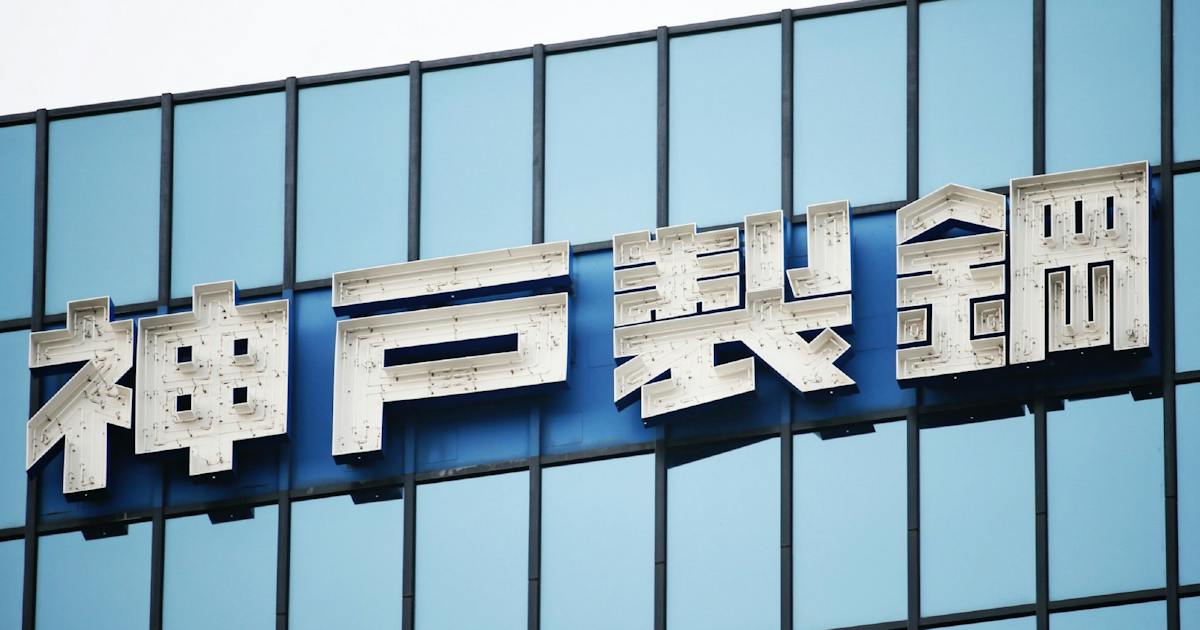
On August 30, ALM — a relatively small Kanazawa-based software firm — stood at a press conference flanked by two of Japan’s industrial heavyweight names: Kyocera and Kobe Steel. The announcement was modest on its face. A four-year consortium to develop physical AI for machining and robotic control. Starting in October. Targeting large-part manufacturing for automotive and semiconductor equipment.
But strip away the press-release geometry and what you find is a strategic realignment. Japan is no longer waiting for foreign firms to tell it what autonomous manufacturing looks like. It is building the blueprint itself, and it is assembling the entire value chain — software, materials science, precision engineering, energy — under one roof.
What Physical AI Actually Means Here
Physical AI is the term Japanese industry has adopted for systems where artificial intelligence directly controls physical machinery in real time, without human mediation at the decision layer. Unlike the generative-AI applications most people encounter, physical AI does not produce text or images. It produces motions. Tool paths. Feed rates. Tolerances measured in micrometers.
ALM’s pitch is specific: feed the system a blueprint, and it generates the machining process autonomously. No programmer writes the G-code. No engineer stages the operations. The AI reads the design and decides how to cut the material.
That sounds incremental until you map what it replaces. For decades, large-part machining — the kind used in semiconductor lithography stages, automotive drivetrain housings, aircraft structures — has depended on veteran machinists who can translate blueprints into multi-step processes by intuition and experience. Those people are retiring. Japan’s machine-shop workforce skews older than its semiconductor workforce. The gap is not closing.
Physical AI pretends that gap does not exist.
The Alliance as Industrial Policy
This is not a startup playing with a corporate sponsor. Twenty companies, spanning multiple tiers of the manufacturing stack, committing four years and an implicit guarantee to share data, workflows, and — eventually — proprietary know-how.
Kyocera contributes ceramics-machining expertise. That matters because advanced ceramics are notoriously difficult to cut: hard, brittle, expensive to scrap. A company that can reliably automate ceramic machining has solved one of the hardest subproblems in the field.
Kobe Steel contributes access to its own machine tools. It will run ALM’s software on its equipment and feed performance data back. That is the classic Japanese industry playbook: use your own products as the testbed, iterate internally, then commercialize.
Others round out the stack. A trading company (SOHEAD), a cloud infrastructure provider (Microsoft Japan), and presumably a dozen smaller firms whose roles are less visible but equally structural.
The government has already set the budgetary signpost. Tokyo targets 10.5 trillion yen in combined public-private investment toward physical AI by 2040. This consortium is the early signal of where that money is actually going — not toward general-purpose robotics, but toward CNC-level autonomy in heavy manufacturing.
Why This Matters Beyond Japan
For years, the dominant narrative in factory automation has been Chinese: robot density rising at double-digit rates, government subsidies flooding the sector, companies like Fantuan and Epsilon shipping collaborative robots at prices that make Western manufacturers nervous.
Japan’s response to that narrative is not to undercut on price. It is to leapfrog the entire model.
A robot that follows a programmed path is a tool. A system that reads a drawing and decides how to manufacture the part is closer to a decision-making entity. That distinction may sound semantic. It is not. In high-value machining — thin-wall aerospace structures, complex semiconductor components, precision medical implants — the difference between a programmed robot and an autonomous one is measured in yield, scrap rate, and cycle time. Those metrics dominate margin.
The alliance’s focus on automotive and semiconductor equipment is deliberate. Those are Japan’s two most strategically sensitive manufacturing sectors. Semiconductor equipment alone requires sub-micron precision in components that no amount of cheap labor can substitute for. If Japan can prove that physical AI can close the skilled-labor gap in this domain, it neutralizes the primary cost argument for relocating that supply chain.
Who Wins. Who Loses.
The winners are the firms inside the consortium, especially ALM. The company’s valuation and strategic position will be anchored by association with two of Japan’s oldest industrial brands. Its proprietary AI gets validated on real machine tools by companies that will keep using it even after the consortium ends.
Kyocera and Kobe Steel win through reverse engineering. They get first access to a system that could, within the four-year window, materially reduce their dependence on senior machinists — the exact demographic shrinking fastest in their workforce.
Losers are less visible. Western machine-tool vendors that rely on the consulting-and-programming-service model will face pressure if Japanese manufacturers demonstrate that AI-generated process plans are good enough to run directly. Fanuc has already announced its own physical-AI system for machine tools. Doosan will not sit idle. But the ALM alliance is different: it is not one vendor selling one machine. It is twenty companies building a shared standard.
China’s robot ecosystem remains the volume play. But volume in low-precision assembly is not the same as autonomy in high-precision machining. The two markets do not overlap cleanly.
What Happens Next
The project launches in October. Four years means results likely by late 2029 or 2030, which aligns roughly with when Japan’s demographic pressure on skilled trades becomes structurally acute rather than merely visible.
Watch for three developments:
First, whether the consortium publishes its interface standards. If ALM’s AI can export process plans in a format other machine-tool vendors adopt, the alliance shifts from closed project to open platform — and that changes the competitive geometry entirely.
Second, whether foreign participants appear. Microsoft Japan is already inside. A European or American machine-tool maker joining the second phase would signal that the alliance is building something others feel they cannot ignore.
Third, whether the government fast-tracks procurement. The 10.5 trillion yen target is directional, not committed. If Tokyo ties funding to consortium deliverables, the financial signal becomes operational.
The Human Layer
There is a quieter story beneath the press conference. In Kanazawa, in machine shops across the Kansai and Kanto regions, veteran machinists who have spent thirty years reading blueprints and making judgment calls about feed rates and tool engagement are watching this announcement. Some will see it as obsolescence. Others will see it as the tool they always needed — one that amplifies their expertise rather than replacing it.
The consortium’s language frames physical AI as augmentation, not substitution. That framing matters. Japan’s manufacturing identity is built on the dignity of skilled labor. A technology that appears to erase that dignity will face cultural friction regardless of its economic case. A technology that extends it — even slightly — can move fast.
The question is whether ALM’s AI, running on Kobe Steel machine tools and cutting Kyocera ceramics, will prove the augmentation claim before the demographic clock runs out.