Japan's Switch 2 Data Reveals What Western Analysts Missed
New Japanese user metrics show Switch 2 adoption following a distinct pattern — one that challenges Western assumptions about next-gen console transitions and signals shifting power in game development.
The Numbers Behind the Hype
Japan’s gaming research firm Cross Marketing has released preliminary findings from its Cross GEM (Game Engagement Monitor) dataset that tell a story Western desks haven’t fully grasped: Switch 2 adoption is following a pattern dramatically different from the original Switch’s trajectory, and the implications extend far beyond Japan’s borders. The data, drawn from what will become the Famitsu Game White Paper 2026 edition, represents one of the most granular looks yet at how a major platform transition actually unfolds among real players — not pre-orders, not launch-week enthusiasm, but sustained engagement across months of ownership.
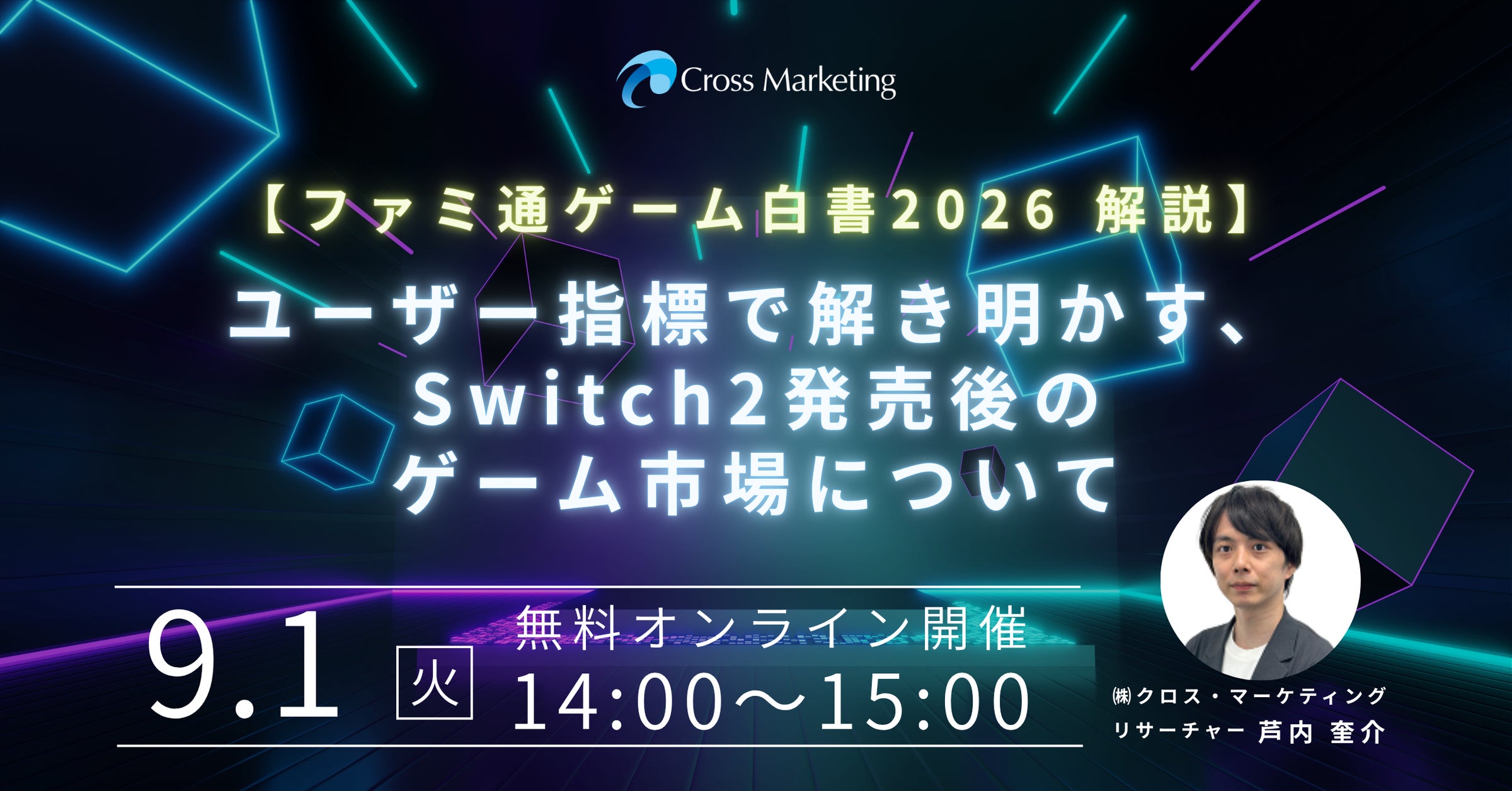
What’s notable isn’t just the raw adoption figures — it’s how user segmentation by hardware, demographic, and genre reveals which players are sticking with Nintendo and which are defecting, and crucially, which third-party publishers are winning and losing ground in the transition. Cross Marketing will present the full methodology and detailed breakdowns at a September 1 seminar, but even the preliminary numbers carry enough signal to warrant immediate attention from anyone involved in platform strategy.
Who’s Playing, Who’s Not
The Cross GEM framework segments users across multiple axes simultaneously: what hardware they own, their age and gender, and the genres they engage with most. This multidimensional approach exposes blind spots that single-metric analyses routinely miss — and it’s precisely those blind spots where the most actionable intelligence lives.
For instance, early Switch 2 ownership data shows a skew toward core Nintendo franchise fans — a predictable pattern, but one with meaningful second-order consequences. The dropout rate among certain demographic segments tells a different story. Players who were active on Switch 1 but haven’t migrated to Switch 2 cluster in specific genre preferences, and those preferences map uncomfortably close to titles that major Western publishers have been betting on for the Switch platform. Live-service experiments, co-op multiplayer titles, and action games that performed adequately on Switch 1 appear to be the categories seeing the steepest attrition during the transition.
Meanwhile, younger demographics — including the key 13-to-17 cohort that drove the original Switch’s casual expansion through titles like Mario Kart 8 Deluxe and Splatoon 2 — appear to be approaching the Switch 2 at a notably slower clip. This isn’t necessarily bad news for Nintendo. A more deliberate, core-gamer-led adoption curve can produce healthier long-term retention than the viral casual surge that initially propelled the original to 140 million lifetime sales. Casual adopters tend to churn faster; core adopters tend to stick around. The question is whether the slower uptake creates a revenue trough that matters for publishers counting on a broad install base.
The Genre Shift Nobody’s Talking About
Perhaps the most consequential finding in the early data involves genre-level engagement, and it’s a finding that deserves far more attention than it’s receiving. JRPG and narrative-driven single-player titles — genres where Japanese publishers hold structural advantages in both development expertise and cultural authenticity — show stronger Switch 2 retention rates than action-heavy or live-service titles. Western publishers with heavy live-service bets on the Switch platform may be underestimating how much player behavior is shifting away from those genres on Nintendo hardware.
This matters because it contradicts the prevailing assumption that Switch 2 will simply replicate Switch 1’s broad appeal across all genres. The data suggests Nintendo’s hardware transition is acting as a filter, reinforcing certain player populations while shedding others at a rate faster than analysts expected. The practical implication is that the Switch 2 library composition in the first year of life may look substantially different from Switch 1’s, with fewer Western third-party entries and a greater share of Japanese-developed content holding player attention.
There’s also a subtle but important feedback loop at work: as the player base skews more core and more Japanese-genre-aligned, publishers respond by investing in the genres that match that audience. This creates a self-reinforcing cycle that amplifies the initial shift. Publishers who entered Switch 1 expecting a generic portable-hybrid audience are now finding that the actual audience has narrowed in ways that don’t favor their portfolios.
Why This Matters Globally
Japanese market data often arrives late to Western coverage cycles, but it carries disproportionate weight for global console strategy. Nintendo’s Japanese player base is not representative of global trends — yet it reliably predicts which titles have staying power beyond launch windows and which franchises will survive platform transitions without subsidy. The Japanese market is also where Nintendo’s most intimate product decisions are stress-tested, and where failure tends to be punished more decisively than anywhere else.
The Switch 2’s Japanese adoption curve, as measured by Cross GEM’s multidimensional segmentation, indicates a market that is both more loyal and more selective than Western projections assumed. Loyalty shows up in retention rates that exceed expectations for a new platform in this generation. Selectivity shows up in the pace at which certain player segments are opting out entirely rather than migrating — a signal that the value proposition isn’t landing uniformly across the installed base.
Publishers who read this correctly will adjust their Switch 2 resource allocation now, rather than discovering mid-cycle that their genre positioning doesn’t match the actual player base. The cost of late adaptation is substantial: shelf space is finite, marketing attention is finite, and player wallets are finite. Getting it wrong means competing for a shrinking pool of relevant users against publishers who saw the shift coming.
What Comes Next
Cross Marketing’s full seminar on September 1 will unpack the White Paper’s methodology and detailed segment breakdowns, and it’s worth watching closely. But the early signals are sufficient to justify a reassessment right now: Switch 2 adoption is not a simple replay of Switch 1, the genre mix of active players is shifting in ways that favor Japanese-developed content, and Western publishers’ assumptions about Nintendo’s platform demographics may need updating.
The companies that act on this data first — adjusting release strategies, marketing spend, and platform investment based on actual Japanese user behavior rather than imported narratives — will have a meaningful edge in what remains of the current console generation. The alternative is to wait for the data to become undeniable, by which point the window for strategic adaptation has already begun to close.