Japan's Yen Reversal Is Just Starting — And It Could Unwind Carry Trades Worldwide
A Japanese FX strategist sees the recent dollar-yen drop as only the opening phase of a structural yen-strength wave that could push the pair to 142–146 by October. The implications for global carry trades and EM debt are far larger than most English-language desks are pricing in.
The Move That Wasn’t a Move
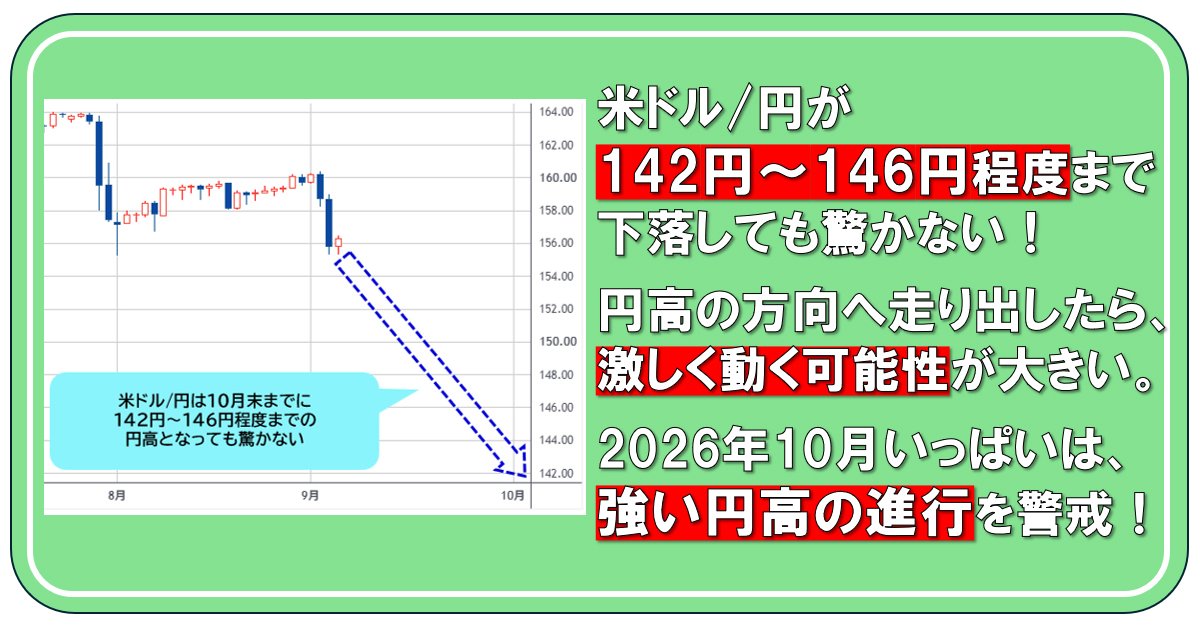
USD/JPY fell nearly 4 yen between September 2 and 3. Cross pairs like EUR/JPY followed hard. For most desk traders, it was another noisy day in a market defined by them.
But Chen Mansaki, a Japanese FX strategist publishing through Zai FX!, sees something different in the structure. The drop, he argues, is not really a yen-strength episode at all. It is the opening act of a much larger reversal — one that has been years in the making and could push the dollar well below 150 by the end of October.
The language matters. He deliberately avoids the word “yen appreciation.” This is not yen strength, he says. It is a correction to a historically excessive yen weak trend. Calling it what it is changes the positioning calculus entirely.
No Intervention, Which Changes Everything
The first question any serious FX trader asks during a sharp yen move is simple: did the Japanese government intervene?
Chen believes it did not. His reasoning is experiential rather than quantitative — intervention leaves a sensory signature, a kind of market texture that he did not feel this time. Short covering, driven by hedge-fund positioning, was the primary driver.
That is a critical distinction. If intervention had been the cause, the move would likely have been one-shot and reversible. Without it, the rally is purely structural — driven by positioning unwinds and momentum, both of which are self-reinforcing once they start.
This is where most English-language commentary stops. The intervention question is interesting but not particularly actionable. The real story lies elsewhere.
The 16-Trillion-Yen Position That Has Nowhere to Go
n
According to Bloomberg data cited by Chen, hedge funds remain net short roughly 16 trillion yen against the dollar. That is a enormous directional bet, one that has been accumulating through a period when fundamentals seemed to justify it. Today, the fundamentals are shifting fast.
Japan is moving toward further rate hikes this month, with expectations strengthening for sustained tightening. The United States, meanwhile, is seeing its own rate-hike narrative retreat — or at least waver into uncertainty. The spread that underpinned the yen-sell trade is narrowing in real time.
When the 200-day moving average at 158.42 yen broke — with USD/JPY briefly touching 155.30 — the carry trade lost its technical anchor. Position unwinding was no longer optional. It became mandatory for anyone with exposure.
And because 16 trillion yen in short positions remains, there is ample fuel for a second wave of selling.
The Fakeout That Changes the Cycle
Chen’s most provocative claim is technical, and it deserves close attention because it reframes the entire recent history of USD/JPY.
The July 2026 high, he argues, was the ultimate fakeout — a head-and-shoulders pattern completed not once but twice. In his cycle framework, USD/JPY should have topped out in 2024. Instead, the arrival of a new Japanese political administration in 2026 forced a second high,延长了 the uptrend well beyond where the cycle logic suggested it should end.
Now, the August green candle has been erased and the July breakdown is playing out in real time. In technical analysis, a confirmed fakeout is one of the most reliable signals available. It means the majority of participants who bought the high are now trapped, and their exit moves become the next wave of selling pressure.
The pattern he identifies — what he calls a double-top structure — suggests the path of least resistance is sharply lower. His target range of 142 to 146 yen by the end of October is aggressive. But it is not a random guess. It is derived from the technical structure combined with the positioning data, and it assumes the trend will do what trends do: accelerate once they get going.
The 40-Year Reversal Thesis
What makes this moment worth watching far beyond Tokyo is the scale of the structural shift at play. Yen weakness since roughly 2024 has been part of a four-decade trend that began with Japan’s lost decades and the Bank of Japan’s prolonged ultra-loose policy era. The yen has been sold systematically by global investors seeking yield — a dynamic that has fed directly into the carry trade machine.
If Chen is right, this is not a pullback. It is the beginning of a long-term trend reversal. That would be the most significant shift in yen dynamics since the early 1990s.
A reversal of this magnitude does not happen in isolation. It ripples outward through every market that has grown dependent on cheap yen funding.
What This Means for Carry Trades and EM Debt
The carry trade is the hidden exposure here, and it is far larger than most portfolios disclose. When the yen is cheap and stable, investors borrow in JPY to fund higher-yielding assets across Asia, Latin America, and elsewhere. The trade has been quietly leveraged through billions in cross-border flows.
n
A sustained yen-strength wave forces these positions to unwind — often rapidly, often in clusters. When multiple large funds rebalance simultaneously, liquidity dries up fast. Emerging-market currencies, which may have looked fine a week ago, can gap down on thin order books. EM dollar-denominated debt becomes harder to roll. The very spreads that made the carry trade attractive compress as funding costs rise overnight.
This is not theoretical. The 2022 yen shock showed what happens when the trade unwinds abruptly. A more gradual but equally determined reversal — the scenario Chen is describing — can be just as disruptive, particularly for borrowers who structured their balance sheets around a stable or weakening yen.
The difference now is that the catalyst is coming from inside Japan’s policy framework rather than from an external shock. That makes the timing harder for global portfolios to hedge against.
Why English Desks May Be Late
The most dangerous assumption in any market is that the consensus view captures the full picture. In this case, much of the English-language commentary has focused on intervention risk and near-term technical bounces. Few are discussing the positioning scale or the cycle-level fakeout narrative.
Chen’s framework — combining positioning data, technical pattern recognition, and a longer-cycle reading of the 2024 high as the true top — sits outside the typical desk notes. It requires reading the market as a structure rather than a series of daily moves, and that is a discipline not every analyst practices.
The result is a blind spot. Global portfolios that assume USD/JPY will mean-revert around 155–160 are exposed to exactly the kind of acceleration Chen warns about.
What Comes Next
Chen is clear that his 142-to-146 yen target is a maximum-case forecast, not a guarantee. But the conditions for it are visible: no intervention, continued BoJ tightening, a retreating US rate narrative, and enough short positioning to feed a momentum-driven unwind.
The key variable to watch is whether USD/JPY holds below the 200-day average. If it does, the trend is intact and the October target becomes increasingly plausible. If it reclaims the level, the thesis breaks and the reversal narrative stalls.
Either way, the market is at an inflection point. The question is whether portfolio managers inside and outside Japan are positioned for the move — or still betting that the yen will stay weak this time around.