Jed York's Arrest Tests How Far the NFL's Accountability Rules
The 49ers owner's prostitution sting conviction raises a fresh question for the NFL: when accountability comes from the top, does the league's personal conduct policy carry the same weight it does for players?
The NFL’s own house is suddenly on the record
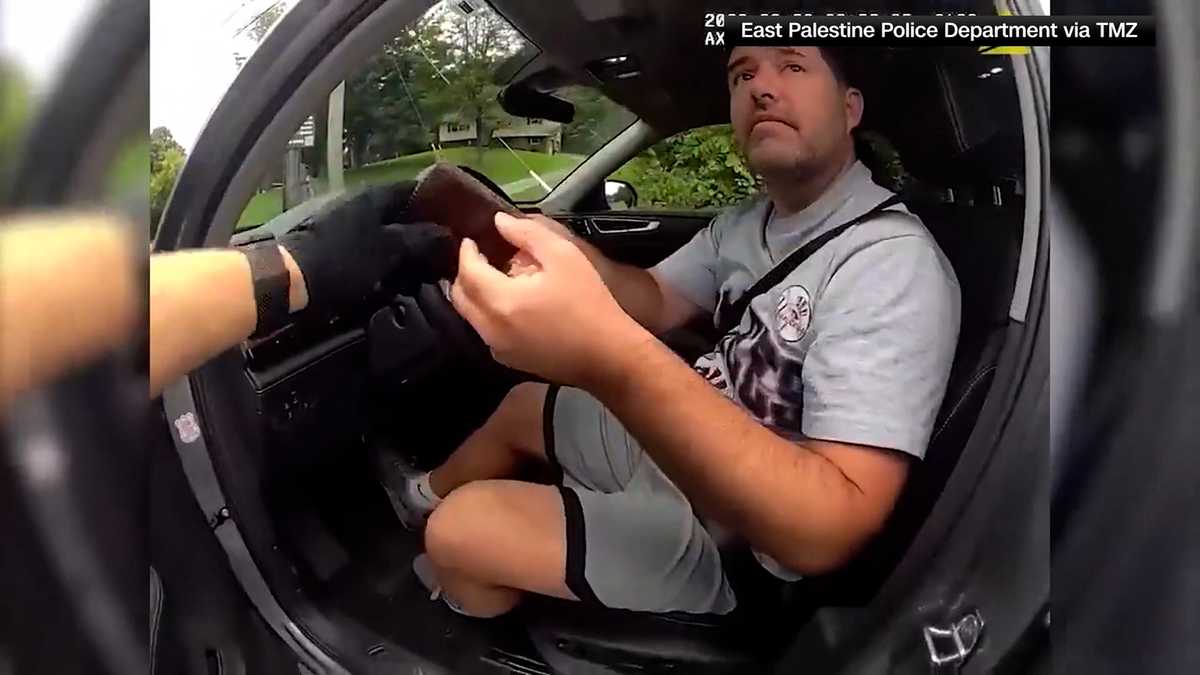
Body camera footage from East Palestine, Ohio, shows a man in a New York Yankees T-shirt being pulled from the driver’s seat of a silver SUV. He asks officers what they are doing there. He says he is just driving.
The man is Jed York, principal owner of the San Francisco 49ers. He was arrested in a mobile home park after participating in what police described as an undercover prostitution sting carried out by the Mahoning Valley Human Trafficking Task Force. He offered $160 for sex with a woman he believed was a prostitute. Police say he responded to an online advertisement.
York pleaded no contest to disorderly conduct and to possessing criminal tools — his phone, used to respond to the ad. He was sentenced to one day in jail, credited immediately because he had already spent a day in custody while awaiting plea proceedings. A fine of $1,150 was assessed. The $160 cash seized during the arrest was turned over to the human trafficking task force. He also completed an online course, the nature of which was not specified publicly.
The charge originally read engaging in prostitution. Prosecutors amended it before trial to disorderly conduct. The distinction matters mostly on paper. The underlying conduct did not change.
What the NFL has not yet said — and why it matters
Roger Goodell’s office has not issued a public statement. That silence is the first story here.
The NFL’s Personal and Professional Conduct Policy gives the commissioner broad authority to discipline individuals whose actions damage the league. The policy has been invoked against players, coaches, referees, and frontline staff. It has rarely, if ever, been tested against a full-time team owner.
York occupies a unique position. He is not a coach. He is not a player. He is the principal executive owner of a franchise that generates more than $500 million in annual revenue and commands one of the league’s highest salary cap commitments. Whatever the NFL decides — or chooses not to decide — will set a signal about where institutional accountability actually ends.
The gap between player consequences and ownership consequences
The contrast with how the league treats on-field personnel is striking.
When players face criminal charges, the NFL routinely suspends them, fines them, and in some cases forces roster decisions that ripple across salary cap calculations and fantasy rosters. Coaches have been suspended for conduct violations that, by many measures, fall short of what York now faces.
Owners operate in a different orbit. They sign the contracts. They hire the coaches. They control the financial architecture. The league has historically resisted disciplining owners through the conduct policy, treating ownership transitions as business decisions handled through the league’s ownership transfer rules rather than through the disciplinary framework applied to employees.
That framing breaks down when the owner is the one entering a police station. The question is whether the NFL can separate the person from the franchise without creating a two-tier system of accountability: one tier for those who answer to a general manager, and another for those who hire them.
What likely happens next
Several paths are open to Goodell.
He could issue a public reprimand. This would acknowledge the incident without imposing formal sanctions and would draw a line under the matter quickly. It is the lowest-cost option and the one most likely to keep the league’s public posture calm.
He could open a formal investigation into York’s fitness to continue as principal owner. The conduct policy allows the commissioner to evaluate whether an individual’s actions are “detrimental to the integrity of the game.” That language is deliberately vague, and that vagueness is precisely what makes it powerful. Whether it extends to off-field encounters with undercover officers is an open legal and policy question that the NFL has never been forced to answer definitively.
He could do nothing. This is also a choice. Silence is a decision, even if it is a quiet one. The league benefits enormously from the goodwill generated by high-profile franchises, and it has strong incentives to avoid publicly fracturing that relationship. That incentive is real. It is also exactly the kind of structural pressure that makes accountability feel arbitrary.
Who wins and who loses
If the NFL acts, it strengthens the argument that the personal conduct policy is institutionally serious rather than selectively enforced. That is a credibility win, particularly after years of criticism that the league applies its standards unevenly.
If the NFL does not act, it reinforces the perception that ownership enjoys functional immunity. That is a credibility loss — and the cost is paid by everyone else in the league who has faced suspension, fine, or public censure for conduct that looks far less severe than this.
For the 49ers organization, the immediate impact is manageable. York remains the principal owner. No roster moves are required. The team can continue preparing for the season without a structural interruption. But the longer-term dynamic is harder to predict. Media scrutiny will intensify. Sponsors may ask questions. Other owners will be watching to see what their own exposure looks like if a similar situation arises.
The timing is not coincidental
York filed for divorce from his wife, Danielle, in May. Court records confirm the filing. He has spent much of the summer in Ohio, where he grew up near Youngstown. The arrest occurred in East Palestine, a small city in Mahoning County that is far from Santa Clara.
The convergence of personal turmoil and public legal trouble creates a narrative the league cannot easily dismiss. Whether the two are connected is impossible to say from the available record. What is clear is that the NFL now has a live accountability question instead of a theoretical one.
What English-language readers usually miss
American sports coverage tends to treat owner arrests as scandal stories rather than institutional ones. The focus lands on the spectacle — the body cam footage, the Yankees shirt, the $160 cash — and then moves on.
That framing misses the structural question. The NFL’s conduct policy was written, in large part, in response to incidents involving players and coaches. It was never designed to govern the behavior of the people who employ them. York’s case forces a reckoning with that gap.
How the league closes it — or refuses to — will define accountability at the ownership level for years to come. The arrest is a single event. The precedent it establishes could shape the league far longer.