How NVIDIA's CEO Became a Target of Chinese Spies
US intelligence concluded NVIDIA CEO Jensen Huang was romantically linked to a woman accused of espionage for China's security apparatus — a revelation that rewrites the personal-risk calculus at the heart of America's chip war.
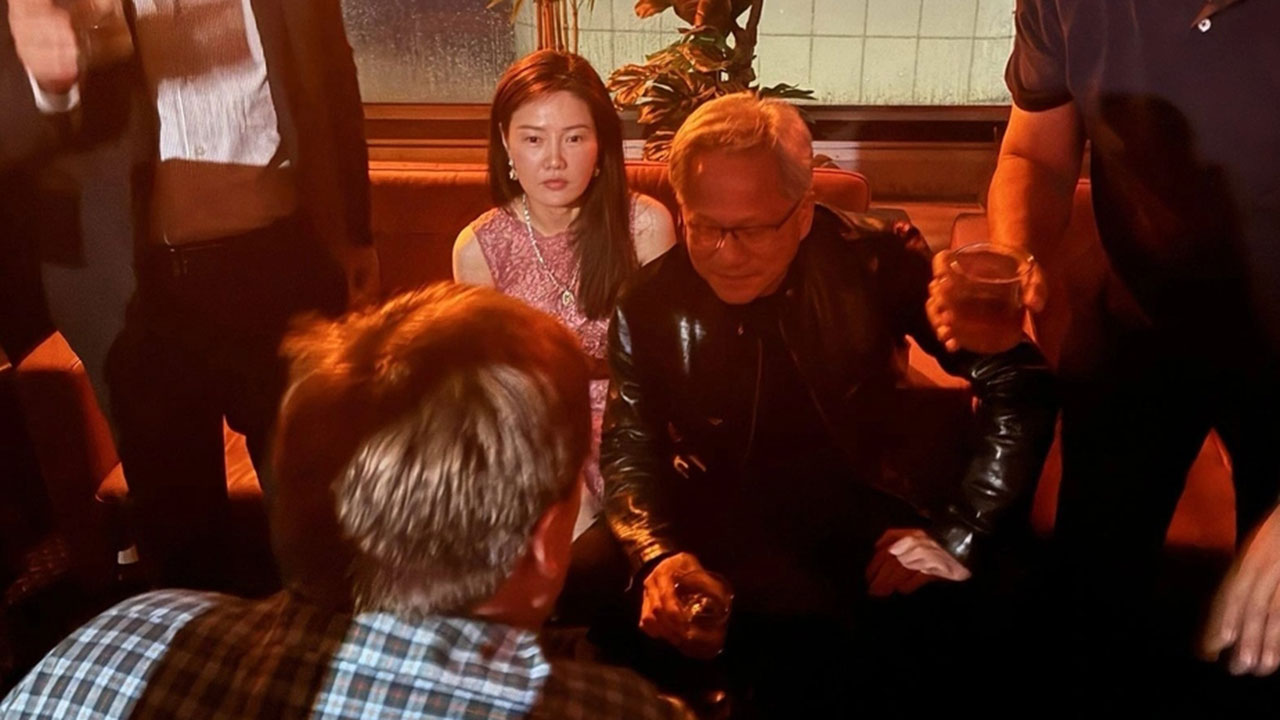
A Love Affair Worth Watching — Because the Enemy Is Watching You Too
For years, American national-security debates over China have treated technology CEOs as either strategic assets or inconvenient obstacles. Jensen Huang occupied the former category so thoroughly that the idea of him as a vulnerability felt almost absurd — until this week.
According to a Financial Times report citing unnamed sources, a classified US intelligence memorandum produced earlier this year concluded that Huang maintained a romantic relationship with Alice Huang, a Singapore-based executive at data-center operator Megaspeed who US authorities consider to have been recruited by China’s Ministry of State Security, known as the MSS.
The memo reportedly reached only the highest echelons of the US government ahead of President Donald Trump’s May visit to Beijing for a summit with Xi Jinping. That timing — feeding intelligence about one of the world’s most consequential tech figures into diplomatic planning — signals how seriously Washington now treats the intersection between personal relationships and industrial competitiveness.
Who Alice Huang Is and Why She Matters
Alice Huang holds no public role at NVIDIA. She appears to operate through Megaspeed, a company that designs and manages data-center infrastructure out of Singapore — a jurisdiction that has become, deliberately or not, a convenient crossroads for semiconductor capital flowing between Silicon Valley, Taipei, and Shenzhen.
US intelligence assesses that she was brought into China’s spy apparatus by the MSS and then positioned to gather information about American artificial-intelligence chip capabilities while also exerting influence over NVIDIA’s export decisions. If accurate, this is not merely an espionage story. It is a supply-chain story wearing a romance novel’s skin.
NVIDIA’s H-series GPUs and its newer AI accelerators remain the de facto standard for training large language models globally. Any channel — however small — through which those designs or deployment schedules could be read in Beijing represents leverage worth exploiting. The MSS has been running human-intelligence operations targeting the semiconductor sector for years. This memo simply makes explicit what some analysts have long suspected privately.
How the Personal Became Policy
What makes this revelation unusual is not the existence of a romance. It is the institutional response it triggered inside the US government.
Traditionally, the export-control apparatus treats corporations as legal entities subject to rules. CEOs are people. The line between the two often stays blurred because pulling it too sharply risks criminalizing ordinary human behavior at a moment when Washington needs American companies to stay competitive. That tension is exactly what this case exposes.
If a chief executive’s private life can become relevant to national security — through association, through compromise, through simple proximity to someone under foreign control — then every major technology leader faces a new kind of compliance burden. Not just IT security. Lifestyle security.
That shift has yet to be formally discussed in public hearings or regulatory filings. It should be.
What This Means for the Chip War
The broader implications are threefold.
First, export controls will tighten further around person-to-person contact. Expect future guidance from the Bureau of Industry and Security to address not just transactions but travel, social interaction, and business partnerships involving foreign nationals with ties to China’s intelligence community. Companies that previously relied on informal networking in Hong Kong, Singapore, and Taipei to close deals may find those channels suddenly toxic.
Second, the narrative around Taiwan’s role in the semiconductor chain becomes more complicated. Photo documentation shows both Huals together in Taipei in 2024 — not in a corporate setting, but in a bar. The island remains the physical anchor of advanced chip manufacturing through TSMC, yet this incident underscores how easily human connections can thread through it without triggering alarms. Intelligence gaps exist precisely where business density is highest.
Third, and perhaps most quietly consequential, is the signal this sends about how far China is willing to invest in penetrating the personal lives of Western executives. The MSS has moved beyond traditional corporate recruiting into romantic entanglement — a tactic drawn directly from Cold War playbook traditions. The fact that US countersurveillance caught up to it suggests the pendulum is beginning to swing back, but detection lag in human intelligence is always measured in years, not months.
What Happens Next
There are no immediate corporate consequences for NVIDIA. No criminal charges have been filed against either Huang. The memo remains classified. But the existence of this assessment changes the operating environment for the entire industry.
Competitors will watch closely. If AMD or Intel learns that their rivals’ leadership was scrutinized through a personal-affairs lens, they may push for reciprocal transparency or seek similar protections. China will likely interpret the memo’s creation as evidence that its approach worked well enough to attract US attention — which is not the same as saying it failed. An investigation implies access existed at some point; it does not prove whether that access yielded operational intelligence.
Washington’s next move will probably come through guidance rather than prosecution. Treasury and Commerce departments tend to prefer soft-law instruments first. Look for revised embassy advisory notes, updated due-diligence frameworks for C-suite interactions in Southeast Asia, and possibly new reporting requirements for board-level relationships with foreign nationals.
For Jensen Huang personally, the damage is reputational rather than financial at this stage. He has not been charged. But any future appearance before Congress or participation in multilateral trade forums will carry an implicit question: how thoroughly has your personal life been vetted?
In the chip war, the battlefield is no longer limited to fabrication plants, patent portfolios, or tariff schedules. It extends into hotel bars in Taipei, dating apps, and the spaces between professional and private lives. That is where the next round of this conflict will be fought — and where the most interesting intelligence memo you’ll never read was likely written.