Kevin Warsh's Jackson Hole Speech Hides a Growth Gamble
Fed Chair Kevin Warsh's hawkish Jackson Hole comments masked a deeper agenda: using inflation rhetoric as political cover for massive stimulus. The paradox could upend emerging-market capital flows and put Korea's export engine at risk.
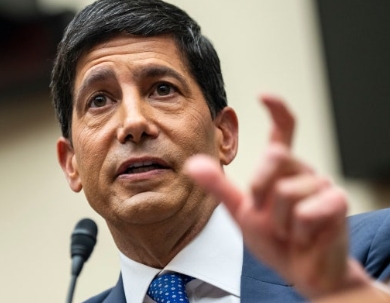
The Hawk Mask
Jackson Hole. Teton Mountains. The air thick with expectation.
The world’s financial markets had their eyes on the podium. Kevin Warsh, the seventeenth Chair of the Federal Reserve, stepped up to the microphone with a face carved from granite and a voice that carried the weight of decades of inflation-fighting orthodoxy.
“The Fed will not relax its vigilance until prices are firmly under control. If necessary, we are prepared to tighten the reins further.”
The silence in the room was electric. Headlines wrote themselves before he finished speaking: “Warsh’s True Hawk Colors,” “Long-Term Tightening Ahead.”
Wall Street’s oldest players exchanged knowing glances. They understood something the press had missed entirely.
This was not a signal of sustained tightening. It was a performance.
The Strategy Behind the Speech
The real game Warsh is playing is far more audacious than simple rate policy. He is using the language of monetary orthodoxy as political armor while preparing the ground for something radical — a fusion of massive liquidity injection, tax cuts, and deregulation designed to send the American economy into what his inner circle privately calls a “supercycle of growth.”
The hawkish rhetoric at Jackson Hole served two purposes. First, it anchored inflation expectations downward, creating the psychological space for expansionary policy without triggering market panic. Second, it provided Warsh with political cover — an alibi that insulated him from accusations of fiscal irresponsibility should his growth strategy encounter resistance from Congress or the White House.
Warsh is what insiders describe as the most sophisticated “king pigeon” in central banking history — outwardly the strictest orthodox Hawk, inwardly the most ambitious growth-stimulus architect the system has ever seen.
A Different Kind of Fed Chief
To understand why this paradox exists, you need to understand the man behind the podium. Kevin Warsh did not come through the academic pipeline that has traditionally produced Federal Reserve Chairs. There is no economics PhD in his background. No tenure-track publications on monetary theory.
Instead, Warsh carries a J.D. from Harvard Law School, an MBA from MIT Sloan, and three decades of battlefield experience in the boardrooms of Morgan Stanley, where he rose to Executive Director of the M&A division before turning thirty-five.
He joined the Federal Reserve Board of Governors in 2006 at age thirty-five, becoming the youngest member in the institution’s history. During the 2008 financial crisis, he operated as the emergency hotline between the Treasury and Wall Street, helping manage the collapse of Bear Stearns, the AIG bailout, and the Merrill Lynch acquisition.
His practical experience is undeniable. His economic theorizing, however, remains contested among academic circles. Critics argue his regulatory intuition outpaces his macroeconomic foundations — a gap that may prove consequential when unconventional policy collisions occur.
The Trump Collision Course
The most volatile dimension of Warsh’s positioning involves his relationship with the Trump administration. Reports suggest significant friction between the Fed Chair and the White House over monetary direction. Warsh’s Jackson Hole remarks appeared designed partly to establish institutional independence — a boundary declaration that the Federal Reserve will not be subordinated to political timelines, even as he pursues policies that align with the administration’s growth objectives.
This dual posture creates a paradoxical dynamic: Warsh uses hawkish rhetoric to defend Fed independence while simultaneously laying groundwork for expansionary policy that Republicans champion. The question is whether this balancing act survives contact with implementation.
What This Means for Emerging Markets
The implications for global capital flows are immediate and potentially seismic.
If Warsh’s strategy succeeds — if the Fed can signal toughness on inflation while secretly engineering a liquidity surge — emerging markets face a treacherous transition. Capital that fled EM assets during the hawkish phase may return with unprecedented velocity, but the timing will be unpredictable and the exit conditions equally volatile.
Countries with dollar-denominated debt profiles will find themselves caught between a Fed that says one thing and does another. The currency mismatch risk — already elevated across Southeast Asia and Latin America — could accelerate sharply if the perception gap between Warsh’s public rhetoric and actual policy widens.
The Korean Connection
For Korea, the stakes are existential. The country’s export-dependent growth model — where semiconductor, automotive, and electronics shipments account for roughly 45 percent of GDP — operates on thin margins and tight financing cycles. A Federal Reserve that publicly commits to higher-for-longer rates while privately preparing to unleash liquidity creates a policy whiplash that hits Korea harder than almost any other advanced economy.
The Korean won, already fragile amid trade uncertainties, would face dual pressure: initial outflows during the hawkish signaling phase, followed by potentially disorderly reflows when the growth agenda takes hold. Hyundai Motor, Samsung Electronics, and the broader chaebol ecosystem all depend on stable currency conditions and predictable financing costs — both of which disappear in Warsh’s two-track scenario.
Korean exporters who benefited from the previous decade of accommodative global liquidity now face a Fed Chair who speaks in one voice and acts in another. That gap is where the danger lives.
The Institutional Battle
What distinguishes Warsh’s chairmanship is not merely policy contradiction — it is the institutional confrontation it represents. Central banks worldwide have spent fifteen years rebuilding credibility after the 2008 crisis. Warsh is testing whether that credibility can withstand a strategy where communication and action are deliberately decoupled.
If successful, the Fed gains an unprecedented tool: the ability to signal restraint while executing expansion. If it unravels, the institution faces a credibility crisis that could permanently alter its relationship with markets and governments alike.
The Jackson Hole speech was not a forecast. It was a opening move in a game that has yet to reveal its full board.