Khalid Sheikh Mohammed's trial finally has a date. What it means.
The US military has set June 2028 as the start date for Khalid Sheikh Mohammed's trial, rejecting a sooner prosecution request. After more than two decades of delays, the scheduling decision carries implications for Guantanamo's future and the 9/11 legacy.
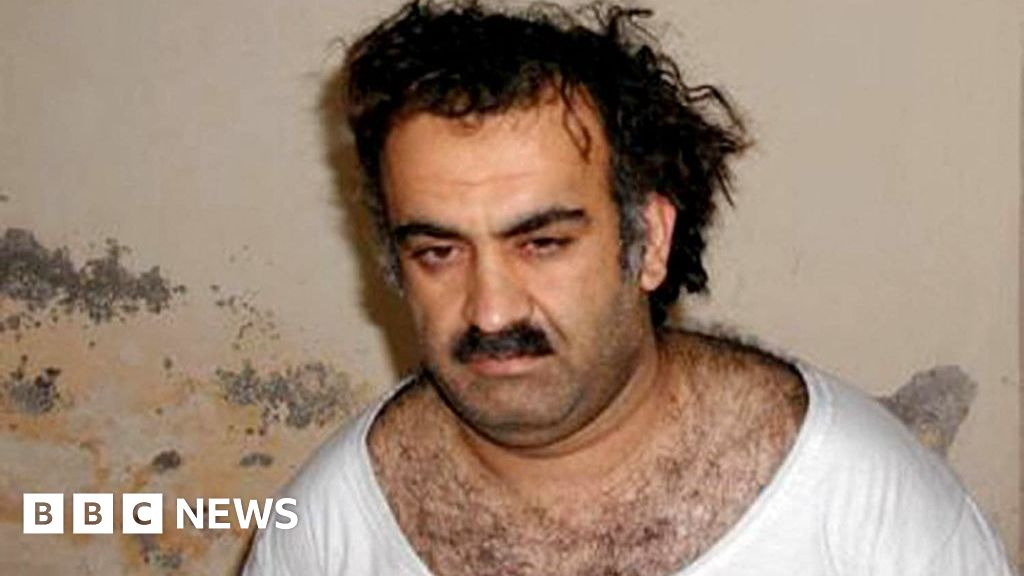
A date after nearly three decades of waiting
The military commission overseeing Khalid Sheikh Mohammed’s case has set June 5, 2028 as the trial start date — a decision that will matter more than the headline suggests.
Lt Col Michael A Schrama, the military judge, rejected prosecutors’ request to begin in 2027, ruling simply that the sooner date was not feasible. The reasoning matters: the court still faces unresolved disputes over what evidence can be presented. Those evidentiary battles, which have plagued military commissions since 2006, demand time that this schedule now acknowledges.
Mohammed, captured in Pakistan in March 2003 alongside co-accused Mustafa al-Hawsawi, has been held at Guantanamo Bay since September 2006. Next month marks 25 years since the hijackers struck. The trial date places him squarely inside that anniversary moment — and inside a legal process that began roughly when Guantanamo itself opened.
The collapsed plea deal and what it left behind
The current path to trial emerged from a collapsed negotiation. Mohammed had reached a plea agreement promising a life sentence without parole in exchange for a guilty admission. Two years of negotiations produced the deal, signed by an official appointed by then-Defence Secretary Lloyd Austin.
Austin was reportedly caught by surprise and moved immediately to revoke the agreement. A federal appeals court subsequently threw out the deal last summer, clearing the way for the death-penalty trial that now looms in 2028.
The consequence of that collapse is visible in the judge’s scheduling order. Without a plea agreement resolving the case, the court must now work through evidentiary disputes that a guilty plea would have bypassed entirely. The two-year gap between a 2027 target and a June 2028 start date is, in part, the cost of a rejected bargain.
But the implications extend beyond scheduling. The plea deal’s collapse sent a signal through the remaining Guantanamo cases: negotiated resolutions are possible, but they remain fragile and politically contingent. Defense lawyers for other detainees will be watching closely. Prosecutors will recalibrate. The commission system, already skeptical in the eyes of many legal practitioners, now carries the added burden of having its most promising settlement mechanism publicly dismantled.
Who else stands trial
The court document lists three co-accused alongside Mohammed: Walid bin Attash, Ali Abdul Aziz Ali, and Mustafa al-Hawsawi. All are detained at Guantanamo. Mohammed has previously stated he planned the September 11, 2001 operation from A to Z and took those plans to Osama bin Laden, the al-Qaeda leader.
The four defendants face the same commission, the same evidentiary process, and now the same calendar. Their cases will be bound together through pre-trial motions, discovery disputes, and whatever happens on the stand. Any procedural delay affecting one defendant will ripple across all four.
Bin Attash, the commission’s most prolific litigant, has a history of filing motions that have repeatedly disrupted proceedings. His presence ensures that even before a single witness takes the stand, the docket will absorb friction from defendants who view the commission itself as the primary adversary. Al-Hawsawi, Mohammed’s alleged operational partner, has expressed willingness to cooperate in ways that could complicate the government’s narrative if he testifies against his co-accused — or invoke Fifth Amendment protections if he chooses silence. Each scenario carries strategic weight for a jury of military officers.
The evidentiary maze ahead
What makes the 2028 date both significant and uncertain is the wall of unresolved evidentiary questions the court must clear first. Mohammed was tortured during CIA custody — he has said he was subjected to waterboarding 183 times — and the government’s use of information derived from that treatment remains the single most contested issue in the case. Multiple federal appeals courts have ruled that certain evidence must be excluded, but the government continues to assert derivative-use theories that defense lawyers say infect the entire prosecution.
Then there is the question of classified intelligence. The government will want to introduce surveillance data, intercepts, and forensic analysis that cannot be fully disclosed in open court. The commission’s security-clearance requirements for victims’ representatives and defense counsel have themselves been sources of prolonged litigation. Some family members of the 9/11 victims have been granted clearances; others have not. The tension between transparency and classification will play out in closed sessions, producing rulings that neither side may accept.
These disputes are not abstract. They determine how much of the case the jury — twelve military personnel chosen by the government — will actually hear. They shape whether the trial becomes a narrowly focused account of Mohammed’s role or a sprawling examination of al-Qaeda’s global network that the prosecution may struggle to contain. A trial that drifts into broader terrorism history risks confusing the jury and giving the defense room to argue that Mohammed was one actor among many, not the singular architect the government claims.
Why the 2028 date is significant beyond the courtroom
Twenty-five years after 9/11, the United States still lacks a final judicial resolution for the man accused of masterminding the attacks. That absence has shaped counterterrorism policy, judicial philosophy, and public memory. The trial date ends nothing in terms of closure — 3,000 people died, and no verdict repairs that — but it does mark the first firm schedule in a process that has drifted through multiple administrations and dozens of court rulings.
For the military commissions system, the Mohammed case has always been the test. Its failures have justified criticism from civil libertarians and legal scholars. Its slow movement has made Guantanamo a symbol of indefinite detention rather than justice. A 2028 start date suggests the government is finally treating the commission as something other than an open-ended holding pattern.
The system still has roughly 15 prisoners remaining at Guantanamo, down from its peak. Each trial requires the same apparatus — military judges, evidentiary rules, security protocols, interpretation services. Completing the Mohammed case clears institutional capacity for whatever follows. That capacity is the commission’s strongest argument for survival: it can deliver results if it is allowed to finish what it started.
But the second-order effect runs deeper. A successful trial — meaning one that produces a verdict withstand on appeal — would legitimize a system that critics call a legal graveyard. An unsuccessful one, bogged down in further appeals or collapsing under evidentiary challenges, would provide ammunition for those who have argued for decades that military commissions are fundamentally unfit for serious terrorism prosecutions. The 2028 date is not an endpoint. It is the starting gate for a race the system has been losing by default.
Who wins, who loses
Victims’ families gain the smallest possible thing: a date on a calendar. They have waited 25 years for a trial that may still produce only a guilty verdict and a sentence, not answers about every dimension of the plot. Some families supported the plea deal because it guaranteed Mohammed would never walk free. Others opposed it because it denied the public accountability of a trial. Both camps will view the 2028 date with measured relief and lingering frustration.
The justice system gains marginal credibility. A scheduled trial is better than an indefinite adjournment, and the fact that a military judge insisted on adequate time rather than rushing toward an anniversary press conference suggests some institutional seriousness remains. But credibility is earned through completion, not scheduling orders.
Mohammed loses nothing he has not already lost. He remains detained. He remains charged. The death penalty remains on the table if the case proceeds to trial without another last-minute negotiation. His strategy of waiting out the system has always been rational from his perspective — every year that passes is a year the government bears the cost of his detention without achieving resolution.
The broader counterterrorism architecture, however, faces a quiet question. If the most prominent terrorism case since 9/11 finally reaches trial, what happens to the legal framework that allowed it to stall for decades? The commissions were designed to handle enemy combatants outside the civilian system. This trial will test whether that design can deliver a functioning verdict — or whether the gaps that produced the plea deal’s collapse will simply reappear in a different form.
What comes next
Pre-trial motions continue through 2026 and 2027. Evidence disputes will be resolved, partially or completely, before June 2028. Appeals from those rulings are almost certain, and they could push the actual trial further. Military commission appeals move through the Court of Military Commission Review and then the DC Circuit, both of which have shown willingness to remand cases back to the tribunals for further proceedings.
But for now, there is a date. It is not justice. It is not closure. It is a scheduling order in a process that has outlasted three US presidents and more than two dozen years. In a case defined by delay, that is the only concrete thing available — and after this long, it is enough.