Kia's Robot Line Handles 180 Van Variants — Here's Why It Matters
One factory cell in Hwaseong assembles 180 different PV5 configurations using a novel four-stage frame method. The move reveals how Korean automakers are rethinking mass production for a fragmented mobility landscape.
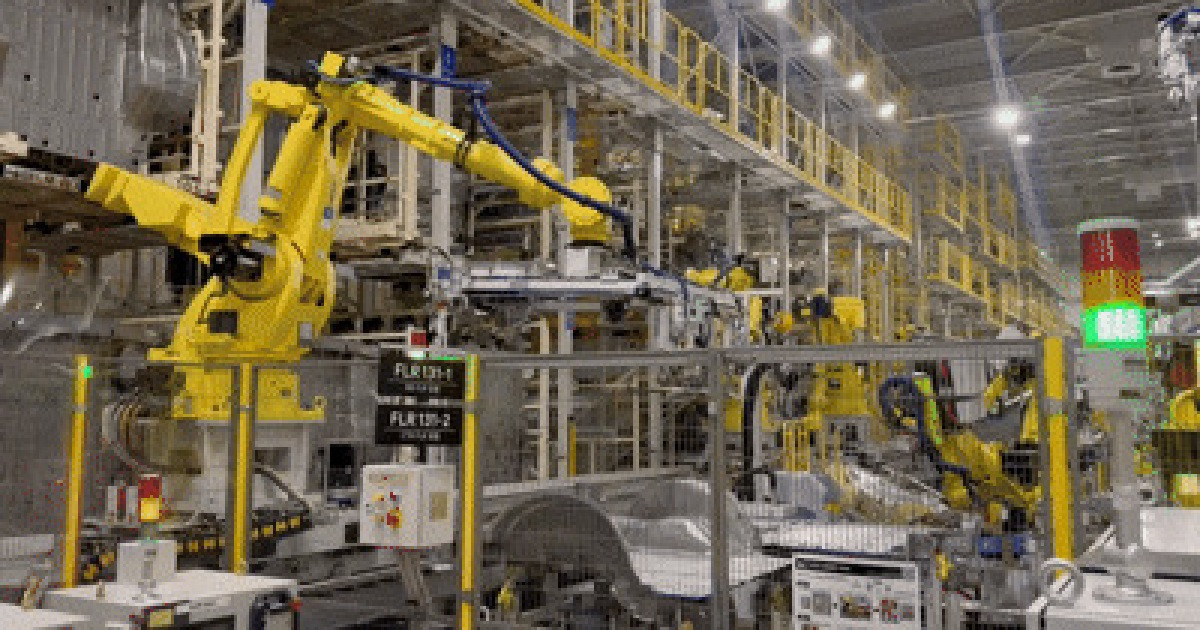
The 180-variant paradox
A single production line at Kia’s Hwaseong facility is churning out 180 distinct specifications of the PV5 — a purpose-built van that can be configured as a cargo hauler, a passenger shuttle, or a vehicle for people with reduced mobility. That number alone should set off alarms in every traditional automaker’s engineering department. Mass production was built on the premise that you make one thing, very well, in enormous volumes. The PV5 line proves that premise is breaking.
What happened at EVO Plant East isn’t just another factory tour. It’s a functional proof that high-mix, low-volume manufacturing can reach the economics once thought impossible without retooling every six months. And the implications extend far beyond Korea.
The four-buck method that makes it work
The secret lies in a process Kia calls the “4-buck sequential assembly method.” Instead of building a body shell in one continuous stretch, the line splits the frame into four distinct stages: inner buck, rail buck, outer buck, and roof buck. The first two stages establish the skeleton. The last two drape the exterior panels and roof over it.
This fragmentation sounds obvious in retrospect — it’s how job shops have operated for decades — but applying it at automotive scale is the novelty. Each buck station can pause, reconfigure, or swap parts without stopping the entire line. A van destined for last-mile delivery leaves one station; a wheelchair-accessible shuttle rolls into the next. They share the same robots, the same welders, the same floor space.
The line runs at 29 units per hour, with an annual capacity of roughly 100,000 vehicles. More importantly, the reported line efficiency sits at 98.9 percent. That number matters because flexibility usually extracts a speed penalty. Kia appears to have defied that trade-off — at least on paper.
Robots doing jobs humans refused to do
The assembly shop tells the fuller story. Kia is using robots to install components that have historically required human hands: the 65-kilogram crash pad, the headlining, the emblem, the high-voltage battery bolts.
The crash pad installation deserves particular attention. A 3D vision camera maps both the part and the vehicle body, the robot calculates the exact insertion point, and then pushes the component into place. The torque value from each bolt is logged as real-time quality data. No more guessing whether a worker tightened something correctly — the machine records it.
The emblem attachment and hood installation are firsts for Hyundai Motor Group. The headliner, split into front-center-rear sections, uses robots for the front and rear panels while a human handles the center section where wiring and ductwork require manual dexterity. It’s a hybrid model, not a fully lights-out factory — and that honesty is more useful than a brochure claiming full autonomy.
One detail stood out from the factory floor: the welding gun that stretches two meters long. Standard guns can’t reach inside PV5 bodies that lack a second-row door. Kia sourced railway and subway vehicle assembly equipment to solve the problem. That kind of cross-industry borrowing is rare in auto plants and tells you how desperate the geometry constraints had become.
What this means for the PBV market
Purpose-built vehicles are a $300 billion global opportunity by some estimates, and they’re inherently bespoke. A delivery van in Lagos needs different specs than a mobile clinic in Jakarta. The PV5 has already moved 39,000 units globally by August, earning the 2026 World Van of the Year title. The larger PV7 model is set to debut at the IAA Transportation show in Hanover this month.
The conversion center attached to EVO Plant East handles 40,000 units annually across PV5, PV7, and PV9 platforms. Ninety-eight work cells and fourteen inspection cells transform a base vehicle into whatever the customer ordered — open-bed, crew van, prime cargo, refrigerated truck, or a light camper. This is where the 180 variants come from: not from building 180 different cars, but from branching a single base into many endings.
The model mirrors what Boeing did with the 787 — build a common airframe, then customize for each airline at the final assembly stage. Kia is applying that logic to vans at a scale the auto industry hasn’t attempted.
The Western factory coming in 2027
EVO Plant West is scheduled to open in June 2027, bringing total Hwaseong PBV capacity to 200,000 units annually. It will add autonomous mobile robots for parts delivery and a tunnel-type exterior vision inspection system. Assembly-line automation is rising only slightly, from 27 percent to 28 percent, which suggests Kia is prioritizing flexible logistics over simply adding more robots to the same tasks.
The line’s automation already exceeds the existing Hwaseong operations by roughly 9 percentage points, with a 10 percent improvement in quality and operational efficiency. Those aren’t speculative figures — they’re reported by the plant management team.
Who wins, who loses
Kia wins if this model proves replicable across other platforms and geographies. A flexible PBV line that can switch between cargo and passenger configurations without major downtime is a competitive weapon in a market where delivery volumes are fragmenting and customers demand specialization. The PV5’s global success suggests the demand side is ready.
Traditional automakers running dedicated model lines lose on two fronts. First, they can’t match the configuration speed without massive capital investment. Second, their existing factories were designed for volume, not variety — retrofitting them carries its own risk. Ford’s Transit and Mercedes’ Sprinter face a China-born competitor that treats customization as a feature, not a cost center.
Workers on the line lose the most mundane tasks but gain oversight roles. The factory floor has fewer people bent over bolt guns and more people watching screens. That transition is uncomfortable and uneven, and Kia’s own safety fence colors — forced yellow by new regulations rather than the original gray design — remind you that even robotic factories are subject to human rules.
The bigger signal
The most important thing about EVO Plant East isn’t the robots. It’s the confirmation that the automotive industry’s central tension — standardization versus customization — has found a working solution. For a century, the answer was volume. The PV5 line suggests the next answer is agility.
If Kia can produce 180 variants on one line at near-full efficiency, the question becomes whether other manufacturers can adapt their existing plants or whether they’ll need to build greenfield facilities from scratch. The latter is expensive and slow. The former may be impossible without reinventing the assembly process itself.
The PV5 won’t replace the Camry or the Corolla. But it might replace the assumption that every car plant needs to look like a car plant — uniform, predictable, optimized for one product at a time.
That assumption is now outdated.