KIST's 1000x Chip and $1 Hydrogen — Can Korea Actually Buy Its Way Out of Tech Dependence
Korea's national lab is betting the country's tech sovereignty on two audacious targets: a chip 1000 times faster than conventional computing, and hydrogen at $1 per kilogram by 2033. The numbers are breathtaking. Whether they survive contact with manufacturing reality is another question.
The number that tells the story
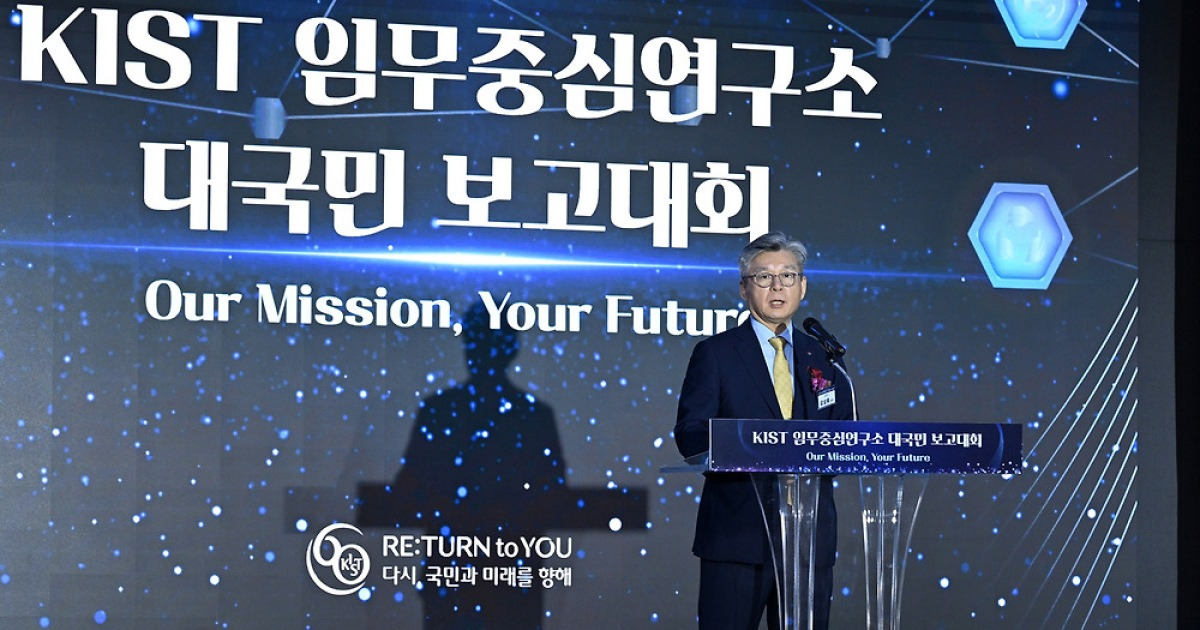
A chip that delivers 1,000 times the computing performance of conventional hardware while consuming one-hundredth the power. That is the headline KIST (Korea Institute of Science and Technology) unveiled on September 17 at its Seoul headquarters, and it is the kind of claim that makes semiconductor engineers reach for their calculators and skeptics reach for their acid tests.
The context matters more than the headline. KIST announced seven mission-oriented research programs — semiconductors, AI and robotics, climate and environment, clean hydrogen, brain science, natural-product drugs, and space materials — as part of a two-year structural overhaul that reorganized the institute from a collection of individual principal investigators into a team-based, mission-driven laboratory. The theme was “Our Mission, Your Future.” The subtext was: Korea can no longer afford to depend on foreign chip design, foreign hydrogen technology, or foreign pharmaceutical IP if it wants to remain a competitive economy.
The 1000x claim, decoded
The 1,000x performance figure refers to KIST’s Random Processing Unit (RPU), a next-generation computing architecture that the institute says has already succeeded in high-performance chip design and in optimization algorithms for logistics, autonomous driving route planning, and data-center workloads. The power reduction — one-hundredth of current levels — is the part that would matter most to AI operators, whose electricity bills are already a dominant cost line.
No one should interpret “1,000x” as a straight comparison to a modern CPU or GPU. The metric is likely benchmark-specific and architecture-dependent. What the number does signal is that KIST believes it has found an architectural lever — not just a process-node improvement — that can deliver orders-of-magnitude gains for certain classes of computation. That is the difference between a credible platform shift and a lab curiosity.
The institute says it will now move toward technical validation and piloting. In semiconductor terms, that means tape-out, silicon verification, and the long, expensive funnel from prototype to volume manufacturing. KIST is a research institute, not a fab. The jump from RPU proof-of-concept to a chip that actually ships inside a data center is where most academic semiconductor programs stall.
There is a quantum-simulation track as well. KIST says it is developing a high-speed, high-efficiency quantum simulator aimed at unlocking core technologies needed for large-scale quantum computers. This is parallel to — and potentially complementary with — the RPU work. If KIST can demonstrate that its classical RPU architecture solves problems that would otherwise require a quantum machine, the commercial implications are significant: near-term, deployable acceleration without the cryogenics and error-correction overhead that still plague quantum hardware.
The hydrogen bet that changes everything
The second headline number — hydrogen at $1 per kilogram by 2033 — is arguably the more consequential claim. Current green hydrogen production costs sit in the $3 to $6 per kilogram range, depending on electrolyzer type, electricity price, and geography. $1/kg would be a step change, not a marginal improvement. It would make hydrogen competitive with natural gas in many industrial applications and dramatically improve the economics of hydrogen-as-transport-fuel in heavy logistics.
KIST’s approach is not simply “build cheaper electrolyzers.” The institute reports it has already developed an ammonia-based co-production system that generates both hydrogen and electricity simultaneously. Ammonia cracking is an established technology, but coupling it to on-site power generation in a compact, scalable module is a different proposition. The target of $5/kg by 2030 and $1/kg by 2033 implies that the institute expects cost curves to continue falling steeply — not plateauing.
The demand side is also shifting. AI data centers, which KIST explicitly names as a growth driver for hydrogen and power-system technology, are consuming electricity at rates that will strain existing grids. If KIST’s ammonia-hydrogen-electricity co-production system can be scaled, it offers a potential answer to the energy-density problem that data-center expansion creates: generating fuel and power on-site rather than requiring massive new transmission infrastructure.
Whether the $1/kg target is achievable depends on three variables that KIST controls only partially: the cost of renewable electricity over the next seven years, the durability and maintenance schedule of ammonia-cracking hardware at scale, and whether the co-production system can be mass-produced at competitive cost. None of these are impossible. All of them are difficult.
The seven missions, three observations
The other five missions share the same pattern — ambitious targets with real technical substance:
A humanoid-robotics track built on the KAPEX technology transferred to LG Electronics, aiming for practical deployment in industrial and everyday settings by 2030. This is not a research demonstration; it is an industrialization claim.
A brain-science program backed by 500 billion won in global technology-transfer revenue, now targeting final regulatory approval for a dementia drug candidate. This is the longest commercialization runway in the portfolio.
A carbon-capture materials initiative seeking industrial-scale production by 2030.
A natural-product drug platform commercializing an ophthalmic formulation for age-related macular degeneration and expanding into a broader geriatric-disease pipeline using AI-accelerated drug discovery.
A space-materials unit launched in January focused on ultra-lightweight, high-radiation-shielding, high-thermal-insulation composites for spacecraft — explicitly aimed at reducing Korea’s reliance on imported space-grade materials.
Three things stand out across the portfolio.
First, every mission is designed to address a dependency. Semiconductors, hydrogen, space materials, and pharmaceutical IP are all areas where Korea currently imports critical capabilities. The restructuring is not accidental; it is strategic.
Second, the institute has shifted from a principal-investigator model to a project-manager model, concentrating decision-making and resource allocation around missions rather than disciplines. This is the same structural change that DARPA pioneered in the United States and that China’s national laboratories have adopted. It trades scientific freedom for speed and focus.
Third, KIST is explicitly measuring success in technology-transfer revenue — 500 billion won is cited as a milestone — and in regulatory approvals, not just papers. The evaluation framework has changed, which means the incentives have changed, which means the behavior of researchers embedded in these missions will change.
What this means for the supply chain
Korea sits at a fragile node in the global semiconductor and energy-transition supply chain. It manufactures cutting-edge memory chips but depends on foreign equipment, foreign EDA tools, and foreign packaging technology. It produces hydrogen-intensive chemicals but imports the electrolyzer and fuel-cell IP that underpin the clean-hydrogen economy. It designs autonomous-vehicle software but relies on foreign foundries and foreign sensor供应链.
KIST’s seven missions, taken together, are an attempt to build domestic capability at exactly those nodes. Whether the institute can execute at the speed the strategy requires is the open question.
The RPU work, if it survives manufacturing validation, could give Korean data-center operators a domestic acceleration option that reduces dependence on American GPU suppliers. The hydrogen co-production system, if it reaches $1/kg, could anchor a Korean green-hydrogen export industry that competes with Australian and Middle Eastern producers on cost rather than geography. The humanoid-robotics program, if it delivers deployable systems by 2030, could reshape Korea’s manufacturing labor economics at a time when the country faces one of the world’s most severe demographic collapse.
The credibility test
There is no reason to dismiss KIST’s claims. The institute has a long track record of foundational research, and the project-manager restructuring is genuinely different from the old model. The 500 billion won in technology-transfer revenue demonstrates that commercialization is not purely aspirational.
But there are also no shortcuts through the validation phase. A 1,000x performance claim needs independent benchmarking, not just internal results. A $1/kg hydrogen target needs pilot-scale demonstration, not just lab-scale numbers. A dementia drug needs Phase 3 data, not just a promising candidate molecule.
The two-year milestone KIST is reporting on is real progress in organizational design. The next two years — through technical validation, pilot deployment, and regulatory review — will determine whether the organizational redesign translates into technological sovereignty or into a well-publicized set of targets that recede as reality intervenes.
Korea’s bet is that the mission-driven model can compress timelines that previously took a decade into something closer to five. The question is whether compression alone is enough, or whether the underlying physics, chemistry, and manufacturing challenges remain unchanged regardless of how the laboratory is organized.
The answers will come not from press conferences but from tape-out results, from pilot-plant data sheets, and from FDA filings.