Korea's 12-Year Sentence Is a Test for Democratic Accountability
The 12-year sentence for the commander who led troops into the National Assembly is sterner than many expected — but his defiant public campaign after arrest makes clear the real question is whether South Korea's courts can sustain accountability without fracturing the political center.
The Soldier Who Marched Into Parliament Gets 12 Years
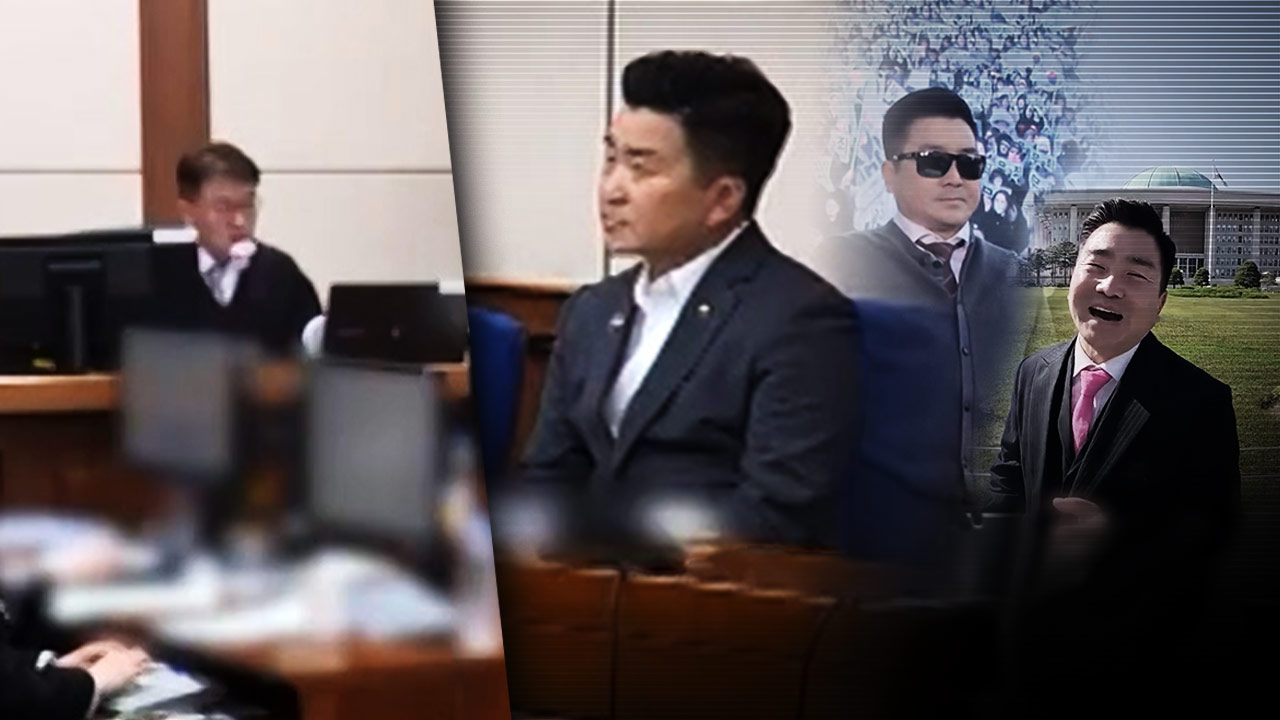
Kim Hyun-tae, the former commander of South Korea’s 707th Special Mission Group who led troops into the National Assembly on December 3, received a 12-year prison sentence in his first trial. The Seoul Central District Court also placed him in pre-trial detention, meaning he goes to jail immediately — a signal that the judiciary does not see this case as one warranting release pending appeal.
The judges did not mince words. The court’s opinion described the crime as an attack on the very foundation of the state’s legal order. Force used against citizens, the ruling stated, is a betrayal of the military’s purpose. Blind obedience to an illegal order, the court added, damaged the pride and honor of the armed forces.
But the sentence itself tells a more complicated story than the language suggests. The special prosecution had requested 18 years. Kim got two-thirds of that. His co-conspirators fared less harshly: Lee Sang-hyeon, former commander of the 1st Airborne Brigade, received 10 years; Kim Dae-woo, former head of military counterintelligence, got 5.
The gap between the prosecution’s request and the court’s sentence is worth noting. In cases involving insurrection — a word South Korean prosecutors deliberately used — sentences often land near the top of whatever range is available. A 33 percent discount from the sentencing request is unusual.
The Real Story Is What Happened After Arrest
What makes this case distinctively dangerous for South Korea’s institutions is not the crime itself. It is Kim’s behavior since his arrest.
In the immediate aftermath of December 3, Kim held the line. He told reporters he would bear full responsibility as commander. Prosecutors accepted his initial statement and allowed him to remain free while awaiting trial — a decision that would have significant consequences.
Within months, he had completely reversed course. He denied the charges. He began appearing on YouTube, where his channel — self-branded around the persona of a wronged soldier — projected images of a man who saw himself as a patriot betrayed by the system. He called for a by-election. He spoke at rallies in Olympic Park, espousing the most extreme conspiracy theories about fraudulent elections and demanding the return of President Yoon Suk Yeol.
The court’s judgment captured the arc clearly: instead of contrition, the defendant chose to distort the record and mock the judiciary. Rather than accept accountability, he positioned himself as a political martyr.
The Political Hazard of Leniency
Here is the tension at the heart of the case. South Korea’s democratic institutions have survived the December 3 event — but only barely. The National Assembly was occupied. Troops with live ammunition were positioned outside the legislative chamber. The government attempted to dissolve parliament and suspend civil liberties for 48 hours before the order was blocked by the Constitutional Court and mass protests forced a reversal.
The judicial response will shape how other actors in this drama are treated — and how the political center holds together.
A severe sentence could alienate Yoon’s supporters and radicalize a segment of the right that already sees the legal process as weaponized. A lenient one would signal to anyone considering forceful action that the consequences are manageable — that you can enter parliament with troops, lose, and simply wait out a reduced sentence while continuing your political career from behind bars or from a YouTube studio.
Twelve years sits uncomfortably in the middle. It is harsh enough to communicate that martial law is not a political controversy but a criminal offense. It is lenient enough that Kim’s backers will frame it as persecution — which they already are.
What English-Language Readers Miss
The international press has covered the December 3 event as a constitutional crisis. South Korean coverage has increasingly treated it as a generational test of institutional resilience.
The 707th Special Mission Group is not a routine military unit. It is South Korea’s equivalent of a direct-action special operations command — the unit responsible for high-risk rescue and counter-terrorism missions. Its commander’s willingness to deploy it against the National Assembly represents a breach that goes beyond politics. It cuts to the question of whether the military serves the constitution or the person in charge.
The sentencing of military officers for insurrection is also rare in modern South Korea. The country has experienced coups — most notably Park Chung Hee’s seizure of power in 1961 — but those events were not prosecuted in the same legal framework applied here. December 3 is being treated as an ongoing criminal investigation, not a political dispute. That distinction matters.
What Comes Next
Kim will appeal. The political calendar does not help: South Korea holds local elections in June 2026, and the presidential election in 2027. A conviction that stands would remove a prominent figure from the right-wing ecosystem at a moment when that faction is searching for legitimacy after Yoon’s collapse. A reversal on appeal would deal a devastating blow to the courts’ credibility.
The government has established a special prosecution team precisely because ordinary prosecutors lacked the independence to handle a case involving a sitting president’s inner circle. Its performance in the appeals process will be the real indicator of whether South Korea’s institutions can enforce accountability without becoming instruments of political retaliation — the accusation Kim’s supporters are already making.
The 12-year sentence is not an endpoint. It is a provisional answer to a question South Korea has never fully resolved: when the military is turned against the people, who decides what happens next?
The courts are deciding now. The political fallout will decide whether their answer lasts.