Korea's Abortion Pill Rollout Is a Quiet Revolution
South Korea has formally approved medical abortion up to nine weeks — a seismic shift in one of Asia's most conservative nations. The phased rollout and strict initial restrictions reveal how far the country is willing to go, and where it still draws the line.
The quiet end of an era
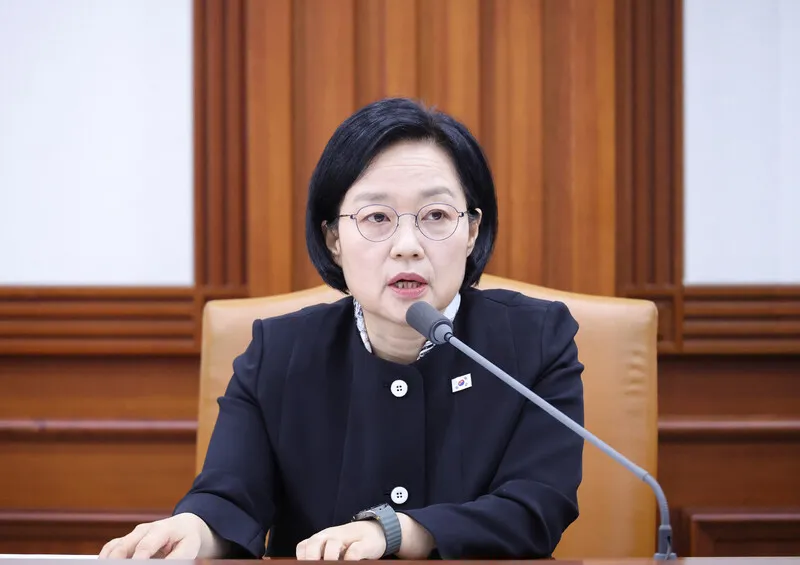
On September 16, South Korea’s cabinet formally approved the introduction of mifepristone — the so-called abortion pill — for pregnancies up to nine weeks. Prime Minister Han Sung-sook announced the decision at a National Policy Adjustment Council meeting at the Government Complex in Jongno, Seoul. The move resolves a policy vacuum that has persisted since the Constitutional Court declared South Korea’s abortion ban unconstitutional in 2019.
It is also a move that came after years of fierce debate. For nearly six years, the ban was struck down but never replaced with a legal framework. Women continued to face criminal penalties, and many turned to unsafe methods or traveled abroad. The government’s decision marks the first time an executive branch has formally committed to a path toward legal medical abortion — a dramatic reversal from just a few years ago, when even discussing the topic was politically radioactive.
Behind the announcement lay months of internal deliberation that were rarely visible to the public. Cabinet ministers reportedly wrestled with competing demands: public health advocates pushing for immediate access, conservative legislators warning of backlash, and medical professionals divided over prescribing protocols. The final framework — a cautious, hospital-centered rollout — represents not just a policy decision but a negotiated truce among forces that had been locked in stalemate.
What the policy actually says
The framework is deliberately cautious. For the first two years, the drug will only be prescribed and dispensed within hospitals — not in clinics, not in pharmacies. After that period, if conditions are deemed ready, the model may shift to a prescription-and-pharmacy-dispensing system. The government emphasizes that safety is the priority and insists the measure is not an endorsement of abortion but a public health protection.
Prime Minister Han noted that the decision follows an instruction from President Lee Jae-myung, who directed the cabinet in July to explore the introduction of the medication. The approval now hinges on the final sign-off from the Ministry of Food and Drug Safety (MFDS), which has faced pressure from women’s groups to act by September 28.
The announcement has drawn both relief and criticism. Women’s organizations have praised the move as long overdue but expressed frustration at the delays and restrictions. Some conservative groups have condemned it as a betrayal of the value of life.
Under the current plan, only board-certified obstetrician-gynecologists will be authorized to prescribe mifepristone, and each patient must undergo an ultrasound to confirm gestational age before receiving the medication. Follow-up visits are mandatory — a requirement that some clinicians argue is medically unnecessary for low-risk patients but that officials say is essential for building the safety data the government will need to justify any future expansion. The two-year review period will specifically examine complication rates, patient satisfaction, and whether the hospital-only model creates undue barriers to access.
The numbers behind the decision
South Korea’s abortion rate has fallen dramatically in recent decades, but that does not mean the need has disappeared. The Constitutional Court’s 2019 ruling acknowledged that illegal abortions still occur and that women continue to seek unsafe procedures. Medical data suggests that self-managed abortions — often involving unregulated sources of medication — remain a significant public health concern. The World Health Organization estimates that 25 million unsafe abortions occur globally each year, and East Asia has been identified as a region where restricted access drives significant numbers of women to unsafe methods.
Domestic studies paint a stark picture. A 2023 survey by Seoul National University’s research team found that nearly one in four women of reproductive age had considered self-managing an abortion after the Constitutional Court’s ruling, with many turning to gray-market pharmacists or online vendors for misoprostol. Emergency rooms across the country report treating complications from unsupervised use regularly, though official statistics likely undercount the problem since patients rarely disclose the circumstances.
The government’s phased approach aims to ensure that early access is monitored and that complications are managed within the hospital system. Success rates for medical abortion at nine weeks and below are high — around 95 percent according to WHO data — but the initial hospital-only restriction reflects a desire to control the rollout in a deeply polarized environment.
Critics of the restriction note that requiring hospital visits creates practical obstacles: time off work, transportation costs, childcare for existing children, and the stigma of being seen entering a maternity ward. Rural residents, in particular, face longer travel distances to the hospitals that will stock the medication. These friction points are precisely what advocates hope the pharmacy rollout will address — if the second phase proceeds as planned.
Why this matters beyond Korea
South Korea’s decision is significant not just for its 52 million people but for the broader Asian region. Several countries in the region — including Taiwan, which legalized abortion in 2019, and Thailand, which relaxed its laws in 2021 — have moved in recent years to liberalize access. Others, like Japan and Indonesia, maintain strict bans. Korea’s shift adds another major economy to the list of countries expanding legal access, and it could influence policy debates in neighboring nations where conservative religious and cultural forces remain powerful.
The timing is also noteworthy. The decision comes amid a broader global backlash against reproductive rights, with several countries tightening restrictions in recent years. Korea’s move in the opposite direction — however cautious — signals that even societies with deep conservative roots can evolve on this issue when the political calculus shifts.
Regional observers note that South Korea’s approach — gradual, evidence-based, and framed explicitly as a public health intervention rather than a rights assertion — may prove more transferable than abrupt liberalization. Countries like Japan, where abortion remains heavily restricted despite growing public support for reform, could look to Korea’s phased model as a template for navigating their own political constraints.
Who wins and who loses
Women who can access the hospital system win. The two-year restriction means that rural women, lower-income women, and those without connections to major hospitals may still face barriers. The pharmacy-to-prescription model that may follow could broaden access, but only if the regulatory framework supports it.
Conservative groups lose ground in the immediate term, though they are likely to frame the decision as a temporary concession rather than a settled matter. Medical providers gain a new clinical tool, but some may resist due to personal objections or institutional constraints.
The government wins credibility on public health grounds, but it also inherits the political risks of any abortion liberalization in a divided society. The next two years will be critical in determining whether the phased approach expands or contracts.
Beyond the direct stakeholders, a quieter transformation is underway within Korea’s medical community. Hospitals are retraining staff, updating protocols, and preparing for a volume of patients they have long avoided serving legally. Some institutions — particularly those with religious affiliations — are expected to opt out, creating access deserts in areas already underserved. The gap between progressive medical centers and conservative holdouts could become a defining feature of the rollout, mirroring patterns seen in other countries where conscience clauses complicate reproductive care access.
What happens next
The immediate next step is the MFDS decision. If approved, the rollout will begin within hospitals and could extend to pharmacies after the two-year review period. Legislative action will likely follow to formalize the change in the penal code, which still criminalizes abortion — a legal relic that the cabinet’s approval does not itself erase.
The broader implications extend beyond the drug itself. This decision could reshape how South Korea talks about reproduction, gender, and state responsibility — questions that have been stalemated for decades. It may also embolden activists in other conservative societies to push for similar reforms.
But the most consequential unknown is what happens after the two-year mark. The framework allows for expansion, but it also allows for contraction — if complication rates spike, if political winds shift, or if conservative lawmakers successfully lobby for additional restrictions during the review period. The pharmacy rollout is not guaranteed; it is conditional on a set of criteria that officials have yet to publish in full detail.
Korea’s leadership has framed this as a beginning, not an ending. Whether it proves to be the start of a durable expansion of reproductive access — or a narrowly bounded concession that leaves the deepest inequities intact — will depend on the activism of women’s groups, the professionalism of medical providers, and the willingness of future governments to build on rather than rollback what has been won. On September 16, South Korea took a concrete step that many thought was impossible just a few years ago. How far that step carries the country remains the question that follows.