Korea's ISDS Win Sends a Signal to Chinese Investors
South Korea's landmark ICSID win against a Chinese investor who funded his deal through bribes sets a precedent that could reshape how Asian governments defend against bad-faith investment claims.
What Korea Won Was More Than a Case
South Korea has just pulled off something rare in international investment law. A Chinese investor, Min Mou, had spent years trying to claw back roughly 2 trillion won (about $1.4 billion) from the Korean government, claiming it had illegally expropriated his shares in a company called Pay Korea. On September 12, an ICSID annulment committee rejected his final appeal, confirming a 2024 ruling that completely dismissed his claims — and ordering him to pay Korea nearly 1.5 billion won in legal costs.
But this victory matters less for the money and more for the reasoning behind it.
How It All Began
The story starts in 2007, when Min established Pay Korea to acquire the Hwapu Building in Beijing. He borrowed 380 billion won from Woori Bank and other domestic lenders. He never repaid it.
After six extensions, Woori Bank executed its collateral rights and sold Pay Korea’s shares to a foreign company. Min sued in Korean courts, alleging the seizure was illegal. He lost at the Supreme Court in 2017.
He also lost on a separate criminal charge: providing money and other benefits to bank employees to secure the loan. That conviction was finalized the same year.
Rather than walk away, Min filed for ICSID arbitration in August 2020. His argument was familiar territory for anyone who has watched investment disputes play out: the collateral execution was an unlawful expropriation by the Korean state, and the domestic courts had denied him due process.
His initial claim topped 2 trillion won, later trimmed to about 264 billion won.
The Core Legal Move
In May 2024, the arbitral tribunal dismissed everything. Its reasoning was sharp and direct: Pay Korea had been set up as part of an illegal plan to obtain loans through bribery. Investments funded through corruption do not qualify for protection under the China-Korea investment agreement. The tribunal lacked jurisdiction.
It also ordered Min to repay Korea approximately 4.9 billion won in legal and arbitration costs, with interest.
Min appealed that September, triggering a stay on enforcement. Under ICSID rules, annulment committees review very narrow grounds — whether the tribunal clearly exceeded its powers or committed a serious procedural breach. They do not re-examine the facts.
On September 12, the annulment committee concluded that the original tribunal had interpreted the China-Korea investment agreement reasonably, afforded Min adequate opportunity to present his case, and produced a decision free of contradictions or material omissions. All of Min’s arguments were rejected. He was ordered to cover Korea’s 1.5 billion won in annulment costs, plus $426,751 in ICSID fees.
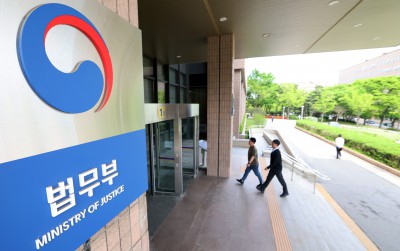
The Korean Ministry of Justice stated plainly that the case reaffirmed the principle that investments violating domestic law cannot claim protection under investment treaties.
Why This Matters Beyond the Courtroom
International investment disputes are rarely clear-cut wins for host governments. The system was designed to protect investors from arbitrary state action — and historically, tribunals have been skeptical of governments trying to justify regulatory measures. When a government loses, it often pays hundreds of millions, sometimes billions, in damages. When it wins, it still pays enormous legal fees and emerges with little public recognition.
Korea’s victory here is unusual on both counts: complete dismissal of the claim, and recovery of significant costs.
But the deeper implication lies in what the case says about the relationship between investment treaty protection and domestic legality.
Min’s strategy was not original. Corrupt actors sometimes use ISDS as a lever — filing claims in international forums precisely because those forums tend to place the burden of proof on the host state and are cautious about second-guessing domestic judicial processes. The hope is that even if a claim lacks merit, the threat of litigation and the cost of defense will pressure a government into settlement.
This judgment makes that calculus riskier. A host state can now point to this precedent and argue that where an investment is fundamentally tainted by illegality — particularly bribery of state or corporate officials — the investment treaty does not apply. That is a narrower reading of treaty protection than some tribunals have adopted, but it is defensible and well-reasoned.
The China Angle
Chinese investors are among the largest outbound investors in Asia. According to various sources, China’s outward direct investment has fluctuated sharply since 2020, but Chinese capital remains deeply embedded in regional supply chains, real estate, and financial services. Beijing has also been increasingly assertive about protecting its investors abroad, sometimes using economic leverage in ways that complicate dispute resolution.
A Korean tribunal ruling that Chinese investors who bribed domestic officials forfeit treaty protection could be read in Beijing as hostile — or at least inconvenient. It signals that South Korea will not treat investment arbitration as a automatic shield for questionable conduct.
That may not bother China’s official planners much. But it could make individual Chinese investors think twice before using ISDS as a strategic weapon against a government that is willing to fight. The precedent travels. Other Asian states watching this case will note that a host government can win decisively, recover costs, and avoid the usual pattern of large damages payouts that emboldens serial claimants.
Who Loses Here
Min loses everything — the money, the shares, and the cost of a five-year legal battle. His case demonstrates the limits of ISDS when the underlying investment is corrupt. No amount of procedural argument can rehabilitate an investment that was designed to circumvent domestic law from the start.
Korean banks and financial institutions also benefit indirectly. The case reinforces that collateral enforcement by a domestic lender, even when tied to alleged corruption in the loan origination process, does not automatically trigger international liability. That matters for any financial institution in Asia that has faced similar disputes or fears them.
What Comes Next
The immediate question is whether Min attempts any further enforcement or appeal. ICSID annulment is the final step under the convention, and there is no substantive appeal mechanism. However, enforcement of ICSID awards can face political headwinds in certain jurisdictions, and Min’s assets may be located in countries with varying attitudes toward Chinese investors or arbitration outcomes.
More broadly, this case could influence how Asian governments approach ISDS disputes in the coming years. South Korea’s Ministry of Justice framed the outcome as confirmation of an existing principle — that illegal investments receive no treaty protection. But the practical effect of a high-profile, fully cost-recovered victory may extend beyond legal doctrine. It changes the cost-benefit analysis for future claimants.
Beijing’s response will be telling. If Chinese investment officials treat this as an isolated enforcement matter, the precedent’s reach remains limited. If they begin signaling concern about the treatment of Chinese investors in third-country tribunals, the case may acquire a geopolitical dimension far beyond its immediate facts.
The ruling itself is clean. The politics around it are just beginning.