Seoul's Margin Relief Exposes Asia's Carry-Trade Fragility
South Korea's emergency suspension of margin requirements reveals how emerging markets remain hostage to global liquidity swings. The move eases immediate selling pressure but underscores the structural weakness of the yen carry-trade model.
The circuit-breaker nobody talked about
South Korea’s emergency margin relief isn’t a capital control. It’s something quieter, and in a way more revealing.
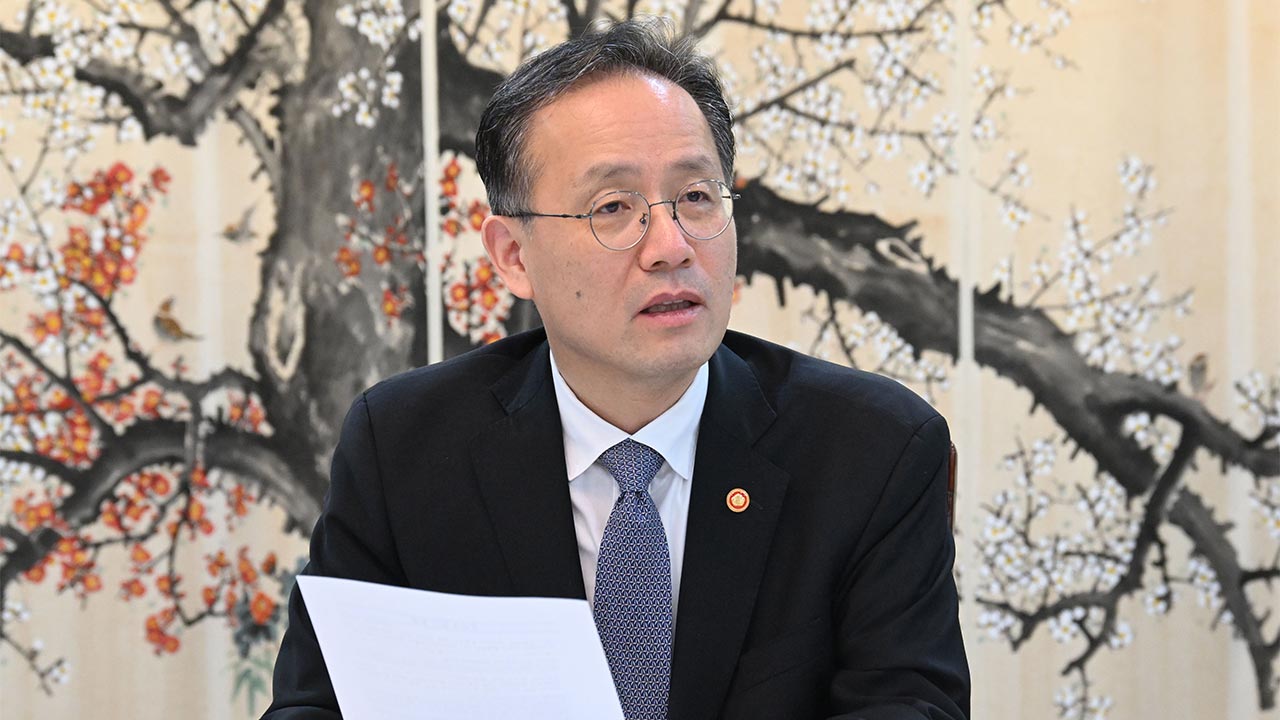
On November 9, three months from now, securities firms will no longer be forced to maintain a 140% collateral ratio on credit margin lending. The move, announced by Vice Finance Minister Lee Hyung‑il after an overnight emergency meeting at the Ministry of Economy and Finance, is designed to stop the chain reaction that turns a falling price into a forced sale, which turns a forced sale into a faster fall. It is, in essence, a pause button pressed on the mechanics of panic liquidation.
What makes this moment noteworthy is not the policy itself—circuit‑breaker‑style tools have been used in Asia before, most recently by Taiwan and India during their own volatility episodes—but the speed with which Seoul chose to deploy it and the scale of the external shock that triggered it. The decision came after less than 48 hours of steep index declines that erased over four trillion won in market capitalization. That compression from concern to action suggests the authorities saw the wiring of the market more clearly than most investors did.
The domestic market has dropped sharply. The government points to “policy uncertainty around the AI industry” and a wider contraction in global risk appetite. English‑language coverage has largely framed the slide as a routine correction. That misses the structure underneath. The KOSPI’s weakness is not merely a reflection of sectoral headwinds or technical selling. It is the symptom of a broader mechanism—leverage funded by cheap yen—that has quietly reconnected emerging‑market equities to fluctuations in Tokyo and Washington.
Who wins, who loses, who watches
Securities firms win immediate relief. They will no longer face the prospect of margin calls across a broadening book of leveraged positions, a situation that historically accelerates declines in Korean equities. The three largest firms—Samsung Securities, KB Securities, and Shinhan Securities—collectively hold tens of trillions of won in margin lending exposure. Each additional point of downside that triggers automatic liquidation compounds losses for their books and for the institutions that back them.
Retail investors who borrowed to buy stocks also buy time. The rule change does not erase losses, but it reduces the likelihood that a sudden dip triggers a cascade of automatic liquidations. For the estimated 30 percent of Korean equity trades financed through margin borrowing, this pause is the difference between managing a downturn and being forced out of it.
Who loses is harder to pin down in a single headline. Taxpayers absorb the systemic risk that margin suspensions externalize—when leverage is artificially sustained, the next downturn carries greater potential for disorderly unwinds. Global portfolio managers who priced in orderly volatility now face a more unpredictable liquidity environment. And the Korean won, already sensitive to carry‑trade unwind flows, faces renewed pressure as the boundary between “normal” and “crisis” intervention blurs. The FX market does not reward clarity when clarity is replaced by emergency measures.
The public comments on the original report tell their own story. Frustration at the timing, accusations that the government waited for political thresholds to break, and anger at the leverage‑driven structure that amplifies both rises and falls. One recurring line: “Why should the government care about losses from borrowed‑money investing?” That question cuts to the core of the policy dilemma—because when enough investors are leveraged, their losses become someone else’s problem through fire sales, margin cascades, and institutional balance‑sheet contagion.
The carry trade’s hidden Achilles heel
The real stress test here is not the KOSPI’s daily swing. It is the yen‑carry trade, and how fragile it remains even after years of “normalization” rhetoric from the Bank of Japan.
For over a decade, investors have borrowed cheap yen to fund higher‑yielding assets in emerging markets. Korea has been a natural destination: a deep semiconductor chain, a liquid equity market, and a financial system comfortable with cross‑border flows. Japanese banks and asset managers have been the primary funding source, lending yen at near‑zero rates while routing the proceeds into Korean equities, real estate, and corporate bonds.
When the US Federal Reserve signals a shift in rate expectations—or when midterm election anxiety compresses risk appetite—the unwind begins. Yen funding costs rise. Risk‑on positions are sold. The first targets are often the most leveraged: emerging‑market equities, high‑yield debt, and currencies with current‑account surpluses that make them attractive yield carriers. The pattern is recognizable: a spike in the yen‑dollar rate, a contraction in cross‑border yen lending, and a rapid exit from Asia’s risk assets.
Korea’s recent drop fits that pattern. The government’s own assessment that the market is “overly responsive to external factors” is a polite way of saying the carry‑trade plumbing is still wide open. The KOF Economic Policy Uncertainty index has climbed alongside the won’s weakness, confirming that the market perceives a feedback loop between foreign exchange moves and equity selloffs—one that Seoul is only partially equipped to interrupt.
What happens next
The three‑month exemption creates a window. Regulators will use it to monitor whether forced selling actually subsides and whether volatility spreads to related markets—bonds, derivatives, and the foreign‑exchange forward points that signal carry‑trade positioning. The Bank of Korea will likely watch the won–dollar spread and the size of its FX swap placements to gauge whether the unwind is slowing or accelerating beneath the surface.
If the KOSPI stabilizes, the policy will be framed as a successful circuit breaker. If the decline continues, the next question is whether additional tools follow: short‑sale bans, broader margin restrictions, or even implicit guidance to institutional holders. Each escalation narrows the market’s operational freedom and signals deeper distress.
International investors will watch two signals. First, whether Seoul coordinates with the Bank of Japan on yen liquidity—a repeat of the bilateral swap arrangements that have prevented sharper currency dislocations in the past. The existing $30 billion swap line is adequate for normal turbulence but would be strained by a genuine carry‑trade crisis. Second, whether Washington’s post‑midterm policy clarity restores enough global risk appetite to let Korean equities breathe without further intervention.
The semiconductor angle matters too. Any AI‑policy uncertainty that rattles chip demand projections will feed directly into Korea’s export‑weighted index. Samsung Electronics and SK Hynix together account for roughly a third of the KOSPI’s market cap. The government’s pledge to monitor “major countries’ policy trends” in real time is an admission that Seoul no longer controls the narrative that moves its market.
Why this matters beyond Seoul
Emerging markets have spent years convincing themselves they are less vulnerable to sudden stops. Korea’s emergency margin relief shows that confidence was misplaced. The region’s growth story has not decoupled from global liquidity conditions—it has simply found new channels through which those conditions transmit.
The carry‑trade model is not dead, but it is no longer the reliable engine of emerging‑market gains it appeared to be during the low‑rate era. When global liquidity contracts, the first casualty is the leverage that amplified gains in the first place. This is not a Korea‑specific problem. It is a structural feature of markets that have grown accustomed to funding long positions with cheap, abundant yen and have not fully priced the risk of its return.
Seoul’s intervention is a reminder that open capital accounts and volatile risk appetites do not mix well without a dense web of backup arrangements. The three‑month exemption is a temporary patch. The structural question—how to finance growth without depending on borrowed yen that can disappear overnight—remains unanswered. Korean policymakers may well consider tighter limits on margin lending ratios, or incentives for longer‑duration domestic funding, but neither is likely before the next cycle of external turbulence arrives.
For now, the market gets a breather. The broader lesson is that the next shock may not arrive with a headline. It may arrive quietly, through the unwinding of positions that everyone assumed were safe—and by the time the circuit breakers kick in, the damage may already be woven through the fabric of the portfolio.