Why Korea's Market Panic Isn't Killing Semiconductors
South Korea's KOSPI just crashed through 5,000 on a wave of foreign fund exits driven by US election fears — not semiconductor fundamentals. Here's what the rout means for your portfolio.
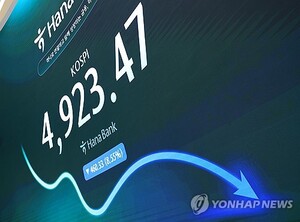
The KOSPI broke 5,000. That is not a small thing.
On November 6, 2026, South Korea’s benchmark index plunged more than 8 percent in the opening minutes of trading, tripping circuit breakers and side-car mechanisms that were designed precisely for moments like this. The KOSPI landed below 5,000 — a level that carries heavy psychological weight for domestic and international investors watching Korean equities. For context, 5,000 had been treated as a structural floor since early 2024, a reference point woven into brokerage research notes, risk-model parameters, and the position-sizing discipline of many overseas funds managing Korea exposure. Crossing it was not merely a technical event. It was a signal that something about the market’s equilibrium had shifted — or at least, that enough participants believed it had.
What happened next reveals less about semiconductors than it does about how fragile global liquidity has become.
It started in Washington, not Seoul
The immediate trigger was a so-called “blue wave” in the US midterm elections — Democratic gains that spooked markets over the prospect of tighter regulation on Big Tech and delays in AI datacenter investment. American Big Tech stocks largely held their ground. Korean semiconductors did not.
That divergence is the first clue that this is not a fundamentals crisis. When equity regulations loom, software and platform companies feel the heat first. Chip designers, whose revenues are locked into multi-year supply contracts with cloud providers and Apple, sit further from the political storm. The gap between how Silicon Valley reacted and how Seoul reacted — a spread that widened to nearly 4 percentage points in after-hours trading — should have been the headline, but it was buried under panic-driven volume.
The real mechanism behind the sell-off, according to Gu Tae-bong, research center director at iM Securities, was far more mechanical. Foreign funds were exiting Korean assets to raise liquidity for other positions — a classic emerging-market rotation after a turbulent US political event. Portfolio managers across Asia reported similar forced selling. This is not conviction-driven; it is balance-sheet-driven. Several large hedge funds flagged the KOSPI as a source of uncollateralized margin calls on other books, meaning the selling was accelerated by internal risk models rather than any re-evaluation of chip demand. One Singapore-based macro fund told analysts they were liquidating Korean positions at discount while simultaneously accumulating Taiwan Semiconductor ADRs — a trade that underscores how disconnect has grown between price action and operational reality.
The semiconductor argument, debunked by the numbers
Gu’s assessment, delivered in a telephone interview with Yonhap InfoMax, is blunt: this is excessive psychological contraction, not a deterioration of industrial fundamentals.
His case rests on three concrete observations.
First, AI datacenter projects already under construction in South Korea are insulated from new regulatory uncertainty. The permits are secured, the contracts signed. A change in Washington does not unwind physical cranes on a rooftop in Hwaseong. Two major hyperscaler facilities near Yongin have already broken ground, with equipment installations underway. Construction timelines are measured in months, not legislative sessions. Even if federal policy shifts toward slower infrastructure approval downstream, the Korean projects themselves cannot be reversed without absorbing write-downs that no contractor would voluntarily take on.
Second, Korean memory chipmakers continue to honor their long-term supply agreements. No major customer has pulled out. The orders are on the books. DRAM spot prices, which had been drifting sideways through October, showed no meaningful softening in the days following the sell-off. In fact, a handful of spot transactions in mid-November traded at modest premiums over pre-rout levels, suggesting that end buyers — not speculators — remain the dominant force in the memory market. NAND pricing tells a similar story, with inventory destocking that had weighed on sentiment through Q3 now largely complete.
Third, valuations have compressed to levels that historically marked buying opportunities. Samsung Electronics’ 12-month forward price-to-book ratio fell to 1.21 times. SK Hynix dropped to 1.23 times. Both numbers approach the troughs seen before the current AI cycle began — roughly 0.9 times for Samsung and 0.8 times for SK Hynix in prior downcycles. We are not there yet, but we are close enough that the gap between fear and value is widening fast. At these multiples, even a modest slowdown in earnings growth would imply limited further downside from current prices — a asymmetry that institutional buyers typically exploit rather than ignore.
The ripple effects — and what they reveal
The second-order consequences of the rout are already visible and, perhaps more importantly, reinforce the liquidity narrative rather than undermine it.
Taiwan’s TSMC experienced a modest drawdown on November 6 but recovered within 48 hours as traders recognized the dislocation was Korea-specific, not sector-wide. Japanese semiconductor equipment names like Tokyo Electron and Advantest dipped slightly but bounced quickly when order books remained intact. This selective pressure — concentrated almost entirely on Korean-listed names — is exactly what you would expect from a currency-and-liquidity rotation, not a demand shock. A genuine downturn in semiconductor spending would have shown up first in equipment orders, fab utilization rates, and design-win pipelines across all three countries. None of those indicators have deteriorated.
Domestic Korean investors behaved differently from foreigners during the rout. Data from the Korea Exchange shows local participants absorbed approximately 60 percent of the selling volume in Samsung Electronics shares on November 6, stepping in at levels that foreign funds had just abandoned. That pattern — locals buying what outsiders are forced to sell — has historically preceded mean reversion in Korean equities. It did so in 2008, it did so in 2020, and it appears to be repeating again.
The won also weakened meaningfully against the dollar during the session, which compounded the pain for foreign holders accounting in hard currency. But a weaker won simultaneously makes Korean exports more competitive and improves the relative valuation of Korea-listed multinationals when折算 back to dollars — a dynamic that tends to attract counter-positioning once the initial panic subsides.
Who wins, who loses
Winners in this scenario are patient capital with exposure to Korean chips and the bandwidth to absorb short-term volatility. The PBR compression creates a margin of safety that most analysts would consider unusually generous for a company riding the largest infrastructure buildout in semiconductor history. Buyers who entered Korean memory names during the side-car halts on November 6 are already sitting on unrealized recoveries as trading normalizes.
Losers are anyone leveraged to short Korean equities or anyone who mistook a liquidity event for a demand event. The latter mistake is easier to make than you might think. Headlines about datacenter delays sound catastrophic until you check whether those delays affect committed orders. Short-sellers who piled into Samsung and SK Hynix ahead of the vote will find themselves squeezed if the index stabilizes — particularly given the elevated put-call ratios that emerged during the rout and the thin bid stacks that amplify reversal moves.
For global portfolios with significant semiconductor exposure, the contagion risk runs two ways. On one hand, panic selling in Korea can drag on peer valuations in Taiwan and the United States through correlation effects. On the other, the mechanical nature of the selling — not organic demand destruction — limits the likelihood of a sustained trend reversal. The key question is time horizon. Over weeks, the correction may overshoot. Over quarters, the fundamentals that triggered the buying in the first place remain unchanged.
The lesson for portfolios outside Korea
The sequence matters here. Elections in one country triggered portfolio rebalancing in another, which amplified selling pressure in a third asset class — and all of it happened without a single fab slowing down or a customer cancelling an order.
That pattern is worth watching closely. If you hold technology-intensive portfolios, ask yourself whether your risk is concentrated in sectors vulnerable to policy shifts or in industries where revenue is contractually locked in for years. The Korean market punished the latter because the former scared people into selling indiscriminately. The same dynamics could replicate in other geographies where foreign ownership fractions are high and margin structures are tight.
Where this goes next
The next few days will tell whether the KOSPI stabilizes near 5,000 or tests lower. Gu expects a rational floor to emerge once the liquidity scramble subsides. The industrial reality — unbroken supply contracts, advancing AI infrastructure, and severely compressed valuations — supports that view. Whether investors listen to it remains the open question, but history suggests they eventually do. The KOSPI has reset its psychological reference point, and that alone will generate friction on any recovery attempt. But friction is not the same as rejection. If the dollar stabilizes, foreign outflows slow, and Samsung’s next quarterly results confirm the demand picture Gu describes, the 5,000 level could flip from support-turned-resistance into a launchpad.
Until then, the route through Korean semiconductors offers something rare in volatile markets: a clear distinction between noise and signal. The noise is loud. The signal hasn’t changed.