Why Korea Should Watch the Nasdaq AI Sell-Off Differently
Korean investors have been watching the Nasdaq AI selloff through a distinctly different lens — one shaped by Samsung and SK Hynix's memory-chip exposure rather than the American chip-design bets driving the panic.
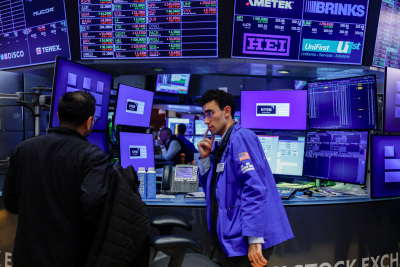
The Nasdaq AI Selloff — Through a Seoul Lens
On November 20, the Nasdaq plummeted 3.39 percent. The S&P 500 and Dow Jones both slipped into correction territory — defined as a drop of at least 10 percent from recent highs. For Wall Street, the trigger was almost theatrical: Anthropic, the star child of the AI investment thesis, opened the day having surged 17 percent the prior session, then erased nearly all of that gain within hours on what was supposed to be its most important day as a public company.
What happened next read like a collective reckoning. Nvidia fell 6.79 percent, extending its losing streak to the longest since 2008. AMD dropped 10.84 percent. Broadcom, Marvell, and Micron each shed roughly 10 percent. The Philadelphia Semiconductor Index collapsed 8.62 percent. Bitcoin tumbled below $60,000 for the first time since July, marking seven consecutive weekly losses — the longest sustained weakness since the crypto crash of 2022.
For Korean markets, however, this narrative lands differently. The headlines focus on American chip designers and AI model companies. But Seoul’s investment universe is anchored in places like Samsung Electronics and SK Hynix — memory-chip giants whose fortunes are tied less to whether Anthropic goes public successfully and more to whether hyperscalers keep buying high-bandwidth memory as AI workloads expand.
Why the Distinction Matters
This is not a semantic point. It shapes how Korean portfolio managers assess risk, and it explains why the KOSPI has historically shown surprising resilience even during brutal periods for American tech equities.
Samsung and SK Hynix sit downstream from the very companies panicking right now. They do not build AI models. They do not design GPUs. What they produce — HBM, or high-bandwidth memory — sits inside the servers that run those models. If Anthropic fails to generate investor enthusiasm, that is a story about the applications layer, not necessarily about demand for memory chips. And crucially, every major cloud provider has signaled multi-year capacity commitments for HBM regardless of which AI startup ultimately wins the race.
That said, the current sell-off carries real implications for Korean exporters — just not in the way most English-language coverage frames them.
The Capital-Expenditure Question
BMO Global Asset Management’s chief investment officer, Sadiq Adatia, put his finger on the underlying anxiety during the week’s turbulence. “CapEx is being overspent,” Adatia noted. “People are asking how it’s being funded. Is it coming from core operations, or increasingly from debt?”
That question matters enormously for Korean semiconductor exports. A significant portion of Samsung’s and SK Hynix’s revenue comes from sales to the same American hyperscalers — Amazon, Microsoft, Alphabet, Meta — who are simultaneously investing hundreds of billions in AI infrastructure while facing margin pressure from elevated borrowing costs. If those companies slow capital expenditure or delay facility builds, memory demand forecasts get revised downward globally, not just in America.
Micron, a fellow DRAM manufacturer headquartered in the US, fell 12.32 percent on November 20. Its decline sent shivers through Seoul precisely because Micron and SK Hynix compete in overlapping product segments. When one American memory maker gets crushed, the other gets repriced alongside it — regardless of their respective fundamentals.
The Broader Macro Picture
Adam Turnquist at LPL Financial offered a candid summary of the psychological dimension: “Another event that was expected to remove risk failed to revive risk appetite. Anthropic’s IPO generated strong demand the first day, but that heat never spread across the broader technology sector. Concerns persist that the AI cycle may already be peaking.”
That framing deserves scrutiny from Korean strategists. An AI “peak” thesis assumes that the demand curve for underlying hardware flattens once the application layer cools. History suggests that assumption does not always hold. The dot-com bust of 2000 destroyed valuations for many internet companies but did not reverse the underlying migration of enterprise computing toward digital infrastructure. Fiber-optic cable deployments continued. Server farms kept expanding. Demand for components followed patterns that were decoupled from the fate of any single company’s IPO.
Still, the timing is unfavorable. The Federal Reserve has signaled a hawkish stance, and institutional investors remain cautious about deploying new capital into risk assets. Wincent’s senior investment officer Paul Howard observed that ETF outflows are telling — and that big-money buyers have yet to step in meaningfully. BlackRock alone saw $541 million exit its spot Bitcoin ETF on a single day, part of a broader wave of $582 million in total outflows from US Bitcoin funds.
Who Wins, Who Loses
If the correction deepens, several outcomes become likely.
Korean memory-chip prices may stabilize faster than American GPU-centric valuations, simply because demand drivers are more tangible and longer-duration. HBM contracts typically span multiple years with predefined volume commitments, unlike speculative software revenues. This structural difference insulates Samsung and SK Hynix somewhat from short-term volatility in AI stock pricing.
American pure-play AI developers like CoreWeave, which fell 10.94 percent on November 20, face far steeper headwinds. Their business models depend entirely on sustained hypergrowth in AI infrastructure spend — a condition currently under review by investors demanding proof of profitability before providing capital.
Chinese semiconductor firms may find a narrow opening. If Western hyperscalers recalibrate their supplier strategies amid cost pressure, any alternative manufacturing source — including Chinese foundries working through domestic design houses — could capture incremental orders, though at lower margins than Korean firms command today.
Japanese equipment makers such as Tokyo Electron and Nikon stand in an ambiguous position. If hyperscaler CapEx contracts, equipment orders fall globally. If the AI buildout persists despite valuation resets, equipment makers remain essential regardless of which specific company wins the software war.
What Comes Next
Three weeks remain until the US midterms, and political dynamics are already influencing sentiment. Analysts have flagged the possibility of increased regulation under a Democratic landslide as a dampening factor for risky sectors. Jensen Huang’s rumored departure from Nvidia continues to circulate as unconfirmed speculation, adding to unease about corporate governance at the center of the AI trade.
For Korean investors, the lesson is straightforward but not always acted upon: treat American AI corrections as partially self-contained events. The memory-chip demand cycle moves on its own timeline, driven by data-center expansion plans that predate any single IPO and that extend well beyond the current earnings season.
The Nasdaq may punish optimism this week. But the machines that power artificial intelligence still require physical hardware — and that hardware is largely manufactured in South Korea and Taiwan. Where those factories sit in the value chain, and who controls their output, determines who actually benefits when the dust settles.