China Overtakes Japan in 39 Countries—Auto Power Shift Is Accelerating
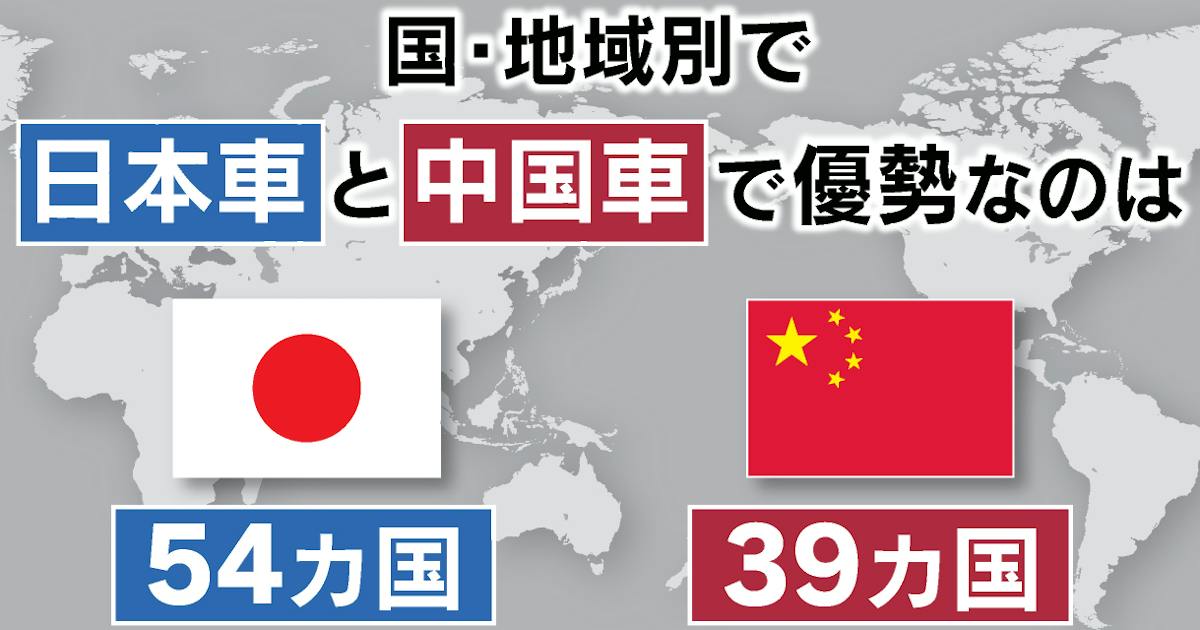
Chinese automakers now outsell Japanese brands in 39 countries, reversing positions in 14 nations including Germany and Brazil. The speed of erosion matters more than the headline number.
The Number That Should Worry Tokyo
Chinese automakers are now selling more new cars than Japanese brands in 39 countries around the world. Fourteen of those reversals happened this year alone—Germany, Brazil, Chile, Malaysia, and several others where Japanese labels once carried unassailable weight. The shift did not arrive as a single shock. It arrived as a pattern that grew steeper every quarter, compounding across regions that had been assumed to follow their historical trajectories.
What makes this moment distinct from previous periods of competitive anxiety in the auto industry is velocity. A decade ago, Chinese exporters were punching below their weight in developing markets, competing primarily on price in economies where brand loyalty had not yet hardened. Today they are taking out European strongholds and tightening gaps in Southeast Asia faster than any industry forecaster projected. The gasoline-to-electric transition, compounded by elevated global crude prices and shifting consumer sentiment, is the engine behind much of it—but it is only part of a broader structural realignment.
Japan’s automotive sector contributes roughly 20 percent of the country’s manufacturing GDP and employs nearly seven million people across direct and supply-chain roles. When a competitor begins capturing shared ground in major export destinations, the economic and political ripple effects extend far beyond dealership receipts. Governments take notice. Tariffs get proposed. Strategic reviews begin.
How Fast Is the Gap Closing?
Thailand tells the story most clearly. Japanese brands still command roughly 56 percent of the market there, but last year the gap over China was 43 percentage points. This year it had shrunk to 24—a compression of 19 points in twelve months. That is not incremental drift. That is a structural shift happening in real time, driven largely by BYD and GAC’s localized production ramping up at their Eastern Thailand Economic Corridor facilities.
Part of the reason the numbers look slower on the Japanese side is accounting lag. Toyota and Honda continue to earn significant income from servicing and spare parts for vehicles they sold years ago. A dip in fresh sales does not hit quarterly results immediately. Chinese manufacturers do not enjoy that cushion. They must sell volume now, build factories now, and secure dealer relationships now. Their cash flow discipline forces faster decision-making—and in a sector where speed is increasingly a competitive weapon, that matters more than accumulated goodwill.
The velocity of change also affects capital allocation. Japanese automakers, accustomed to multi-decade product cycles and conservative investment schedules, are finding themselves playing catch-up on platforms that should have been in development five years ago. Every delayed launch cedes shelf space to competitors who shipped first. The gap widens not because Japanese engineering has declined but because the window for decisive action closes faster than ever before.
Distribution Is the Real Battleground
The sharpest insight comes from what is happening beneath dealership showrooms. In southern European cities, ride-hailing fleets are quietly becoming China’s most effective marketing channel. Drivers who sign up through Uber or Bolt are being offered lease-to-own programs for BYD electric vehicles, often at rates that undercut comparable Japanese alternatives when total cost of ownership is calculated across three to five years.
BYD announced a multi-year strategic partnership with Uber to deploy 100,000 electric vehicles globally. Europe and Latin America were the first regions reached. This is not a promotional stunt. It is a circumvention of the traditional sales ladder—skipping dealer negotiations, skipping showroom contracts, skipping the slow process of convincing individual buyers one transaction at a time. A fleet operator placing bulk orders moves far faster than a consumer comparison-shopping between a Corolla and a Camry.
The implication extends beyond any single route. If Chinese manufacturers can embed their vehicles into mobility platforms worldwide, they compress the timeline for market entry in ways that factory construction alone never could. Japanese exporters built their postwar ascent on relationships developed country by country, dealer by dealer. That model is not dead. But it is suddenly obsolete relative to the alternatives available to competitors who refuse to play by the same rules.
German dealerships illustrate the contrast sharply. Traditional dealers spend years cultivating regional brand ambassadors, hosting service events, and building community presence. Chinese entrants bypass that architecture entirely, delivering vehicles through corporate channels and digital sales funnels that reach price-sensitive consumers without the overhead burden. The result is thinner margins for incumbents and accelerated share loss in segments where volume depends on accessibility rather than prestige.
Supply Chains Already Bleeding
There is an even quieter dimension to this shift—one that does not appear in monthly registration statistics. Toyota’s bZ3X, sold under its own badge in China, contains a substantial share of Chinese-made components. The company already leans heavily on local suppliers in its largest foreign market. The lesson that should terrify executives is that this dependency could replicate elsewhere.
If Japanese original equipment manufacturers continue integrating Chinese suppliers into their vehicle architectures regionally—as ASEAN seems poised to mirror the Chinese model—the value captured in those economies shifts toward component makers rather than brand owners. Brand share stays on paper. Supply chain share disappears from annual reports until it is too late to restructure.
Professor Masaomi Yamamoto of Nagoya University put it plainly: before Japanese OEMs lose ground, Japanese suppliers may already be losing the ability to capture new markets worldwide. That distinction between brand territory and manufacturing territory is the one most Western readers miss when tracking this story. Japanese automakers may still be famous names. But fame does not manufacture semiconductors, battery cells, or wiring harnesses.
The secondary effect is already visible in supplier earnings calls. Companies like Denso and Aisin have quietly expanded their Chinese-language investor briefings and increased R&D coordination with domestic partners in Southeast Asia. The signals suggest they anticipate a future where their biggest growth opportunities lie within the ecosystems they currently serve rather than in exporting finished assemblies back to Japan.
Policy Backlash and the Tariff Frontier
Governments are beginning to respond. The European Union launched anti-subsidy investigations into Chinese electric vehicles and subsequently imposed provisional tariffs that will reshape pricing structures through 2027. Brazil has followed with its own import duty adjustments. These measures may slow the pace of displacement in the short term, but they do not address the underlying competitive dynamics driving it.
Tariffs raise costs for consumers who are already evaluating total ownership economics. They also risk fragmenting the very supply chains that make Chinese vehicles competitively priced. Japanese automakers may benefit from protectionist measures, but the reprieve is likely temporary. Any plant built to serve a tariff-protected market eventually becomes a export base itself—exactly the pattern that worried policymakers in the 1980s when Japanese cars flooded American streets.
The more enduring consequence may be geopolitical. Auto trade flows have long been a barometer of economic power between industrialized nations. When China displaces Japan across dozens of markets simultaneously, the symbolism extends well beyond commerce. It reinforces narratives about the redistribution of global manufacturing influence and puts pressure on alliance frameworks that assumed Japan would remain the default Asian automotive anchor.
What Comes Next
The next twelve months will determine whether the current trajectory stabilizes or accelerates further. Chinese manufacturers are converting sales growth into physical assets—factories in Indonesia with annual capacity of 150,000 units, service networks expanding across emerging markets, partnerships with global platform companies locking in fleet placements. Each new facility reduces shipping costs, shortens delivery timelines, and deepens local market integration. The flywheel is spinning faster.
Japanese manufacturers face a different calculus. They have inventory depth, dealer loyalty, and a decades-old reputation to deploy. But deployment takes time. Every month of hesitation lets Chinese rivals consolidate positions that are expensive to dislodge once established. The question is no longer whether Japanese brands can compete on electric platforms—it is whether they can reach meaningful scale before the window narrows to something manageable.
Thailand’s narrowing gap suggests the answer to who wins the next phase will not depend on which country builds the best car in a lab. It will depend on which country can move from design to delivery fastest. The data so far favors Beijing.
This is not simply about car exports. It is about which industrial ecosystem controls the next generation of transportation infrastructure—and the answer is shifting.