Korea Is One Pipeline Hit Away From an Inflation Wave
Saudi Arabia's east-west pipeline is down after a drone attack, pushing crude past $100. Korea has pre-positioned much of its import volume — but for how long? What happens when those reserves run thin and global supply tightens further.
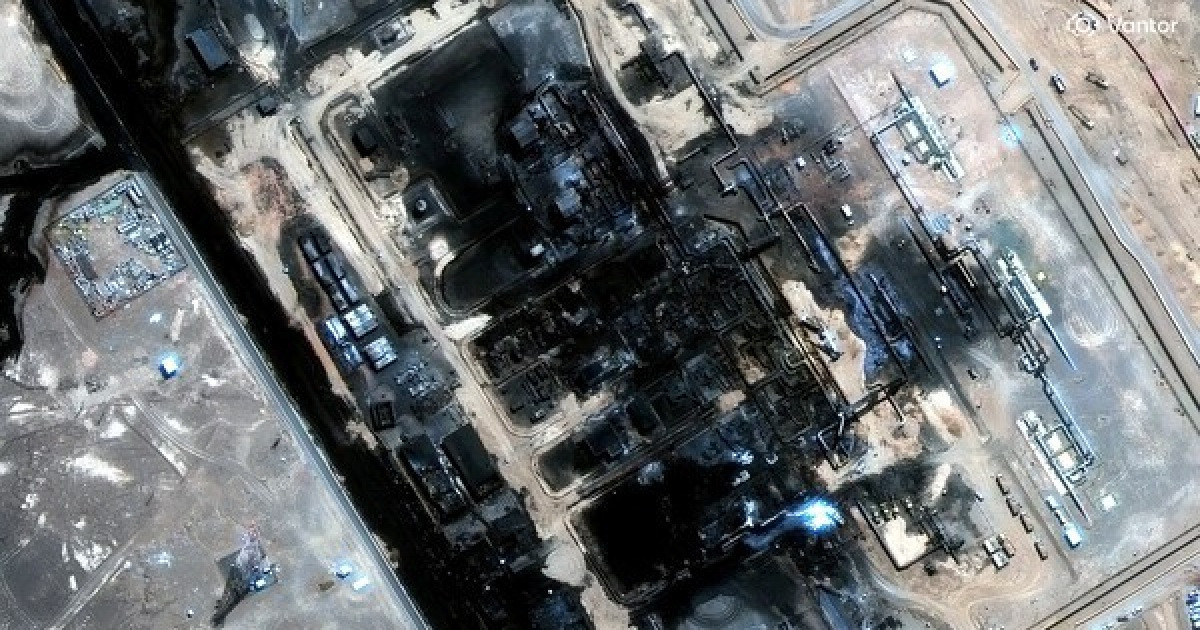
The Pipeline That Held Oil at Bay Is Now a Target
When Saudi Arabia’s east-west pipeline — the 1,200-kilometer artery that has quietly absorbed the brunt of Red Sea disruptions for the past six months — went dark after a drone strike on October 10, the market had already priced in roughly half the crisis. What investors are now recalibrating is what happens next.
The pipeline runs from the oil-rich Eastern Province to the Red Sea port of Yanbu, designed specifically as a detour around the Strait of Hormuz. In a normal year it moves about 4 million barrels a day — nearly 4 percent of global supply. Since Hormuz shipping faltered in spring, Yanbu had become the pressure valve keeping crude flowing from Saudi fields to world markets without transiting Iranian waters. That valve is now shut.
Brent crude pushed above $108 a barrel on September 13. WTI broke $102. The market is not reacting to a single event; it is pricing in the possibility that this becomes the second structural chokepoint to fail in as many months.
Why $100 Oil Hits Korea Differently Than America
American readers will note that the United States is now a net oil exporter and that higher prices are partly a self-inflicted tariff on OPEC+’s own market share. A $100 Brent is uncomfortable but not catastrophic for a country that produces more than 13 million barrels a day.
South Korea is in a different category entirely. It imports virtually all of its crude. Refineries in Ulsan and Pyeongtaek run at high utilization feeding domestic demand and export-oriented chemical complexes, but the feedstock arrives on tankers, not through pipelines tapping domestic shale. When Brent crosses $100, the Korean won-denominated cost of every barrel rises sharply — and there is no domestic well to offset it.
The difference is not just psychological. It is mechanical. Korea’s trade balance is already sensitive to commodity shifts. A sustained move above $100 would add billions in import costs over a single quarter, squeezing household budgets through diesel and gasoline at the pump and pressuring industrial margins at the refinery.
Seoul’s Buffer Is Real — But It Has an Expiration Date
The Korean government is not bluffing when it says crude supplies are secured through October. According to the Ministry of Trade, Industry and Energy, July and August imports came in at over 100 percent of the prior-year level, and September through October volumes are at least 90 percent secured. That is a meaningful cushion — but cushions compress fast under disruption.
The Yanbu port holds strategic reserves that can sustain existing export commitments for roughly five to seven days. Once those reserves deplete, any delay in pipeline restoration or rerouting translates directly into tighter global availability and higher spot prices. And if Hormuz escalates further — a realistic possibility given stalled talks in Oman between Iran and Gulf states — the buffer shrinks from both ends.
This is the critical window for Korea. The secured imports cover roughly two to three months of refinery feedstock at normal throughput, but that math changes if logistics costs spike. Tanker freight rates along the Persian Gulf route have already risen. If the Strait of Hormuz narrows or closes, every barrel must travel farther, costlier, and with less certainty of arrival.
The Tools Seoul Has Left
Government officials in Seoul are deploying three mechanisms. The first is the strategic petroleum reserve swap program, which allows refiners to borrow from national reserves while they secure replacement crude abroad, then repay once the new shipment arrives. This is a liquidity tool, not a volume expansion — it buys time but does not create additional supply.
The second is route diversification. The government is supporting a shift away from Hormuz-dependent shipments toward alternatives such as the Suez Canal corridor and potentially Caspian or African crudes. These routes exist but carry their own bottlenecks, longer transit times, and higher per-barrel costs. The freighting subsidy the government plans to expand is a direct acknowledgment of this gap.
The third is monitoring. A public-private command structure has been active since early in the crisis cycle, tracking tanker movements and refinery intake. This is standard procedure, not a novel response, but it is better than reactive scrambling.
What Happens Next Depends on Two Timelines
The first timeline is technical: how quickly can Saudi Arabia repair the east-west pipeline? International estimates suggest days to weeks depending on the extent of damage. The second timeline is geopolitical: whether the US-Iran confrontation de-escalates enough to reopen Hormuz or at least stabilize shipping insurance and freight rates. Both timelines point in different directions right now.
If the pipeline comes back online within two weeks, the market may absorb the shock and $100 crude becomes a ceiling rather than a floor. If repairs drag into November and Hormuz remains unstable, the question shifts from whether Korea has enough crude to whether it can afford it — and that is where the inflation wave begins.
Korea’s preparedness is real. Its pre-positioned stockpiles are among the better calibrated in Asia. But preparedness against a known risk is not the same as resilience against compounding risks. The east-west pipeline did not fail in isolation. It failed because the alternative route — Hormuz — was already under sustained pressure. When both chokepoints strain simultaneously, no amount of reserve swapping changes the arithmetic of a country that buys nearly everything it consumes at sea.