Why Korea's Property Tax Overhaul May Trap Wealth, Not Free It
Seoul's Gangnam market is showing the first cracks under aggressive new property taxes, but analysts warn the政策 may backfire — locking up inventory rather than flooding it, and pushing displaced renters deeper into an already tight rental market.
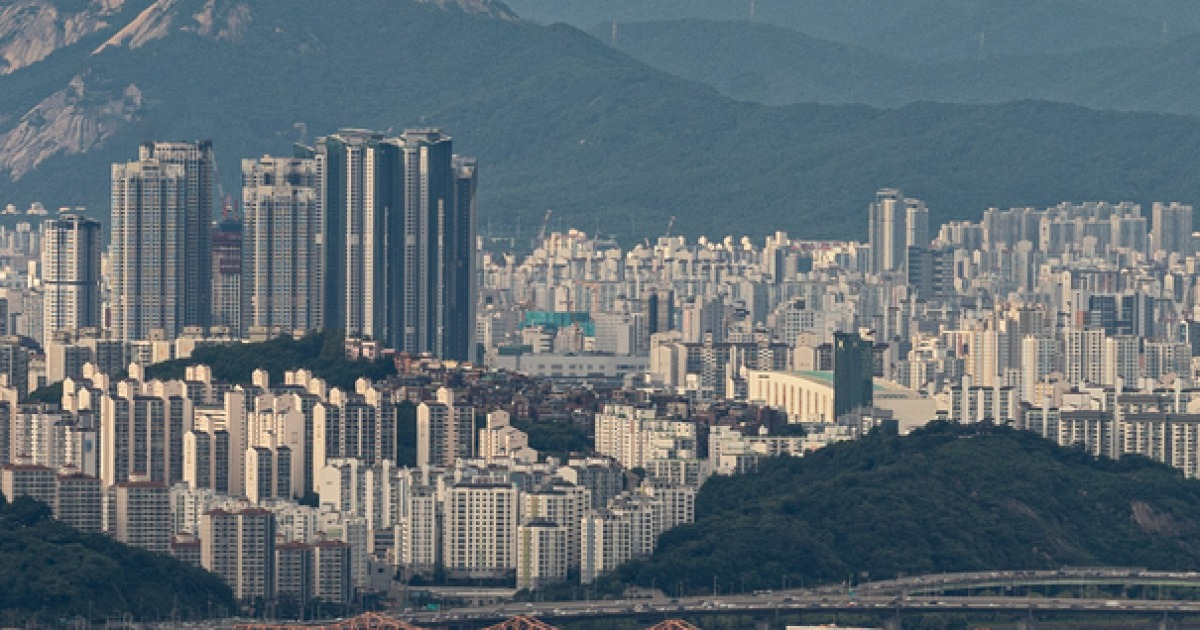
The tax that hit Gangnam before the law did
Prices in Seoul’s most expensive neighborhood started falling before the government even published the fine print. In mid-August, the Finance Ministry finalized its 2026 tax reform package, but by then the market had already begun pricing in the pain. A luxury condo in Apgujeong — a address that once commanded 915 million won in July — was suddenly listed for 780 million won. That is a cut of more than 10 percent in less than a month.
This is not a ordinary correction. South Korea is waging a structural war on concentrated wealth through its property tax system, and Gangnam is ground zero.
How the rules actually change
The reform targets three levers simultaneously, and none of them is gentle.
First, the comprehensive real estate tax (종부세) threshold for the one-household-one-household exemption rises to 1.4 billion won in assessed value — roughly 2 billion won at market price. That sounds like relief. But the exemption for non-resident single homeowners shrinks from 1.2 billion to 900 million won. Foreign owners and Korean expats who held one home abroad lose ground fast.
Second, the tax base flips from number of properties to total property value. Right now, one- and two-household owners face rates between 0.5 and 2.7 percent, while three-plus owners see up to 5 percent. Next year, the bracket for properties worth 600 million to 1.2 billion won in assessed value climbs from 1 percent to 1.3 percent for everyone. By 2028, all brackets converge to a flat 0.5–5 percent scale regardless of how many homes you own. The government says this weakens the “one exceptional property” mentality that has driven Koreans to concentrate wealth in a single prized address. In practice, it removes the penalty premium that once made hoarding a second home rational.
Third, and perhaps most disruptive, the long-term holding credit — the 4 percent annual reduction that has rewarded investors simply for waiting — is being replaced by a long-term residence credit. After 2028, the system favors 6 percent per year of actual living in the home and only 2 percent per year of pure ownership. By 2029, the holding credit vanishes entirely. You must reside in the property to earn the break.
That last change is the one that matters most for the market. It turns a passive asset strategy into an active lifestyle requirement. If you own a second home in Gangnam but live elsewhere, you no longer get the decades-long tax reward for simply holding it.
The lock-in paradox
Here is where the policy runs into a wall of human behavior that few in the ministry seem to have stress-tested.
The logic of the reform assumes that higher taxes will force sellers onto the market. But the opposite dynamic may be stronger. Wealthy homeowners facing a 2029 cliff where their tax shelter disappears have every incentive to hold — not sell — until the old rules expire. They are sitting on assets that are becoming more expensive to carry but potentially more valuable to defend. This is the classic lock-in effect, and it is already visible in the data.
Cheonggu apartment prices fell 0.09 percent in the week of August 17, and Gangnam dropped 0.05 percent — small numbers, but accelerating from the prior week. The Apgujeong listing is the tip of a iceberg of reluctant sellers who may simply wait out the transition. Industry insiders quoted by the source warn that the number of listings could contract precisely because the tax pressure makes selling unattractive while holding becomes unbearable.
What looks like a price correction today may be a transaction freeze tomorrow.
The rental market time bomb
The residential-occupation requirement creates a second-order shock that nobody is talking about loudly enough.
Many landlords in Seoul have been listing rental properties not because they need the income, but because renting out a second home generated favorable tax treatment. Under the new rules, that incentive flips. The smart move for a dual-homeowner becomes: evict the tenant, move in yourself, claim the residence credit, and avoid the comprehensive tax spike.
A wave of landlords converting rental units to owner-occupied homes would squeeze an already fragile rental market. Displaced tenants would flood back into the jeonse and wolse markets, pushing rents higher at exactly the moment the government wants to demonstrate that its tax policy is protecting ordinary families. The irony is sharp: a reform designed to discipline wealth concentration may end up punishing the least wealthy renters.
This dynamic is well-known in comparative housing policy. Australia’s negative gearing debate and the UK’s stamp duty surcharges on buy-to-let investors both produced similar displacement effects. Seoul has not learned from those cases.
What this means for Asian wealth strategy
Gangnam has long been a barometer for Asian real estate sentiment. When South Korea sneezes, Hong Kong, Singapore, and Tokyo catch a cold. The current reforms signal something broader: East Asian governments are done subsidizing passive real estate wealth accumulation. The era of “just buy and wait” is closing.
For family offices and high-net-worth individuals across the region, the implication is concrete. The Korean model — tax pressure on multi-property holders, incentives for active residency, and a gradual erosion of the one-flagship-property premium — is likely to spread. Taiwan has floated similar comprehensive tax ideas. Japan’s fixed asset tax adjustments in major cities already punish vacant luxury units. The direction of travel is clear even if the timelines differ.
Wealth preservation strategies that relied on Korean luxury real estate as a silent anchor are now exposed. The Apgujeong condo that sold for 915 million won in July and is listed for 780 million won is a canary. It is not yet a collapse. But the tax regime is designed to turn canaries into a flock.
The question for investors is not whether prices will fall further. It is whether the lock-in effect will keep volumes artificially low and let sellers dictating terms to a market starved of inventory. If that holds, the 2028–2029 transition period could produce a paradox: falling prices, falling transaction volumes, and rising rents — a triple squeeze that benefits no one except the government’s tax ledger.