Korea's Quiet Rate Hike Is a Warning for the Nvidia Trade
The Bank of Korea's second consecutive rate hike to 3.0% signals a tightening cycle that quietly undercuts the Korean market's semiconductor enthusiasm. While global headlines chase Nvidia earnings, a more important macro story is playing out in Seoul.
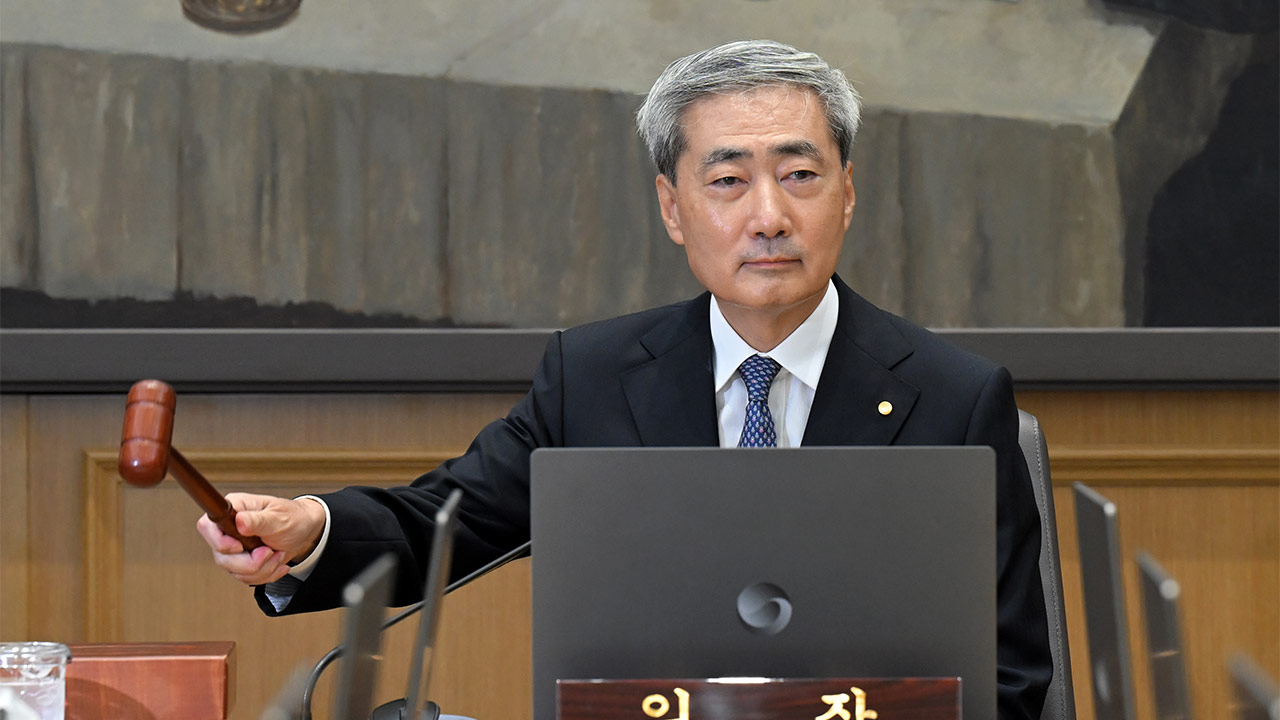
The Rate Hike Everyone Missed
While Wall Street and London desks scramble to parse Nvidia’s latest earnings report for clues about the AI boom, a quieter but arguably more consequential signal has emerged from Seoul.
The Bank of Korea raised its benchmark rate by 25 basis points to 3.0 percent on Thursday, marking the second consecutive increase. The July move had already broken a three-and-a-half-year cycle of rate cuts or holds. This time around, there was no debate. The inflation rate sat at 2.7 percent — above the central bank’s comfort zone — while GDP growth clocked in at a sturdy 3.3 percent for 2026 and is projected to hold at 2.9 percent next year.
The message was unambiguous: the tightening cycle has begun, and policymakers expect it to continue. Unlike previous episodes where the KBO held its nerve through political pressure and corporate lobbying, this cycle carries the weight of structural change. Korea’s monetary authorities have concluded that the era of accommodative policy designed to prop up export-dependent growth is over, replaced by a framework that prioritizes currency stability and inflation anchoring above all else.
Why This Matters Beyond Korea
The Bank of Korea’s decision may not dominate global newsfeeds, but it carries real weight for anyone tracking the semiconductor supply chain. Samsung Electronics and SK Hynix — the two firms that together account for roughly a third of the world’s memory chip output — are headquartered in South Korea. Their fortunes, and the Korean won’s trajectory, are intertwined.
When the KBO raises rates, the won typically strengthens. A stronger won makes Korean chip exports more expensive in dollar terms and compresses margins at a time when the industry is already navigating a fragile demand environment outside of AI-related high-bandwidth memory. That tension between a rate hike and a semiconductor export engine is the story most English-language desks are too busy with Nvidia to tell.
The implications extend further still. Korea’s semiconductor sector employs approximately 80,000 workers directly and supports another 300,000 in upstream and downstream operations. Any deterioration in competitiveness from currency appreciation ripples through an economy where exports account for nearly 45 percent of GDP. The KBO understands this perfectly, which makes its decision all the more significant: it has chosen to prioritize inflation control and currency stability over protecting the very industries that built modern Korea’s prosperity.
The Won and the Yield Gap
Prior to the July rate hike, the interest rate differential between Korea and the United States had widened to uncomfortable levels. The yield gap — the difference between Korean and American government bond returns — had expanded as the Federal Reserve held rates higher for longer while the KBO cut aggressively through 2024 and early 2025. Capital flowed out of Korean assets in search of safer yields, and the won depreciated sharply against the dollar, dropping below 1,450 per dollar at its weakest point.
A weaker won fed imported inflation through higher energy and food prices, which in turn justified further domestic tightening. The KBO’s calculation is straightforward: keep the won anchored, reduce imported price pressure, and buy credibility with markets that have grown accustomed to emerging-market currency volatility. The central bank’s track record on inflation credibility has improved markedly over the past two years, and policymakers are reluctant to undermine that progress by reverting to accommodative stances at the first sign of external pressure.
But the trade-off is real. Every 25-basis-point increase pushes borrowing costs higher across the Korean economy. Corporate debt servicing becomes more expensive. Consumer credit card and housing loan rates climb. The domestic consumption story — already thin — grows thinner still. Korea’s household debt-to-GDP ratio stands at approximately 105 percent, one of the highest among advanced economies, making the economy uniquely sensitive to rate increases that translate directly into monthly payment burdens for millions of families.
Who Gains, Who Loses
Banks stand to benefit from wider net interest margins. Depositors earn more. Borrowers feel the squeeze immediately. The housing market — long the barometer of Korean household financial stress — will tighten further as mortgage costs edge higher. Small and medium enterprises, already navigating a difficult export climate, face a steeper financing environment. The chaebol conglomerates that dominate Korean industry can absorb higher borrowing costs through internal capital markets, but the thousands of smaller suppliers and distributors that feed them cannot.
Equity investors in Korean-listed semiconductors are caught in a crosscurrent. The structural demand thesis for advanced memory holds, but the cost of capital in Korea is now moving against them. A 3.0 percent benchmark rate is a far cry from the near-zero environment that underpinned much of the domestic market’s risk appetite over the past several years. Valuation multiples that relied on cheap funding will compress, even if the underlying companies remain profitable.
The real estate sector faces a different kind of pressure. Korean homeowners typically carry variable-rate mortgages tied to the base lending rate, meaning every KBO hike translates immediately into higher monthly payments. The government has attempted to shield borrowers through temporary caps and subsidies, but these measures are proving expensive and ineffective at scale. Property prices, which surged during the pandemic era of easy money, may begin their correction now that the cost of carrying debt has increased meaningfully.
The Path Ahead
The KBO signaled clearly that another rate increase this year remains on the table. Whether that materializes depends almost entirely on inflation data and the won’s exchange rate path. If the dollar weakens sharply, the need for further tightening diminishes. If imported prices stay elevated, the central bank will have little reason to pause.
For global investors, the takeaway is simple: the semiconductor rally cannot be read exclusively through American earnings. The funding conditions of the companies manufacturing the chips matter just as much. Korea is back on a hiking cycle, and the implications for the won, for domestic demand, and for the cost structure of an industry that depends on it are real and immediate.
Nvidia’s numbers will dominate headlines this week. But the Bank of Korea’s decision, cold and measured, tells a parallel story that deserves equal attention. The chips powering the AI revolution are being manufactured in a country that is deliberately choosing to make them more expensive to produce, not because of industrial policy, but because of monetary policy. That tension between technological optimism and monetary reality is the quiet story of 2026.