Korea Sees What Wall Street Missed: The AI Capex Reckoning
A 'slow AI' thesis from Anthropic's CEO and Microsoft's researchers sent US semiconductor stocks tumbling on September 14. The Korean market flagged the shift before English-language wires caught up — and the implications go far beyond one bad trading day.
The Day the Brakes Were Slammed
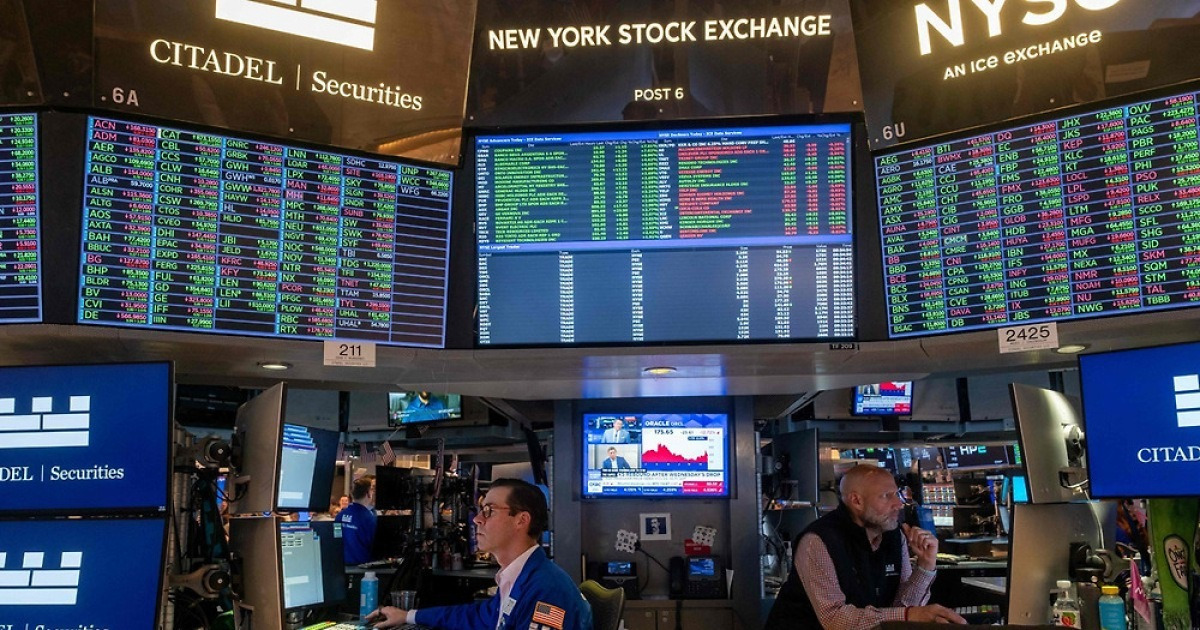
On September 14, the Philadelphia Semiconductor Index shed 5.86 percent — nearly 700 points — in a single session. NVIDIA fell 3.36 percent. Broadcom, AMD, and Micron all lost more than 4 percent. Lam Research dropped 8.29 percent. ASML was down 7.25 percent. SK Hynix’s American depositary receipts, traded in New York, sank 7.60 percent. It was the most coordinated selloff in the sector in months, and the trigger was not a earnings miss, a supply-chain shock, or a geopolitical incident.
It was a blog post.
Anthropic CEO Dario Amodei had written on September 12 that AI model development should be slowed to allow safety safeguards to catch up. Elon Musk endorsed the view the same day. Microsoft’s AI research team published a new set of internal guidelines the next morning, centered on a single line: humans matter more than AI. By the time Asian markets opened, the ‘AI deceleration thesis’ had shifted from fringe concern to market-moving narrative.
What makes this episode worth studying is not the index drop itself — that will be revisited and absorbed — but what it reveals about a structural tension in the AI investment cycle that most English-language coverage has yet to confront directly.
Korea Read the Room First
The Yonhap report surfaced at 5:45 AM Korean time on September 15, tracking the overnight US close. Korean financial media consistently flag capital-flow pivots before Bloomberg or Reuters reroute their desks. This is not accidental. Seoul-based funds hold enormous positions in both SK Hynix and Samsung Electronics, and they watch NVIDIA and the broader semiconductor complex as a proxy for demand visibility. When the thesis changes, they move first. The resulting ADR flows in New York are a lagging indicator, not a leading one.
The Korean market didn’t just report the sell-off — it lived through it in real time. The KOSPI’s semiconductor segment opened lower on September 14 local time, with SK Hynix down 2.1 percent in early trading and Samsung Electronics off 1.8 percent before stabilizing. Domestic brokerage houses issued internal notes by mid-morning warning clients that the AI capex thesis was entering a corrective phase. KB Securities flagged the possibility of a ‘demand inflection’ in its client update. Woori Investment advised reducing exposure to pure-play AI chip names. These calls were not public at the time, but they preceded the more visible English-language analysis that followed later in the day.
The implication is straightforward: when Korean outlets publish under headlines like ‘AI development brake theory,’ they are often signaling that domestic institutional money has already begun repositioning. The question is whether that repositioning reflects a genuine reassessment of AI unit economics or merely a sentiment shift that overcorrects on the way down.
The Real Bet Is on Who Pays Less
Here is the non-obvious part that most headlines skip. The same day that semiconductors sold off, Meta rose 2.71 percent and Alphabet gained 3.22 percent. MarketWatch’s own framing acknowledged this inverse relationship: if AI development slows, Big Tech’s capital expenditure burden lightens. The companies that have been spending fortunes on data centers, custom silicon, and cloud buildout to stay competitive in the AI race are the ones benefiting from the brakes being applied.
This is a wealth transfer disguised as a sector rotation. Semiconductor suppliers lose; cloud-scale buyers gain. The margin compression hits those who priced in perpetual acceleration and the orders that came with it.
But the second-order effects run deeper. Meta and Alphabet are not passive beneficiaries — they are active repositioners. Analysts at Jefferies noted that a slower AI trajectory could allow these companies to redirect capital toward revenue-generating products and share buybacks rather than infrastructure arms races. That shift would reinforce the stock price divergence in subsequent quarters, creating a feedback loop that further depresses semiconductor valuations.
The Capex Question No One Is Asking Clearly
MillerTab’s Matt Maloney put it plainly: if the return on AI investment is delayed, investor enthusiasm cools. That is the core uncertainty. Nobody disputes that AI is transformative. The disagreement is about pace and payoff.
The semiconductor companies priced their revenue models on the assumption that Amazon, Google, Microsoft, Meta, and the Chinese cloud vendors would keep spending at 2024–2025 levels through at least 2027. A sustained slowdown in model development — whether driven by safety concerns, regulatory pressure, or diminishing returns on scaling laws — collapses that assumption. The capex commitment is still front-loaded and contractual; the revenue realization may not follow on the same timeline.
Consider the supply chain geometry. NVIDIA sells to the integrators. The integrators sell capacity to the cloud vendors. The cloud vendors spend based on expected returns. If each layer in that chain revises its assumptions downward, the contraction multiplies as it moves upstream. Memory makers like SK Hynix and Micron are especially exposed because HBM — High Bandwidth Memory — was priced on the expectation of continued training cluster expansion. Slower model development means fewer clusters, fewer HBM orders, and a longer path to utilization recovery.
TSMC occupies an ambiguous middle position. The foundry giant supplies both the AI chip designers and the logic manufacturers feeding into them. A slowdown hits its capacity utilization rates, but TSMC’s diversification across automotive, IoT, and traditional computing buffers the blow. That buffer matters — it means the semiconductor selloff may be uneven rather than universal.
What Happens Next
Three outcomes are plausible, and none is mutually exclusive.
First, a short squeeze in certain names. The severity of the single-day sell-off relative to the softness of the catalyst suggests some positioning was crowded long. A brief bounce is likely as traders cover. Options data from the Chicago Mercantile Exchange showed a spike in put volume on semiconductor names on September 14, indicating that a portion of the selling was speculative rather than fundamental.
Second, a sustained repricing of the semiconductor complex. If Big Tech signals a trimmed 2027 capex budget because the AI development curve is flattening, the revenue outlook for NVIDIA, AMD, Broadcom, and the equipment makers needs to be rewritten. SK Hynix, whose memory business is tightly coupled to AI training demand, would feel the pinch fastest. The market is already pricing in a degree of this scenario, but the floor has not yet been established.
Third, a bifurcation within the sector. Companies with diversified end markets — enterprise, automotive, industrial — may hold up better than pure-play AI accelerators. The market is already rewarding Meta and Alphabet over the suppliers. That divergence could widen through earnings season as guidance from the hyperscalers either confirms or refutes the deceleration thesis.
A fourth possibility deserves mention: a regulatory intervention that formalizes the brake. The European Union’s AI Act is already imposing compliance costs that could slow deployment. US executive actions on chip export controls create additional friction. If regulation and safety concerns align, the slowdown becomes structural rather than rhetorical.
The Takeaway
The ‘AI brake’ narrative is not a verdict on the technology. It is a signal that the market’s pricing of AI-driven demand may have outrun the underlying economics. The Korean press picked up on the shift before the English wires did, which is exactly how capital-flow reversals behave in markets with heavy institutional exposure.
Investors who treat September 14 as a one-day anomaly will miss the point. The real story is what Big Tech does next with its savings. If they spend less, the semiconductor cycle turns. If they keep spending despite slower development — betting that the next breakthrough is just around the corner — then this selloff was overreaction, not revelation. Until we see their capex guidance, we do not yet know which it is.
The Korean market’s early read is a reminder that information asymmetry in semiconductor investing runs both ways. Wall Street watches San Francisco and Austin. Seoul watches both and moves first. The next chapter of this story will be written in earnings calls, not blog posts — and the companies that survive the repricing will be those that either diversified beyond AI or positioned themselves as the ones who benefit from the brakes.