Korea's chip exports confirm the AI memory super-cycle
Korean semiconductor exports hit $60.3 billion in September, nearly half of all exports. Morgan Stanley calls it an AI memory super-cycle — and the implications stretch far beyond Seoul's trade balance.
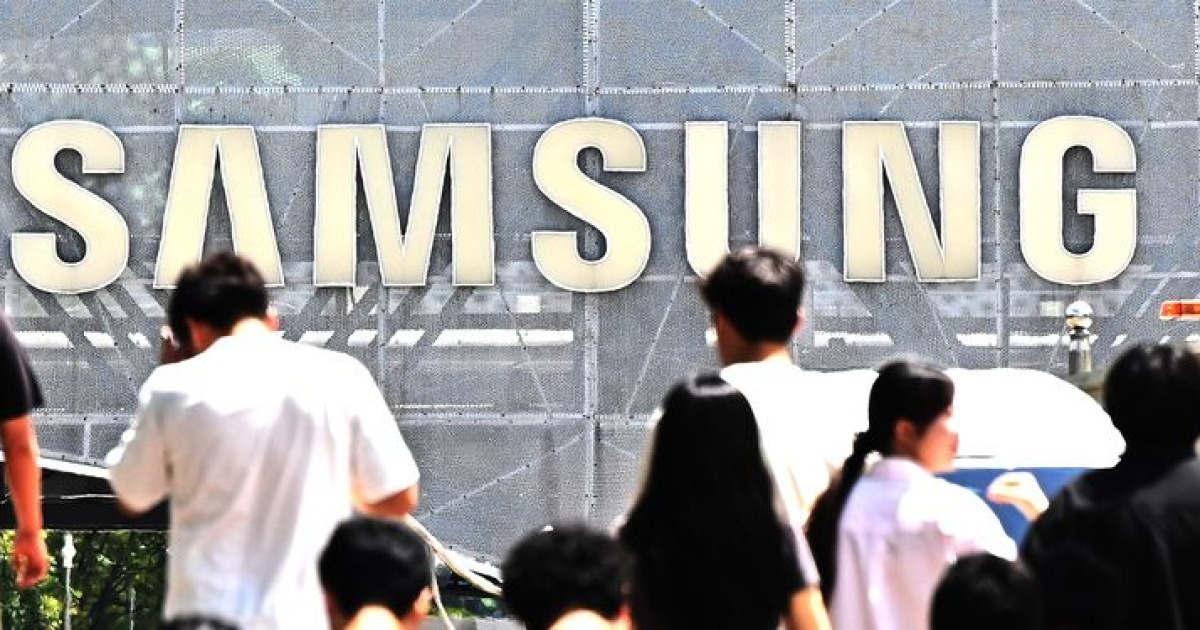
Half a nation’s exports, one chip type
South Korea’s September trade numbers read like a balance sheet written by NVIDIA’s procurement team. Semiconductor exports reached $60.3 billion — a 262.8 percent jump from a year earlier — accounting for 49.9 percent of the country’s entire export bill. The trade surplus hit a monthly record of $49.9 billion. Half of what South Korea sells the world is now memory chips, and the people buying them are building data centers, not smartphones.
Morgan Stanley’s Kathleen Oh, the bank’s senior economist for Korea and Taiwan, put it plainly in a note cited by the Korea Times: the AI-related semiconductor demand and firming memory prices are driving an “unusually strong cycle.” The key word is unusually. Memory has always been cyclical — brutal downturns, euphoric peaks. What makes this different is the length of the rope.
Long-term supply contracts, the kind that lock in volume and price years ahead, are now extending to 2028. That is not a quarterly blip. That is a multi-year demand floor that did not exist two years ago. For a commodity business where visibility beyond six months was once considered optimistic, this changes the capital-allocation math entirely.
Who wins when memory becomes infrastructure
The immediate winner is obvious: Samsung Electronics and SK Hynix. Both are posting results that would have been unthinkable in 2023, when the memory downturn wiped billions in value and production cuts were the headline. HBM — high-bandwidth memory, the dense, expensive chip that sits next to every GPU in a training cluster — is the product driving the price spiral. It commands margins that dwarfs DRAM and NAND by wide margins.
But the secondary winners matter more for the global supply chain. Equipment suppliers are already feeling it. Semiconductor equipment imports jumped 49.2 percent year over year in September, and total semiconductor imports rose 92.8 percent. That is not consumption — that is capital expenditure flowing into fabrication capacity. Companies like Applied Materials, Lam Research, and ASML are about to see another round of strong orders, and unlike previous cycles, the demand signal is backed by multi-year contracts rather than speculative inventory builds.
Then there is the question that Western analysts keep circling around without quite landing: is this about China buying chips, or about the AI data-center buildout driving memory prices? The distinction matters enormously. If Chinese demand were the primary driver, US export controls would be the binding constraint — and the ceiling on this cycle. If the primary demand comes from American cloud providers and hyperscalers building out GPU clusters, then controls matter less for memory specifically, and the cycle’s durability increases.
The data points toward the latter. Computer exports surged 435.4 percent. That number is almost entirely driven by AI server and storage demand, not by Chinese procurement. The memory super-cycle is being funded by American capex, not Chinese import substitution.
The TSMC margin question
TSMC is not immune to the AI boom, but it is not the primary beneficiary of the memory cycle. The foundry giant excels at logic — custom AI accelerators, Apple silicon, the latest GPU nodes. Memory is a different business, dominated by Samsung and SK Hynix, and it operates on a pricing model that rewards vertical integration and scale in wafer fab space rather than process-node leadership.
This creates an asymmetric payoff. Every dollar of memory-price expansion flows to Korea. Every dollar of logic-AI demand flows partly to TSMC but also to Samsung’s foundry division, which is still chasing node credibility. The result is a divergence in margin trajectories that could reshape the competitive balance in Asian semiconductors over the next two years. Korea’s export numbers suggest that divergence is already accelerating.
For TSMC, the strategic response is clear: push further ahead on process leadership while lobbying hard for US policy that restricts China’s access to advanced nodes without constraining the memory supply chain that feeds the same AI boom TSMC also profits from. The company’s investors are watching this closely.
What 2028 looks like — and what could break it
Morgan Stanley raised its 2026 South Korea export growth forecast into the high 40s, citing the contract visibility and the fact that non-semiconductor export growth also accelerated — from 22.3 percent in August to 37.4 percent in September. The momentum is broadening, not concentrating.
But three risks sit on the horizon.
First, the base effect. Oh herself noted that headline growth rates will normalize as the prior-year comparisons grow less favorable. That is technical but important — the rate of change will slow even if absolute output remains elevated.
Second, concentration risk. When half your exports are one product category, a single demand shock becomes an existential question for the macro. Korea’s export profile has never been this narrow. A pullback in hyperscaler capex, a slowdown in AI model development, or a price correction in HBM would reverberate through the entire trade account in a single quarter.
Third, and perhaps most consequential for global markets, is US export-control policy heading into 2027. The current framework restricts advanced logic chip sales to China but has been comparatively lenient on memory. If the Biden administration or a successor White House tightens restrictions on memory chip exports — particularly HBM — to China, the demand side of this cycle contracts abruptly. China is both a major consumer of Korean memory and a growing producer of its own. Policy could flip the cycle from within.
Why this matters outside Korea
Korea’s $60.3 billion semiconductor export month is not just a national statistic. It is a leading indicator for the global AI infrastructure buildout. Every month that memory prices hold and long-term contracts extend is a month that hyperscalers are committing capital to AI capacity. Every month they do not is a sign the cycle is peaking.
Right now, the signals are reinforcing each other: strong exports, rising equipment orders, extending contracts, broadening non-chip growth. That is the pattern of a cycle with room to run — not one at its tail.
What English-language analysis often misses is the nuance beneath the headline number. This is not a China story. It is a data-center story. The buyers are American cloud providers, the contracts are multi-year, and the product is memory, not advanced logic. That distinction determines who wins, who loses, and whether the super-cycle holds through 2028 or unravels sooner. The numbers so far suggest the former — but concentration is a vulnerability, and policy is always the wildcard.